
Given their megastar status with sales of over 150 million albums, of which their greatest hits Gold itself constitutes one of the best-selling discs of all time; and as the music behind one of the highest grossing musicals on record Mamma Mia – now also the source of two highly commercially successful films – it is perhaps surprising that ABBA produced only eight studio albums (and perhaps one album’s worth of other material) of which, if one is to be slightly harsh, a mere five have serious critical merit. All of these albums have been remastered and repackaged multiple times and in multiple formats leading to an accusation of cashing in yet, it might equally be said, one can only cash in if cash can be made so this incessant recycling still going strong over forty years on is itself merely another measure of their immense success.
As a relatively reluctant touring group (blonde lead singer Agnetha Faltskog’s loathing of travelling was, and is, well known) that never fully broke the United States market, and as an act not particularly advantaged by media promotion in preceding the MTV generation by some years, the question is raised as to what drives this jaw dropping on-going success. The answer only partly lies in the quality of the music itself that, whilst sparkling and iridescent, was equally inconsistent. They are maligned, wrongly, for their particularly poor lyrics (Blondie, the Spice Girls and Wet Wet Wet were all far more guilty of this), mawkish sentimentality (there is some truth in this but it is double edged), and commercialism (markedly untrue given relatively few singles per album and many even number one songs that were either more than commercially long or structurally complex or both, The Name of the Game being a prime example). They were undoubtedly slow starters, rather poor in honing their true talents, and arguably gave up too easily when the going got tough.
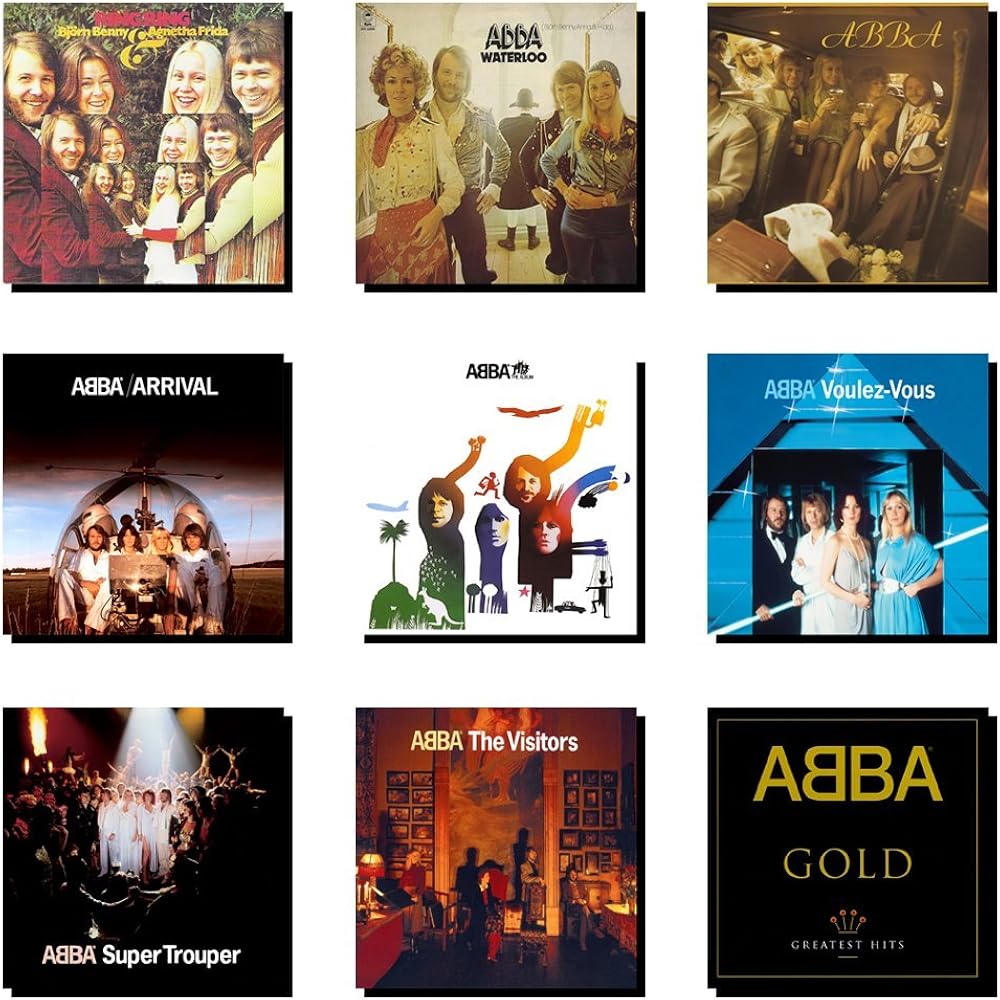
Yes, there was an Abba album before Waterloo bearing in mind that, at the time, they were not called Abba but Bjorn & Benny, Agnetha & Frida. There is a certain history to the name itself as Abba did not become ABBA with the reversed Bs trademark until the Arrival album and Agnetha for some time was known as “Anna” outside of Sweden given difficulties non-Scandinavians had in pronouncing her name. It also left fans scratching their heads as to who the Agnetha was that “appears courtesy of CBS records” given that Faltskog was a major solo artist yet largely unknown outside of Sweden and still under contract. Ring Ring, their first album is also notable for Faltskog’s first – and last – solo writing contribution to an Abba record, the simple and sweet but otherwise unremarkable Disillusion. The roots of Abba’s music are all too clear across the other tracks – the Scandinavian folk scene and “schlager” music, the singing prowess of the female leads, and the influence of three chord 70s rock on the male writers. The effects of this are mixed to say the least. At their best, they produce catchy – if slightly dated – folk rock ballads like Another Town, Another Train or He Is Your Brother; but elsewhere it’s often lumpy and grasping attempts to be commercial when what is all too missing is that harmonious yet melancholic note that would come to dominate later works. The influence of the Beatles and the Beach Boys alike is clear too, but it is the Bacharach-esque I Am Just A Girl that perhaps points towards their more melodic future.
Their second long-player Waterloo hinted more at this melodic greatness in party pleasers like Dance (While The Music Still Goes On), Hasta Manana, and Honey Honey. That said, clangers still abound, most notably the ridiculous gorilla driven King Kong Song, the utterly throwaway What About Livingstone, and Watch Out, a truly desperate attempt to sound hard edged. The challenge remains one of synthesis, not least in finding that all important Abba sound whilst you get no less than two versions of the “three chord rock by numbers” Eurovision winner Waterloo on the vinyl alone.
Self-titled Abba is a marked improvement as well as the point where they start garnering international commercial success. The syncopated chop sticks of Mamma Mia became their first number one since Waterloo. That followed SOS, another hit dominated by a belter of choral chorus that would soon become a hallmark of their biggest hits as well as an added bonus for Agnetha on her album Elva Kvinnor I Ett Hus. Elsewhere Hey Hey Helen is a respectable rock ballad given its guitar hook; whilst Tropical Loveland is a melodic take on reggae. Bjorn’s words are still an on-going problem though. Bang A Boomerang’s title alone says it all whilst Man in the Middle doesn’t have the edge it should have either lyrically or musically. Indeed, the story of Abba’s development is one of Bjorn’s gradual acquiescence into the background of guitarist and writer rather than frontman and fans have long complained about the stubborn persistence of a token “Bjorn song” on almost every album. Here, it’s Rock Me a particularly heavy-handed attempt at edginess that isn’t really saved by the girls’ impressive harmonies. Benny’s keyboard abilities, always central to Abba’s melodies, are showcased to better effect on Intermezzo no: 1, one of their few instrumentals, though John Miles or Bohemian Rhapsody it is not. There are glimmers of the greatest to come, however, in I’ve Been Waiting For You, a big gushy love song with a very fine vocal from Agnetha. Abba is by far their “rockiest” record when pop is more their forte yet it’s rather as they still can’t quite find their way as the album collapses into the three chord 70s rock of So Long once again.
The release of their first Greatest Hits album largely sifted the successes from the failures in these early records and also proved seminal in more ways than one. First, it has that cover – the one of the two couples sitting on a park bench – Agnetha stares out longingly at the viewer whilst her husband is more absorbed in reading a magazine than in her and, if you open out the back of the cover, you get Benny and Frida locked in a kiss. Open it up again and you get all four laughing at the joke they’ve created. The thirtieth anniversary edition on CD had a different cover, using artwork by Swedish artist Hans Arnold, and there has never been any major reissue rendering the park bench vinyl version a sought-after collector’s item. Of course it would also prove a sad premonition of things to come a few years later. Second, it became a major commercial success, selling nearly three million copies in the UK alone, on the back of showcasing the phenomenally successful Fernando. The track was originally given to Frida for her Swedish solo album Ensam and not included on the original Scandinavian version. Thus, it was to become the turning point in making Abba major, and international, stars. As sentimental and nostalgic as the campfire around which the video was set this song was to become the template for much of their future greatness juxtaposing melancholia with the choral euphoria of the choruses. Finding “the Abba sound” was the key that unlocked the door to an awful lot more and tapped into an emotionality that their lyricism otherwise struggled with. There are echoes here of not only the Beach Boys, but the Philadelphia sound and Phil Spector and it is this, more than anything, that elevates them above the more throwaway pop of their contemporaries and indeed many since.
Arrival marked not only a quantum leap forward and the perfect pop moment in Abba’s career but rather became the template by popular music could now be judged. With sales of nearing two million in the UK alone it remains their biggest studio seller primarily on the back of the stratospherically successful lead single Dancing Queen – perhaps one of the few pop tracks to deserve the title of iconic – and later Knowing Me, Knowing You one of their first and finest forays into darker and more adult lyrical territory. Simple it may be but banal it is not and when combined with a belting chant of a chorus – aha – became raised to more emotional heights. Indeed, it is this choral harmonising that characterises almost the entire record. From the moment it kicks in on so wondrously on When I Kissed The Teacher, the famous Abba sound has finally been found. And there’s still no lack of experimentation either – thus, Money Money Money would not sound out of place in a Weimar music hall, all syncopated piano and drums wrapped up in high camp drama whilst That’s Me is an early foray into something altogether more synth driven. At a mere thirty-one minutes long, the melodies pile on thick and fast in a blur of slick arrangements and smooth production. Even the downright silliness of Dum Dum Diddle is irresistible given the sheer joyousness of its bagpipe style belter of a chorus whilst the can-can kicking meets rockabilly of Why Did It Have To Be is undoubtedly the career best of the “Bjorn songs”. Tiger, a play on the lights of the city night, is perhaps a less well-judged attempt at social observation but the arrangement is just about clever enough to pull it off. And all that just paves the way for the near madrigal like closer and title track. It sounds royal because it is royal – this is a band at the peak of their majesty. Abba were never to match this sense of perfection – from the acoustic opening to the closing strings not one note sounds out of place – yet perhaps what is most important remains that quintessential mixing of melancholy with euphoria. My Love My Life is one of their lushest, gushiest and even churchiest of songs and yet, at the same time, a total tearjerker. The foregrounding of Agnetha as the soprano ice queen is key here not only in forming a sound but in providing an embodied image – a beautiful yet vulnerable blonde – that would then get played upon again and again to increasingly devastating effect. It also crystallised their exoticism and mystery as not only Swedish but rather cinematic.
The cinematic would underpin the release of The Album to coincide with The Movie, effectively the story of their 1977 tour of Australia given a celluloid level of celebrity. The core motive behind doing the movie was the avoidance of touring given Bjorn and Agnetha were now expecting their second child, Peter Christian, born in December 1977. Hallestrom’s film was never going to win Oscars but it undoubtedly made Abba stars, shining more brightly and with more dazzle than ever before. Interestingly it would also hint at the stone in the cherry making no bones about the fact that the adulation of the band, now on a level with Beatlemania, was becoming overwhelming. Agnetha, as mother of two young children, in particular was not happy and this would feed into their music. The tour featured a mini-musical entitled – surprise, surprise – The Girl With The Golden Hair. Whilst both girls in fact wore blond wigs, the reference to Agnetha was unmissable as it told the tale of a simple suburban girl from a “dull little town” (Jonkoping?) hitting the big time with “a wonderful talent, a wonderful thing because everyone listens when I start to sing”. This is the stuff of fairy tales and Hans Christian Andersen and has a similar sense of all that glitters is not gold for our heroine then finds herself caught on a carousel of highs and lows like some out-of-control marionette. Much to the chagrin of fans, the frenetic Get On The Carousel would never be released, its middle 8 merely reworked and used in Hole In Your Soul, though much of it is heard during The Movie. The group would strenuously deny any autobiographical connection yet in protesting so much only fuelled the sense of trouble in paradise, a point later emphatically proven in Faltskog’s increasingly outspoken loathing of fame and touring. What is at stake here is the development of Abba into a near Barthesian myth, as symbols of the pain and suffering behind the stage, as cracks in the mirror, and as expressive of the axiomatic interdependence of euphoria and despair. Their increasingly camp aesthetic plays into this along with their now recognised status as icons of gay culture for the same dynamic is at work there in the heartache swirling under the disco glitterball. Abba would sound increasingly triumphant as the years rolled on whilst the lyricism of their songs would tell an altogether darker and more serious story. The secret of Abba’s success and importance in many ways depends on this as they and their music alike became more and more elevated above and beyond the throwaway world of pop into something more akin to the world of theatre and fairy tale, the mythical and magical.
More musically, having created the perfect pop record in Arrival, The Album marks something of a watershed in Abba’s career. Not content to attempt to create Arrival two, Abba’s music would now start to veer in an altogether more adult, more experimental, and deeper, direction. Indeed, Abba The Album barely constitutes a pop record at all. This is also emblematic of their bravery and creativity – they are emphatically not the hit machine they were sometimes made out to be – and the depth of their appeal that they could get away with this without losing too many fans in the process at the time. Lead single, The Name of the Game is a case in point at nearly five minutes long and, more significantly, containing a complex three-part chorus that only really develops into full-on “catchy” in the song’s closing minute. It’s dominated by a combination of bass, rhythm and electric guitar and both Agnetha’s and Frida’s take on lyrics that tell in essence of sexual awakening and emotional insecurity. Frankly, pop it is not yet at this point Abba were unstoppable and it became a major number one hit. The only more obviously commercial moment is Take A Chance On Me, the chugging rhythm of which was dreamed up by Bjorn whilst out jogging. Eagle meanwhile is a near six-minute attempt to evoke the sensations and emotions of flight. It’s dominated by Janne Schaffer’s electric guitar over a whumping bassline, and is another example of Abba’s increasingly complex musical arrangements; as is One Man One Woman, on the face of it another chant of a chorus yet actually woven around an extraordinary mixing of electric guitar, keyboards, and strings. Similarly, the vocal harmonies increase in their complexity as none of these songs is dominated by either Agnetha or Frida but rather the combination and highlighting of both. Frida ruminates on a housewife’s loneliness and ailing marriage to be joined by Agnetha on the melodic chorus. We are a long, long way from the King Kong Song and Dum Dum Diddle. Bjorn’s spoken intro on Move On is best forgotten but is then swept away by the song’s soaring oceanic metaphor lyrically and musically. This leaves Hole In My Soul, a song that doesn’t sound like Abba, more a prog rock band trying to be Abba and it is the album’s one misstep into sounding desperate. All of that just leaves us back where we started with “three scenes” from the mini musical The Girl With The Golden Hair. Logically, if this were the Abba we had come to expect, then Thank You For The Music, as emblematic of their crowd pleasing appeal to nine and ninety year olds alike as it got, should be the closer but instead it is the opener as it was when staged on tour. This is emphatically not a tale of happy endings, rather the horror that lurks behind the façade, cementing their increasingly mythological status as I have already outlined. Whilst I Wonder (Departure) would be worthy of a place in one of Andrew Lloyd-Webber’s saccharine musicals given its pitch perfect vocal from Frida and storytelling musical arrangements, I’m A Marionette is nearer to something from Cabaret and Weimar Germany with its sense of Wagnerian drama and thundering bassline. Abba kept rather stumm concerning the song, making light of the mini musical’s darker themes yet none of their attempts to dismiss them undermines the sheer fury of the lyrics: “You’re so free, that’s what everybody’s telling me/Yet I feel I’m like an outward bound, pushed around refugee”. If that was anywhere close at all to their view of fame, fortune and celebrity then one could but worry. What The Album represents in many ways, then, is the completion of their mythology. Abba moved from the world of snow shakers and Hans Christian Andersen to become players in a Brothers Grimm story now complete with wolves and wicked witches. What is more, this oscillating from fairy tale to gothic horror would continue to inform much of their later work.
However, prior to this, we have Voulez-Vous. If Abba The Album was near devoid of bangers, then Voulez-Vous is near devoid of anything but such is the ferocity of its attempt to recapture the more commercial elements of pop. If one is critical, it is rather cynical record – as cool and calculated as its nightclub cover – yet this masks the difficulties in its composition not least caused by the divorce of Agnetha and Bjorn who were now trying to form a purely working relationship. What also underpins it is Abba’s attempt to make their mark in the world of disco. The stratospheric success of Saturday Night Fever and the Bee Gees, whilst technically preceding the release of The Album, only truly impacted the writing of Voulez-Vous whilst there were also nods in style to the likes of Donna Summer on the album’s more “adult” moments. Much was made of this increased emphasis upon sex. Nevertheless, the record is not so consistent in either content or style. Lead single Chiquitita, a tale of friendship and reconciliation, harks back to both the group’s earlier schlager musical style and Spanish inflections and was chosen as lead single over the sixties style camp piano riffs of If It Wasn’t For The Nights. The lead vocals of Agnetha Faltskog and near three-part harmonising on the chorus are eye wateringly euphoric nonetheless and up there with the very finest moments of their career. The record is, however, rather more dominated by Frida’s sultry mezzo-soprano on songs like the decidedly slinky Lovers Live A Little Longer and the adult story telling of The King Has Lost Its Crown. The increasing use of synthesisers and string sections on such tracks is effective yet cannot lift the rather leaden chorus on the latter. Of the rest, the commercialism of songs such as Angel Eyes and Kisses of Fire echoes much earlier records despite the increased standards of the production and arrangements. This leaves I Have A Dream, a song so cloyingly sentimental in its Nana Mouskouri style Greek twanging and complete with children’s choir, it neither fits nor suits the increasingly adult direction of their career; whilst the Lolita theme of the “Bjorn song” Does Your Mother Know marks a return to the three-chord stomping of their first few albums that is best forgotten. Given their release as “charity” records, Chiquitita and I Have A Dream alike could have stood alone as singles, and the track listing of Voulez-Vous undercuts its disco status, yet these occasional lapses were to reoccur on later records though and Voulez-Vous still contains the grains of a truly great disco pop record. Accordingly, if the first-rate standalone disco driven singles Summer Night City and Gimme! Gimme! Gimme! (A Man After Midnight) that preceded and followed it respectively had become part of it then indeed it would have been. The fact that it was not also begins to expose a series of dubious decisions and pressures building on the group both personally and professionally. Bjorn and Agnetha’s divorce stress was compounded by an over-ambitious and arguably ill-timed attempt to break the North American market. Summer Night City had been released as a potential lead single but ended up dropped from the album due to relatively poor sales that were in themselves as much about problems in distribution as any fault in the song. Similarly, the internal pressures to produce a record a year seems, in hindsight, rather unnecessary and rushed Voulez-Vous’ completion. That said, it remains an album that, despite its overly obvious nods to its disco context, has stood the test of time surprisingly well garnering a string of hits (no less than five songs were released as singles) though – oddly – no number ones in the UK.
By contrast Super Trouper garnered two of them and became their most commercially successful album since Arrival largely on the back of lead single The Winner Takes It All. The story of the song is well-known. Song-writing was becoming an increasing struggle for both Ulvaeus and Anderson but Ulvaeus came up with a provisional lyric to which Anderson added a descending piano melody and the rest is history or rather her story as Ulvaeus handed the song to his still smarting ex-wife to sing the lead on in act of extreme callousness or genius depending on your point of view. When interviewed, Faltskog said she approached the song theatrically, as if acting out a role, yet it remains her finest vocal performance for the group, and perhaps one of the greatest executions of any pop song ever, precisely due to the conviction with which she sings it – sounding as if near breaking point one minute yet ferocious the next. The second single, and title track, was also a massive hit due to its schlager stomping catchiness and bittersweet lyrics but it’s ultimately as soggy and sentimental as a snow globe. Much the same could be said about the waltzing Andante Andante, a song so saccharine and twee it could induce diabetes. This is in fact a problem that besets much of the album and Super Trouper is perhaps the flip side, or yin to the yang, of Voulez-Vous centring itself emphatically in the MOR territory the group were now famous for and often drowning in nostalgia. Considerably better is Happy New Year which, whilst equally schmaltzy, still captures the after-party haze with its “sit around the piano” style verses and soaring choruses. Equally, Our Last Summer is sung with such conviction by Frida and wrapped in a melody so rapturous one is forced to believe in it. Super Trouper is otherwise near devoid of bangers and at its best on the few occasions where it bites – the sublime Winner Takes It All and the decidedly adult disco seriousness of Lay All Your Love On Me. The same cannot be said of the daft lyricism of On & On & On or the inexplicable lapse into folksiness of The Piper. The creation of their own mythology that had worked so well on earlier albums was clearly now both too transparent and too contrived to convince their critics at least. The album closes on a live recording from their 1979 tour of The Way Old Friends Do as if to say “it’s all still ok” in Abba’s never never land when the world was all too aware that it was anything but with both of the band’s key relationships well known to have come undone. The fortunes of the group were also by this time changing for the worse. Whilst they rose to the challenge of disco on Voulez-Vous, the impact of punk and new wave in the late 1970s was now rendering them deeply uncool and the subject of mockery, most notably in the Not The Nine O’clock News parody “Supa Dupa”. This juxtaposing of a commercially successful attempt at crowd pleasing whilst more publicly unravelling would prove to be their undoing and their next moves would prove as interesting as they were terminal.
The Visitors even more than The Album is Abba in experimental mode. As many commentators have noted it’s also, like its cover, their darkest work. Rather maligned at the time for its lack of bangers it is a mixed bag yet remains a container for some of their finest work. Soldiers with its militaristic beat and foreboding that “if the bugler starts to call, we too must dance” and the title track alike speak to ill-defined yet unsettling political themes; whilst Like An Angel Passing Through My Room, set to the ticking of a metronome, is as wistful and melancholic as they get. Elsewhere Head Over Heels is a triumph of camp style over content and Two For The Price Of One, supposedly inspired by a dating ad seen by Bjorn, is as funny peculiar as it is funny haha. The only real Abba standard is lead single One Of Us, a tale of regret with the same kind of fluttering Spanish instrumentation and harmonies that dominated Chiquitita years earlier. It was also to be their last major hit. The boys’ production and arrangement skills are polished till they shine whilst the lead vocals are amongst the girls’ finest – Agnetha mimicking the schoolgirl she misses on Slipping Through My Fingers whilst Frida develops her operatic skills on I Let The Music Speak, a clear foreshadowing of the musical theatre to follow. Whilst much of the lyrical content here is emotionally driven, The Visitors never descends into the schmaltz of Super Trouper and towers over it as a far more mature tour de force. It is perhaps When All Is Said And Done that sums up the album best – on the face of it a near disco style belter (whilst the more obvious dance riff of the title track made it a minor hit on the gay club scene) it is altogether grittier and more adult in its themes than it at first appears, driven it seems by Frida’s recent break up with Benny. One is left with the feeling that there was life left in them. And yet it wasn’t to be. Instead a miscellany of bits and pieces across two singles. The plate droppingly sublime melancholia of the six-minute Day Before You Came, the plodding beat and storytelling of which was offset by Agnetha’s fragile vocal splendour. It barely disturbed the charts but has now become recognised as one of their finest, and most quintessentially Scandinavian, moments in turn backed by the rollicking and atmospheric musical themed Cassandra on the B-side. The double A-side of Under Attack, whose downright odd electronics undermined what was otherwise a well-written song, and You Owe Me One which, put simply, was not. Neither were hits and the latter barely even sounded like Abba, and with that they quietly disappeared. The difficulty was not however that there was really any deterioration in the quality of the music, rather an increasing falling out of favour with an audience that seemed to want three-minute foot stompers or nothing. This is saddening as Abba are by far their most interesting when they are their least commercial. They could, by rights, have gone on to become more of an albums band but both Benny and Bjorn’s other ambitions and the increasing personal divisions in the group given not just one but two divorces meant otherwise. When asked to comment on their split, their response was merely to say: “it just wasn’t fun anymore”.
It needs to be said that a number of Abba’s finest moments never made it onto a studio album at all – crowd favourite Fernando was only included on the first greatest hits collection and re-released versions of Arrival, the Donna Summer-esque Gimme Gimme Gimme (A Man After Midnight) on the second. These attempts to produce the ultimate compilation was an award eventually won by Gold though even then The Name Of The Game was unforgivably shortened and The Day Before You Came left off altogether given its running time. The Bee Gees influenced belter Summer Night City was another casualty whilst some very good B-sides such as Lovelight or Should I Laugh Or Cry weren’t there either. These mostly ended up on the eclectic More Gold along with the utterly unremarkable I Am The City, one of their final recordings. There is an award waiting for someone who can collect up these oddities into the ninth album that never was – without risking accusations of “cashing in” – a criticism that started with the release of Greatest Hits Vol. 2 after Voulez-Vous. Whilst the first greatest hits was a commercially and critically successful attempt at synthesising their early career, the second was merely a vehicle for promoting Gimme! Gimme! Gimme! (A Man After Midnight). Abba were not album artists in the way many more serious acts were yet neither were they easily reduced to a singles act – an accolade that best befitted their American contemporaries Blondie – as far too much of their greatness, perhaps paradoxically, existed outside of their greatest hits. Their collected albums somehow both overstretch their prominence and yet don’t quite encapsulate it either – their so bad its good silliness, the sublime pop, the balladry beyond compare, and that indefinable Scandinavian melancholia, are all needed yet can never quite be grasped in a single collection, even of albums.
 The Cat's Meow