The Y O Y Factor

Toxic masculinity is a con trick of a concept that deflects attention away from the causes of some men’s behaviour and which obscures wider and deeper explanations of what is happening.  Concerns relating to masculinity have inculcated a string of mediatised terminology over some decades – from the new man to new lad and from the metrosexual to the existential, or not, crisis of masculinity.  As I have attested elsewhere (Edwards 2006) the latter idea is a woeful muddle – are all or some actual men in crisis and if so a crisis of what, self-esteem or poverty; or is masculinity as set of ideas sticky note posted to males in some kind of disarray, devalued, or negative?  Or all of this?  The haze is closer to a complete fog.  And some historians have queried whether this already dated idea is new at all (Kimmel 1987).  Whilst the origins of metrosexual terminology are reasonably clear given Mark Simpson’s postulating of a description of metropolitan narcissism in the 1990s (Simpson, 1994) the rest is frankly a muddle.  And a mediatised muddle.  So, we shift from discussing David Beckham’s fashion sense to the now near defunct Loaded lifestyle magazine, and – as of this month – BBC documentaries concerning the internet “manosphere”.  James Blake presents this.  A bit of a hottie if you ask me – and not surprising he is used here – not to be confused with the singer songwriter he’s rather a TV presenter in the style of Stacey Dooley for BBC3.  Such TV amps up the concern, or more cynically hysteria, over issues to get ratings and attention – and there’s clear inflexion of the North American in this which is whence the mythopoetic men’s movement and wider polemics on “the crisis” come (Bly, 1991).  Even women, North American ones, get in on the act so Susan Faludi’s critique of an anti-feminist “backlash” is resurrected in the wake of her volte face concern with “stiffed” men (Faludi, 1992, 2000).

Yet my cynicism here masks a deeper concern for this is not simply mediatised nonsense.  David Szalay has recently won the (was “Man”) Booker prize with his novel Flesh (Szalay, 2025).  It tells the tale of István, a Hungarian teenager then man whose life blows along rather like paper bag in the wind from disaster to success and back again.  Anchoring it are references to sex, his physical-ness, as a constant given his psychological and emotional life are deeply repressed, hidden even, through the flat yet close third person narration.  He does “bad” things, such as – in the first instance – getting into a fight and accidentally killing someone following his emotionally confused affair with an older woman.  Or rather one might say oppressed given it is the woman who refuses his declarations of love.  Szalay’s highly accomplished writing performs certain tricks – first that we learn things late, or suddenly, in offhand ways – such as his loss of a friend in the Iraq war or indeed that he fought in the Iraq war – whilst the chapters, long but pacy, are separated by blank pages where one learns in the next one that István is somewhere different but we have no tale of how he got there.  It’s ingenious.  It’s also symbolic and, if you allow it to, it will reduce you to near tears as – as they say – it’s all in what’s not said not what is.  What it symbolises and expresses is key to my concern here.

The Guardian, doing what the Guardian does, has latched onto the novel as a description of “toxic masculinity” and Szalay has spoken openly of his jitters concerning such as it were “woke” interpretations.  Yet toxic masculinity fails to explain the story of a fictional Hungarian let alone where men are at whilst the novel itself has a lot to say about life in the twenty first century.  I will return to this.  The toxic masculinity story, meantime, goes as follows.  Young (in particular) men are turning to the online manosphere and antifeminist rhetoric if not practice as masculinity is in crisis.  They seek toxic masculinity – hard, repressed, anti-feminist, aggressive, misogynist – as a solution when what they need is good male role models.  Interestingly, metrosexual Beckham is a primary example, good looking, in touch with his feminine side, a family man, pro-gay, etc.  Except he is silly level wealthy.  What also feeds into this is the wider concern with the influences of social media and the internet, the same neurosis that underpins a myriad of parental led campaigns about children needing protection from pornography, unrealistic imagery, bullying, and hate speech from the likes of Andrew Tate.  Tate is a media star, or near avatar, of what one might call “anti-woke” sentiment from promoting money making and kick boxing to misogynist and homophobic commentary or “advice” given through social media platforms.  Similarly emblematic of this “toxic masculinity” is Donald Trump who needs no introduction.  The solution it is argued, lies in countering the anti-woke with woke – the homophobic with the pro-gay, the anti-feminist with the pro-feminist, and so on – and for young men to have better role models.  Parsons – him of the nuclear family system where men are instrumental and women are expressive (this is their “function” as “socialisers”) – would be proud (Parsons, 1949).

Let us get back to Szalay’s novel.  Implicit in this, if not explicit, is a critique of the neoliberal agenda which reduces our lives to a model of individual choice.  As sociologists and others well know, this is patently false.  You cannot choose a big house, to drive a fancy car, or even get the means to either if you are poor, live in the wrong place, and can’t even get the education.  Decisions are social and structural not willy nilly expressions of an inner moral compass.  Such whims were repeatedly given legs via the “it’s your fault if you are poor” understanding – or rather ideology – of poverty that has existed for centuries.  Margaret Thatcher, and a host of others, gave it arms, a head, and a heart to run with – so the poor(er) blame themselves, feel guilty, and get stigmatised nonstop by the world around them.  Bauman has blasted this apart repeatedly as we are either “repressed” and cannot have that which society deems normal or we are “seduced” into consumerist addiction trying to get it (Bauman, 1998).  Similarly, István’s emotional autism – or more simply numbness – is perhaps better explained as a shutdown to the pain inflicted upon him rather than some inner psychosis.

Toxic masculinity is not even a psychological condition.  It does not exist outside of media, and “impact” hunting academia, at all.  Yes, some men – Trump, István – do horrible things but we are avoiding where they are getting it from.  The recent Eastenders story line of how a teenage boy ends up hospitalising his stepmother due to the “dark web” of the “manosphere” similarly distracts.  He is poorly educated and working class and – more to the point – neither parent is properly capable of emotionally communicating with him.  Similarly, Kat Slater struggles with her son but makes a better job of it.  Yes, individual upbringings come into it but diffuse, confused terminologies of gender and masculinity evade the all too obvious consequence that this is what happens when there is no job security, too many have too little opportunity, and there is no safety net in too many cases.  And, alternatively, others become populist narcissists drunken and deluded to the point of criminality on their own grandeur.  Guess who.  In either case, the issue is the lack of infrastructure of any kind to keep this in check.  Late, high – or whatever terminology you want to give it – capitalism, as premised upon neoliberalism, defined as a “rolling back” of state provision whilst increasingly using the state’s legislative powers to control and oppress all and any forms of opposition to it, is key.  Hence the polity collapses into the economy and politicians are entrepreneurs and the shots are called by global CEOs.  Seeing Trump, or whoever, as an outcome of “toxic masculinity” is – as if to pull down a veil – to miss the point.

The other side of this conundrum is women, or rather femininity, or rather again “commodity feminism”.  Goldman and his colleagues coined the term in the 1990s and they and others have extrapolated upon it since (Gill, 2008; Goldman, 1992; Goldman, Heath & Smith, 1991).  The term is a play upon the Marxist concept of commodity fetishism or the ways in which the marketized values given to commodities mask their significance as the products of capitalist relations.  Goldman initially illustrated this through an analysis of a late 1980s advert for the VW Golf car where a woman dumps the fur coat, the ring, and other symbols of “male” ownership and heterosexuality yet keeps the car (and her independence).  Thus, the concept has primarily focused upon Marxist or neo-Marxist studies of advertising and consumer culture.  Baudrillard’s extensive analysis of the collapse of all social meaning into the “commodity form” also underpins much of this (Baudrillard, 1993, 1998).  Put simply, feminism and more populist ideas of women’s empowerment are, as it were, “co-opted” to sell stuff.

My point here is this process has expanded and developed to a point where it saturates the entire mediatised world of popular culture.  Women’s empowerment is now less a statement on their oppression and more a commercial slogan underpinning everything from TV programming to music, film, and media analysis more widely as it “chimes in” with the wider theme of “woke” politics as already outlined.  Examples of this proliferate exponentially from the music of Sabrina Carpenter and Taylor Swift, to more or less all TV shows featuring Suranne Jones, let alone the legion of soap operas and dramas dominated by female interest story lines.  The legacy of the likes of Sex & The City and Desperate Housewives let alone Killing Eve or The Handmaid’s Tale is immense here.  The attempt to represent female empowerment against the odds, or indeed toxic masculinity, is at near epidemic levels in the UK with – in particular – an endless string of mini-TV series involving increasingly fantastical plotlines centred on gender (The Guest – where a poor white female thwarts a rich white male with the support of a rich white female is a recent prime example).

Presenting women as strong female leads is important in counteracting the centuries old legacy of the male gaze as famously outlined in the work of Laura Mulvey – men do stuff and women get looked at – yet, more insidiously, the attempt to challenge this has become co-opted into some marketized con-trickery where women suddenly get away with murder, sometimes literally (Mulvey, 1975).  This deflects attention away from the empirical realities where, whilst much has improved, women are not equal in the workplace, remain the targets of violence and abuse, and are still – or perhaps even more – judged on their appearance.

Toxic masculinity turns much of this on its head to assert that hegemonic culture is increasingly female-centric and excludes, devalues, and misrepresents men.  There is a point of sorts here – for example, Mr Muscle whether as advert or wider representation, plays upon a trope of men as simply useless – yet it’s less this issue of (mis)representing masculinity that is at stake here rather the fact that it obscures the structural oppression of women and systemic gender inequality as a mechanism that underpins the lives of men and women alike.  There’s no lack of positive images of masculinity around from athletes to pop stars, film stars and characters to more politically conscious businessmen, or David Attenborough.  Thus, whilst discussions and critiques of toxic masculinity appear to empower women and feminism, or highlight men’s suffering and needs for support, they effectively deflect the entire portrayal of gender relations into a marketing device to promote a TV show, a car, or popular culture more widely.

This is easily read as a sort of clumsy Marxist critique of capitalism, yet it is more a statement on its contemporary hyper consumerist, hyper individualised, and mediatised form.  We are constantly encouraged to view any and every difficulty through the lens of a neoliberal model that renders all and sundry not only as individual rather than structural but as a mediatized, consumerist, “topic” to market, sell, or even discuss in limited terms.  In turn, this is not new yet centred on the de-regulation of markets to include so that everything from soap powder to spiritual awakening could be “sold” – hence “pink washing”, or slap a rainbow on a jar of marmalade to make out the manufacturer is a supporter of LGBTQ rights, or similarly “greenwashing” where terms such as sustainability and fair trade are thrown around with such wild abandon to incorporate everything from coffee plantations to polyester (yes, really) they become utterly meaningless and reduced to mere marketing tactics.  Thus, here men’s violence against women becomes the focus of selling a TV show or a discussion point in the press on “toxic masculinity”.  As Richard Dyer once wrote, masculinity is rather like air, constantly there but almost impossible to see (Dyer, 1993).  It’s also now increasingly another mediatised concept that confuses discussions of how people, and perhaps particularly some groups of men, are just plain lost.

The more appropriate concept of use here is, perhaps surprisingly, Durkheim’s idea of anomie.  Anomie relates to a state of normlessness, of difficulties in knowing right from wrong, or just making decisions, a lack of social glue…  He highlighted not simply the decline of organised religion or rise of science and secularisation here, rather the shift in solidarity (the glue) holding society together as we moved from a world of commonality and sameness into one of complexity and difference.  It’s an idea that points towards the impact of globalisation and its contradictory tendency to promote diversity whilst collapsing into a McDonald’s in every country.  For the factor missed here is that diversity is itself a strategy of selling what critical Marxists called pseudo-individuality (Adorno & Horkheimer, 1973).  Or, to put it another way, a string of detergents that take up an entire aisle in the supermarket yet are owned by a mere two companies when all do the same thing as stuff to stick in your washing machine.

Let us return to István.  Istvan’s decisions and life course centre on the need for immediate gratification, yet rather than greed what this implies is simply an issue of survival – of finding the means to live and enjoy stuff at least some of the time.  His education and situation are poor – his assets are physical and fleshy – he is strong, can fight, and work as a bouncer, or get sex in an opportunistic sort of way – women seem to fancy him and come on to him.  His life blows along, as I have said, like a brown paper bag in the wind, from Hungary to the Iraq war to London security firms and dodgy dealers, from rags to riches and back again.  What punctuates this is his sexual relationships with women and his physicality.  This is the one constant, hence Flesh.  The story turns full circle.

He commits occasional acts of violence and is near monosyllabic throughout – an implied autism perhaps – saying “OK” to nearly everything.  To read him as an example of toxic masculinity, however, is way off point.  His wealth extends from an act of gallantry, he does not shirk work, and clearly loves his son, whom he loses suddenly.  He is alienated and lonely.  He also remains devoid of assets that are his own.  The issue, to return to where I began, is that life happens to him not him to life.  His life course is almost entirely not under his control and extends from consequences he cannot see.  As such, it is a damning indictment of the neoliberal maxim, or bullshit, “life is what you make it”.  It’s also believable – resonating as a tale of anybody who is nobody – which is precisely the point.  Concepts such as toxic masculinity do not explain István, men in general, or the twenty first century.  They are a gross – and arguably deliberate – distraction from what is in plain sight.  Shit happens – to some, mostly poorer, people more than others – and rarely through much fault of their own.  Others profit, lie on sun loungers and rip off everyone else largely because they can, and they get lucky.  We laugh at them in thrillers on TV where they seem to come unstuck, note seem.  This is, in essence, the nature of the twenty first century.  Not chromosomes.  


References

Adorno, T. W. & Horkheimer, M. (1973) Dialectic Of Enlightenment, London: Allen Lane. 

Baudrillard, J. (1983) Simulacra And Simulations, New York: Semiotext(e) (orig. pub. 1981)

Baudrillard, J. (1998) The Consumer Society: Myths And Structures, London: Sage (orig. pub. 1970).

Bauman, Z. (1998) Work, Consumerism And The New Poor, Buckingham: Open University Press.

Bly, R. (1991) Iron John: A Book About Men, Shaftsbury – Dorset: Element.

Dyer, R. (1993) The Matter Of Images: Essays On Representation, London: Routledge.

Edwards, T (2006) Cultures of Masculinity, London: Routledge

Goldman, R. (1992) Reading Ads Socially, London: Routledge.

Goldman, R., Heath, D., & Smith, S. L. (1991) “Commodity Feminism” in Critical Studies in Mass Communication8(3), pp. 333–351. 

Faludi, S. (1992) Backlash: The Undeclared War Against Women, London: Vintage.

Faludi, S. (2000) Stiffed: The Betrayal Of Modern Man, London: Vintage.

Kimmel, M. S. (1987) “The Contemporary ‘Crisis’ Of Masculinity In Historical Perspective” in H. Brod (ed.) The Making Of Masculinities: The New Men’s Studies, London: Hutchinson

Mulvey, L. (1975) “Visual Pleasure And Narrative Cinema” in Screen, 16, 3, pp. 6-18. 

Parsons, T. (1949) “The Social Structure of the Family” In R. N. Anshen (ed.), The Family: Its Function and Destiny, NYC – New York: Harper (pp. 173–201)

Simpson, Mark (1994) “Here Come the Mirror Men”, The Independent, 15 November

Szalay, D. (2025) Flesh, London: Jonathan Cape.

The XX Factor

“It must be nice to be a man and make boring music just because you can”

(Florence Welch)

When discussing tastes in music, I am often asked by friends as much as strangers why I like so many female artists.  I have reflected on this over the years and rather come to the conclusion that the answer lies in the question itself.  Yet, to attempt to answer it in its own terms, it is true I do like a lot of women singers yet there are a lot I do not like and quite a few men I like or have liked in similar ways.  As I will also argue, there is a lot more to this than a matter of personal taste.

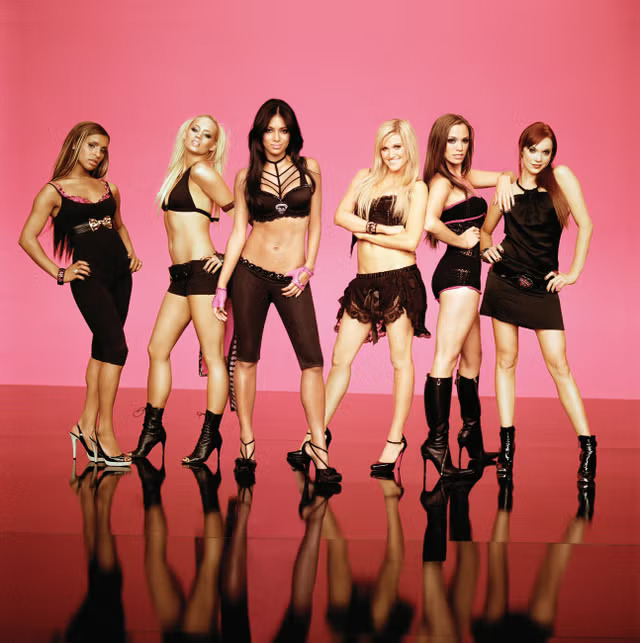
To start with the more personal point, I generally loathe vast swathes of what now constitutes female pop or, more particularly, girl group music – particularly in the twenty first century – the kind of hyper-sexualised gyrating that underpins artists as diverse as Girls Aloud and Destiny’s Child.  The former, along with the Pussycat Dolls, All Saints, Sugababes and many others, tend to represent a partially or wholly male-manufactured disco pop selling of sex.  They may or may not write some of their music, but the emphasis is still placed upon a particular dance-esque style of presenting that has its roots in a lot of Motown groups and similar musical phenomena of the 1960s and then, perhaps more than anything or anyone else, Madonna.  Scantily clad, most of these artists drone on about how they fancy some bloke, don’t want the attention of some other bloke, or generally – to quote Kylie – can’t get blokes out of their heads.  Kylie, interestingly, is a little different.  Whilst sexy in a sort of coquettish way she is rarely fully “sexualised”, it’s too camp and too silly, attuned to the longevity of vaudeville in constructing femininity or, to put it another way and as once self-titled, she is a showgirl from her feathers to her kitten-esque heels.  Madonna, circa the 1980s, was a good deal more aggressive and much of her work at this stage was often confrontational of the male gaze.  Compare this with the imagery of the Pussycat Dolls twenty odd years later and the pornographic takes centre stage with slashed skirts, acres of flesh, and yes, those sky-high spikes for heels.  And that’s before you get to the lyrics of “Don’t Cha” wish your girlfriend was a slag like me.  My gross sexism here is intentional for what is illustrated here is just how far feminism in music has descended into what I would call a pit of neo-liberalism.  So, the argument goes that “I can act like a stripper in an appearance derived from pornography created by men for men but, because I chose to, it’s liberating.  And because I might still reject you when you come on to me, it’s empowering.”  The same muddle besets the likes of Dua Lipa whose songs critique male behaviour whilst she otherwise gyrates and presents in a highly sexualised way.  Also interesting to note here is that the prime consumers here are not straight men at all but either women following the same logic or gay men who’ve long since held up sexuality as liberation and the joys of clubbing.  There is nothing wrong with either, particularly when you are part of a marginalised group that has been oppressed for centuries, but there is something jarring when you are only doing what men wanted and constructed in the first place.

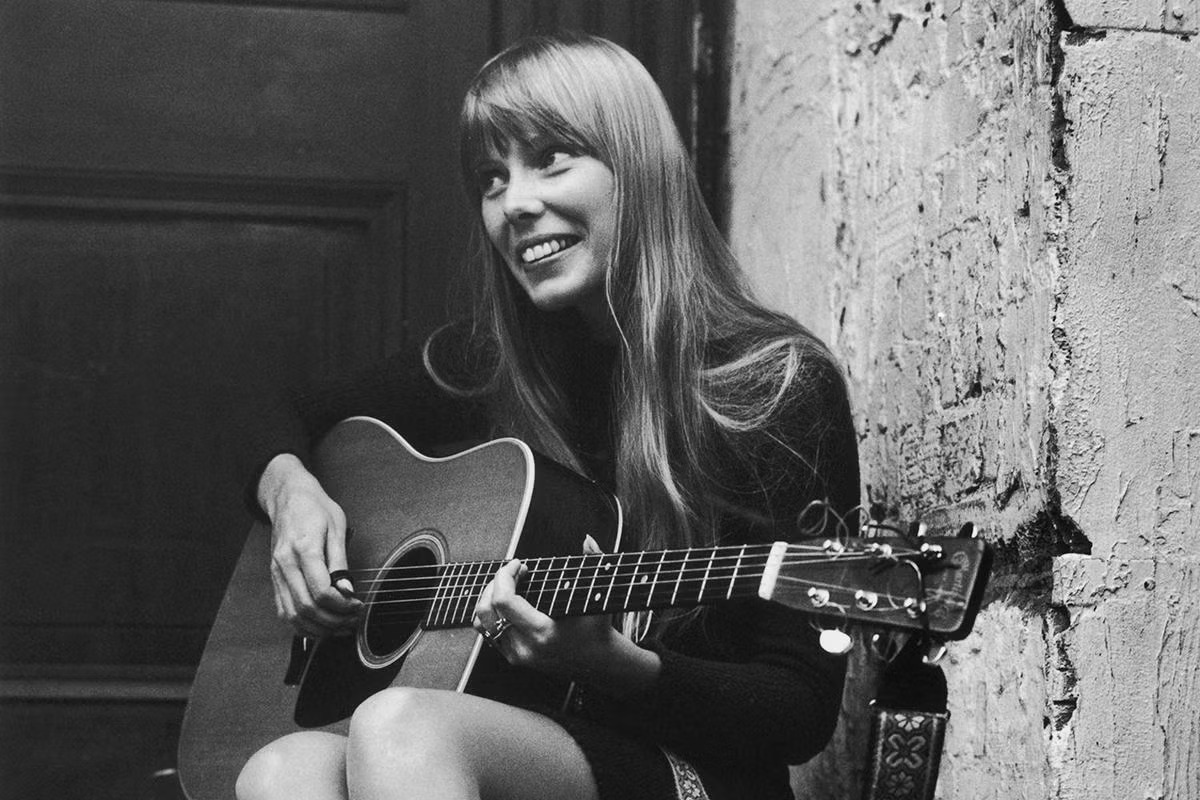
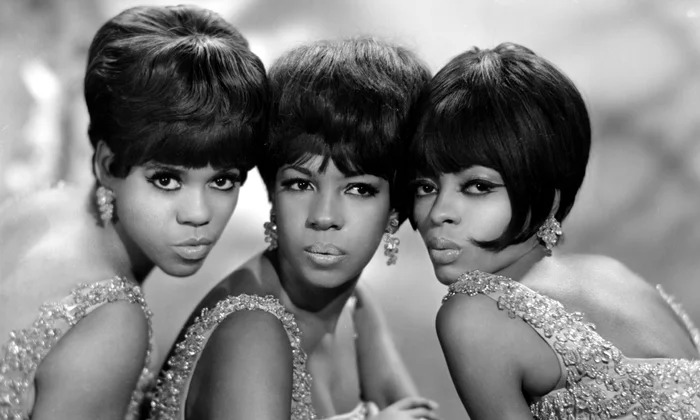
There is a history lesson in this.  As is well-known, the world of rock and pop – as well as classical and jazz forms of music – is primarily founded upon male writers, male producers, and male record company managers.  Women have historically tended to be slotted in here as – at best – singers and sometimes songwriters, particularly on the theme of civil rights (Nina Simone) or as front women for the American song book (cue the likes of Ella Fitzgerald and Billie Holiday).  The rise of Motown would do much to put women centre stage – particularly in the case of Diana Ross and the Supremes – whilst writing and controlling them from behind the scenes.  The folk movement was important in shifting attention more towards the female solo artist as a songwriter as well as a singer, particularly in the case of Carole King and Joni Mitchell, yet this was not normalised until the 1970s.  Women doing anything more than dancing and singing as subjects of the gaze remained marginalised until later still when a slew of female performers and writers across differing genres would emerge from Chrissie Hynde and Cyndi Lauper to Kate Bush and Annie Lennox.  Whilst the music they produced was diverse, the tendency to still position them as objects of the gaze and or to position their songwriting as somehow stereotypically feminine, would remain.  This has shifted remarkably in more recent years yet the very long and entrenched legacy of presenting, or perhaps more accurately pigeonholing, the female in music as the singer of personal pain, particularly in the form of the torch song of unrequited love, would remain.  Thus, whether you like “women’s music” has much to do with how you react to that genre.

To return to my more personal account, my admiration is for songwriters far more than singers.  Thus, the top gongs go to the likes of Kate Bush and Joni Mitchell plus others – these self-producing, self-writing, world of their own creating musicians for whom critical acclaim often came late.  Kate was five albums in before the majority took her seriously and Joni is still living down the “white goddess of folk” label to this day.  Their nearest male counterparts – David Bowie in the UK and Bob Dylan in the United States –conversely held godlike status for nearing half a century, despite the fact that neither had the musicality of their female counterparts – yet I will return to this more vocal issue later.

So, you might say, much of this is politics.  As a child of the 1970s and 1980s, versed in women’s liberation and later academically trained in sociology, I do not – however – fall for mere marketing.  Cue Beyonce.  Yes, she can sing and, dare you ever forget it, she is black and “fierce” and she even challenges the odd stereotype like country music is for white girls or deconstructs drum and bass, yet she does it whilst dressed in little or little that isn’t seriously “designer”, and sells everything from makeup to whisky in the name of her brand on the same website that sells her records.  So, one might conclude, she is a talented singer that undoubtedly writes and performs some banging tunes and is without doubt a businesswoman (bizarrely the term business person still does not catch on in this world of Apprentice type females for whom lip gloss and heels are key parts of their self-proclaiming success) yet this pivots, as with Taylor Swift, on a banding of egoism and branding that is as neo-liberally deluded as it is American.  In sum, the music is but a small part of it.

Interestingly, singer songwriters – even if female and even when the music does matter – do not always convince me either.  The 1970s onwards were littered with Mitchell-esque wannabes from Judie Tzuke to Tori Amos, and from Julia Fordham to Alanis Morrisette.  They have their moments and, in some cases, a startling start, yet the tendency of far too many to collapse into a solipsistic “me me me” of whining does not amuse me.  Even when it’s sometimes meant to be funny.  So, more recently, Self Esteem’s choral “feminism” never steps far from the zone of the self-centred in every sense and Chappell Roan and the like, whilst edgy, are just – well, not quite edgy enough.  Commodity feminism looms here on all levels.  Hence Taylor Swift has made a billion out of talking about herself.  At enormous length.  Thus, the ones that don’t impress the most.  St Vincent shifts gear with every record and plays a mean electric guitar so, again, it rises above mere ego, and no-one really knows quite who Annie Clark is at all – it’s a persona all the way so when she dresses up in PVC like a sex doll and performs songs about sex and seduction, it’s not actually her rather some kind of dramatic irony.  Similarly, Joan Armatrading has always done a lot more than tell tales of hurt whilst strumming a guitar.

Yet, to get back to the point, as is well known, many a gay man (and I am one, sort of) loves a diva yet for me bellowing to the back of the hall in a glittering gown does not cut the mustard much either.  Whilst some are distinctive, Diana Ross and Dusty Springfield particularly, far too many are relics of that bygone age for me where men wrote the songs that women sing and most of that boiled down to bewailing being dumped or perhaps on the dig for gold.  Eartha Kitt’s Black-and-Decker purr was a case in point or Nancy Sinatra’s similarly feline perfection.  I will admit I did like that a lot more; it was fun.  North America again looms large here whether in the form of the original gospel hollerers Aretha Franklin and Whitney Houston or other ear wigglers like Celine Dion, admittedly French Canadian, or Mariah Carey.  Yet torch song touting in the twenty first century – this time in the form of something nearer to a self-confessional – would return in the form of Adele, a one trick pony if ever there was one.  Thank the lord for the Vegas funeral pyre to which most of these aural assaults end up.  I am not keen.

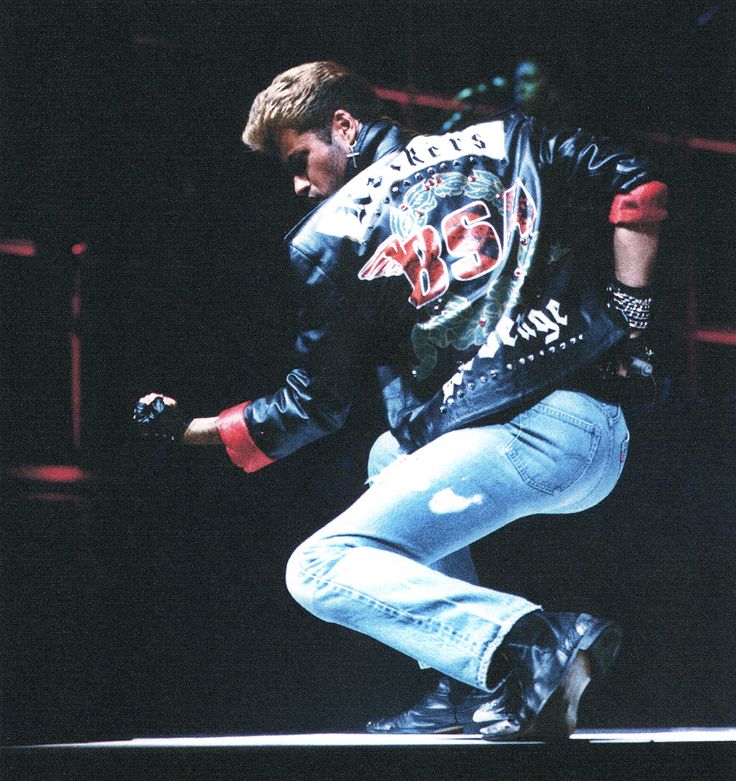
It should be clear by now what I do not like which begs the question why I like what I do like.  And, in particular perhaps, the role of the voice.  I have always liked a high note and, as a male of the species where one mostly loses the ability to hit them, that also becomes a source of admiration in itself.  Of course, some males hit a high note too in falsetto – Russell Allen Thompkins Jr of the Stylistics was fantastic at it, and then there was Jimmy Somerville, and now we have the wonderful Jakub Josef Orlinski, a counter tenor who could near match the castrati and an interdisciplinary genre busting breakdancer to boot.  Darren Hayes, of Savage Garden fame, is another who can hit a high note.  Even more extraordinarily, Venezuelan Samule Mañero is a soprano, a male one, though he does don the odd dress.  Singing styles and voices are a deeply acquired taste – my dad complained that most female ululating top c hitters hurt his ears whilst others like growlers.  Interestingly, I like the whisky and coke gravel of Stevie Nicks (also a songwriter not just singer) or indeed Kelly Jones (again songwriter as well as singer of Stereophonics) or Richard Marx (both male!).  And yes, and so, I do like some men, with a passion.  The two most notable being George Michael (another tenor from heaven) whom I was both in love with and lusted after relentlessly and Peter Gabriel, the only true rival to the crown of Kate Bush.  His third and fourth albums are widely regard as two of the most groundbreaking of all time.  Another Michael, namely Bublé, can also “buble bath me” (to quote Jack Whitehall on the Graham Norton Show) anytime.  George Michael and Jimmy Somerville do of course also stand for a form of unashamed gay politics which – to be consistent with my views on the women – I champion more than the whining of Will Young and Rufus Wainwright.  So, interestingly, whiners whether male or female do not do it for me.

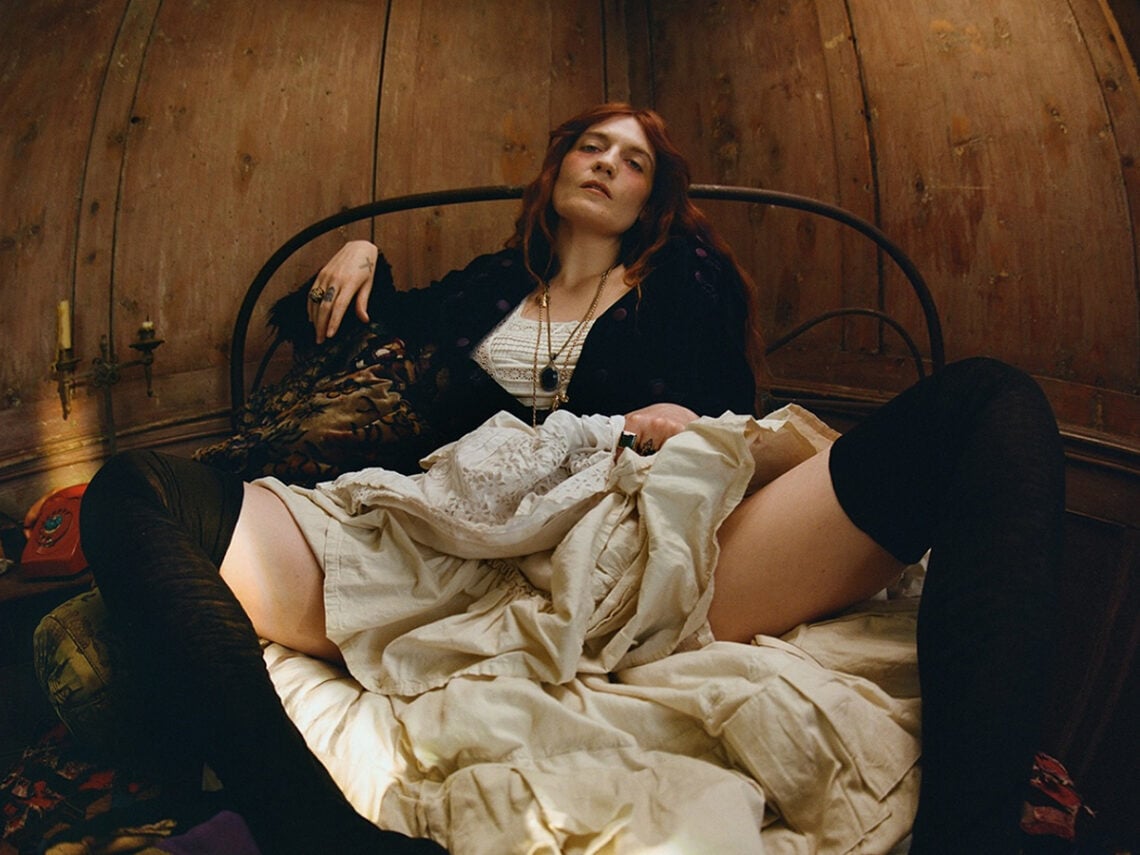
Yet perhaps there is a note to be wrote on the sound too.  Several friends I have chatted to on this matter have said they do not find the female voice so pleasant.  It perhaps lacks the same gravitas or power.  For a heterosexual female listener this might also become a source of attraction (hence my mother’s playing to death of Neil Diamond) whilst heterosexual males do not seem to get into female voices unless, perhaps, they are either male level powerful or sound orgasmic.  However, I wonder if this is purely an aural concern.  I have the lingering sense here that the female sounding is simply not taken so seriously for it sounds feminine and, as all we good feminists and sociologists know, the feminine is seen as weak and degrading.  A linking factor here is that women of more feminist conviction may also find displays of the feminine rather grating.  Yet equally this expression of “what it feels like for a girl” may become admirable and more so for its connection to suffering.  Whether womankind simply suffers more than mankind is perhaps open to debate, but it’s rather as if the female listener is sometimes less inclined to be reminded of all that than the gay male for many gay men finds the howl of female angst arresting.  Many women artists now also do far more than wail in pain – US R’n’B has long been “sassy”, others observe or have punk-like overtones, and some – like Florence Welch – have enormous charisma, and indeed power.

The issue of sexuality also plays its part here for whilst some woman may not like listening to female whining, the heterosexual male appears positively suspicious if he does – like effeminacy, it raises questions about his masculinity.  Hence, women singers may or may not be liked by other women, will rarely be the number one choice of men, and only a minority – gay men – tend to have a stronger affinity with them whereas conversely the men don’t cause problems for the straight men, are admired by some women, and fancied by some gay men so often times it’s a bit of a win-win for the men and not the women.  What this in turn raises is a wider question of marketing.  To return to where I started, women and men tend, not exclusively, to produce different kinds of music.  Softer, folksier and generally more emotionally intimate music – and more simply “pop” – has been the preserve of females whilst males, though sometimes dipping their toes in these areas, have historically had a wider repertoire including more that is aggressive, political, and hard as the word “rock” connotes.  There are of course crossovers, yet the exception tends to prove the rule in the case of punk females or the more confessional worlds of some men.  The question of whether women and men necessarily want to produce such music is perhaps open to question – rather that is what they will get record contracts to produce, so that is what you will hear, and what will be distributed more widely.

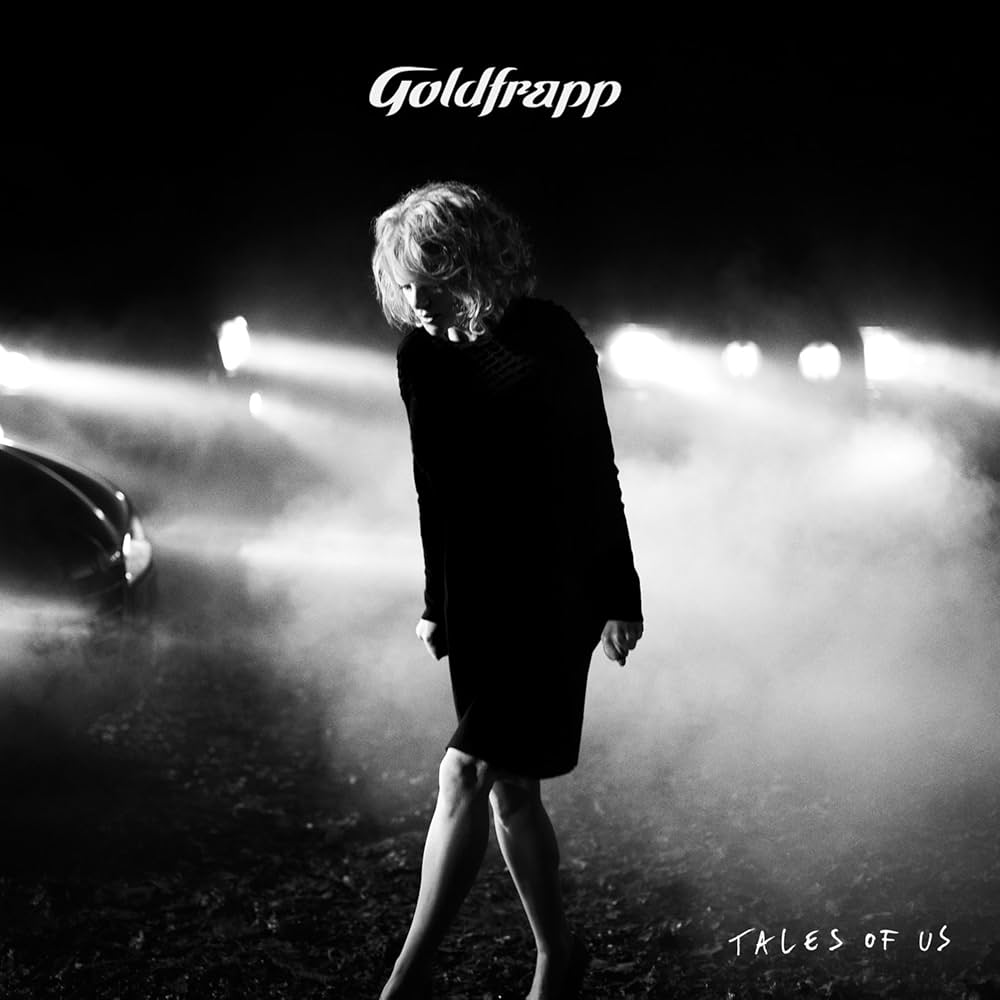
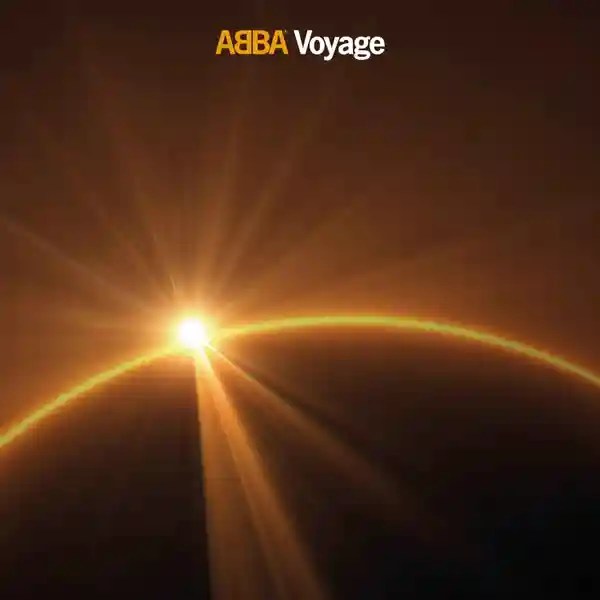
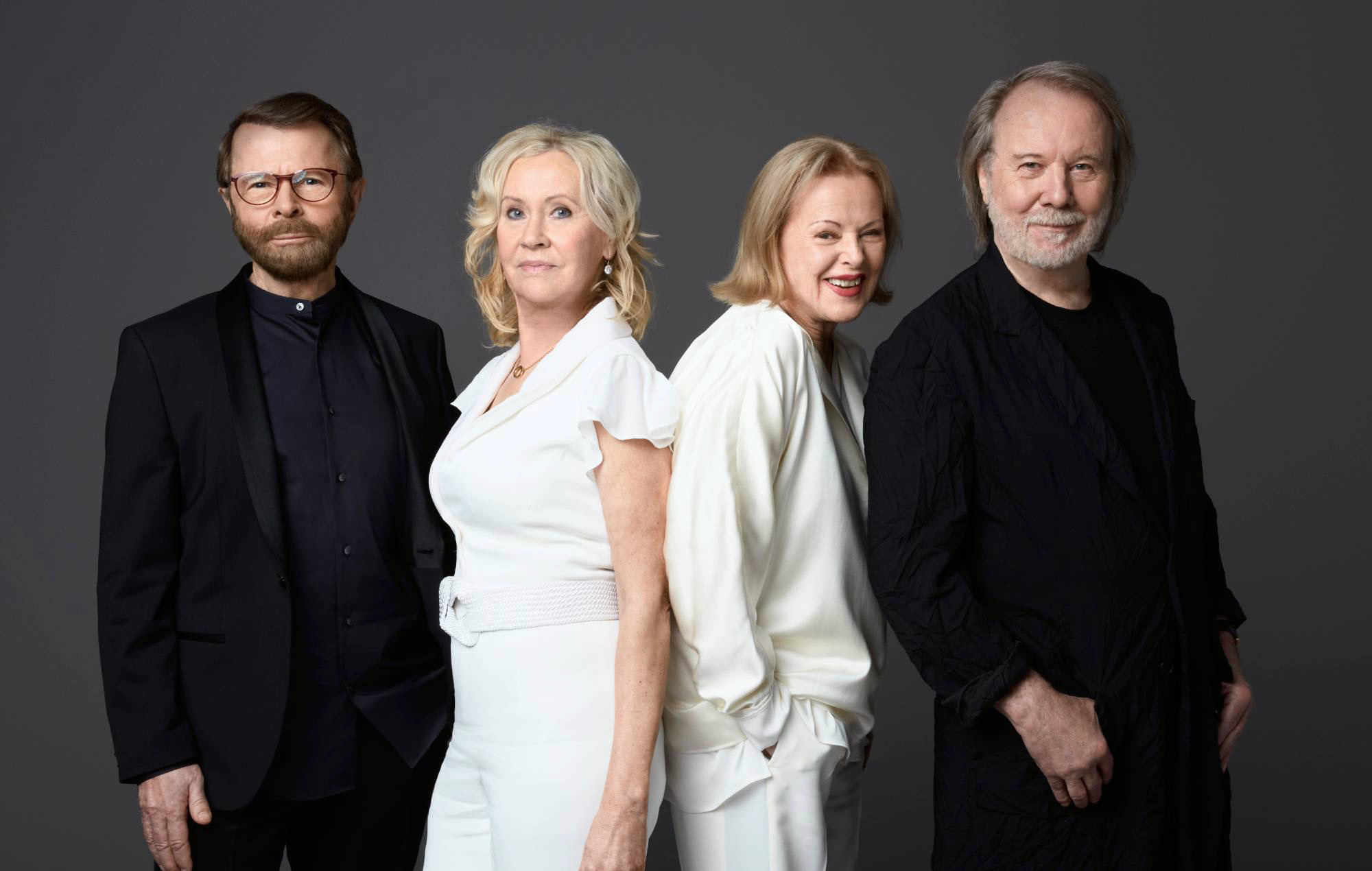
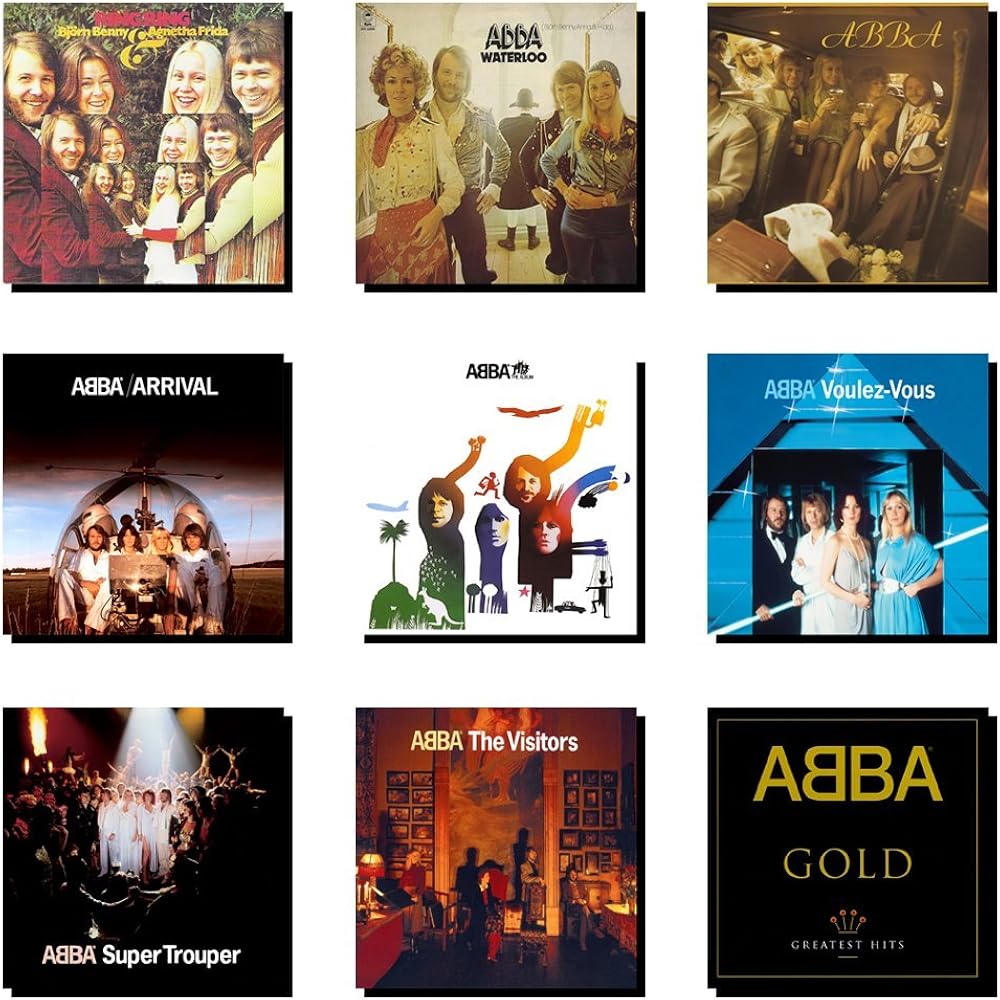
None of this explains, necessarily, why person x likes y and person a likes b, though part of being a teenager is avoiding ridicule.  As I was a teenager in the 70s and 80s, I have never forgotten how lads, particularly in groups, would routinely castigate anything and everything perceived as sissy, soft, or – more simply – feminine.  Part of the derision that underpinned Abba’s career, until they had the last laugh, was that it sounded – and was – a good deal more feminine than its new wave, punk, or even new romantic and electronic pop contemporaries.  That said, I guess I also need to somehow try to explain why I find (some) women’s music so appealing.  Some of my favourite albums are indeed by women.  What I am less sure of is whether their woman-ness is why.  They include Kate Bush’s Aerial.  I have never to this day forgotten going out in 1978 to get The Kick Inside on vinyl, putting it on my parents’ record player and within minutes finding myself tumbling down some kind of Alice in Wonderland rabbit hole never to escape in nearing fifty years – the sheer weirdness of it, the way her music envelops you, these worlds she create – yes, part of this is very female, not least her voice but it’s the creativity of it, its completeness as a mode of expression, and on occasion at least, the cleverness of it.  Who else thinks up songs about Hitler’s sex appeal, the plight of a foetus in a nuclear war, or indeed expresses grief through an account of doing the laundry.  Aerial took the domestic and the mundane and made it a profound exploration of both loss and an affirmation of life.  In observing something as basic as bird song.  She is, was, and always will be – a total one off – able to invent what you could not think up or to make the ordinary utterly extraordinary through lyrics, music, production, and performance.  That is not defined by her femaleness.  As previously mentioned, Gabriel at his best is similar but there are very few men who get anywhere near it not because they are men but because well, they just don’t.  Another is Joni Mitchell’s The Hissing of Summer Lawns.  What I heard back then, and now, is again an extraordinary ability to conjure something up that, in particular, expressed the complexities of humanness from the self-destructiveness of drugs or social climbing through to the realms of spirituality and wonderment.  The complexities of Californian life are rendered dystopian and cinematic.  Once more I am not sure what her femaleness has to do with it – it’s rather an anti-women record in parts – yet perhaps it requires a slithering in and out of vulnerability that males tend to find harder to do.  I don’t know.  What appeals is partly that cinematic quality and I’ve a strong love of film.  This underpins another choice, Goldfrapp’s Tales of Us.  Here femaleness does play a strong part – Alison’s breathy, evocative vocalising to the point where the words themselves near disappear lends itself once again to the creation of whole emotional worlds – the characters, drawn from literature and film are one way or another in turmoil and torment.  Yet, the twist – a female one – is that this is not mostly expressed in ways that are violent or aggressive, rather strange and quite extraordinarily beautiful.  And the other half of Goldfrapp is of course a man, Will Gregory.

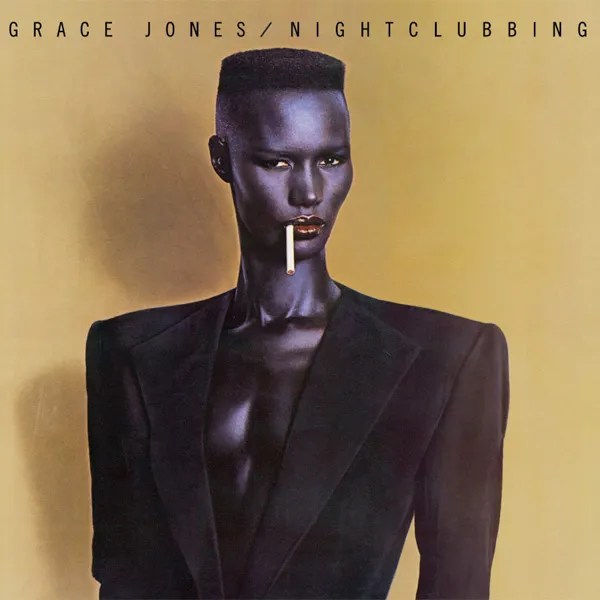
So, what we have here is a repetition of themes around emotionality, strangeness, and the cinematic.  I also rate Gabriel’s third and fourth albums, for their sheer drama – indeed downright scariness – as mentioned before.  Similar themes underpin the superbly dark qualities of Massive Attack’s Mezzanine.  My prog rock seventies leanings also play into my love of Pink Floyd’s Dark Side of the Moon, surely the template for the concept album ever since.  George’s Michael’s mid-career confessionals and soulful dance music, as well as the well-known highpoints of Bryan Ferry’s career, both touched me deeply.  Meantime, the staggering Grace Jones is about as un-feminine as a woman can get.  Thus, all in all, I am not sure this is about gender at all, rather genre – I like songwriters, world creators, the emotionally communicative, the danceable and the melodic – that criterion is occasionally met by the all-male band but not often.

From which another angle is my upbringing, by which I mean both parents and peer group.  My mother was entranced by the ‘sixties revolution.  My father was not.  He stuck to the easy listening.  So, my mother listened to much from Beatles to Baez.  So, there is some synchronicity of my tastes and hers – particularly around the Joni Mitchells – though I would end up going way, way wider.  On the other side of this, was school, the 1970s and the punk era that mutated into new wave.  I was confused and isolated, mostly due to a mix of my upbringing and my burgeoning non-heteronormative sexuality.  I found far too much of the punk/new wave era too displaying of an aggressive masculinity to which I could not relate or felt was threatening to the likes of me.  Given my parenting from a powerful mother and a rather ineffectual father it was less that I was my mother’s sponge and more that I had no hope, and no desire, to play at knickers and tits talking masculine.  So, I stayed put with the feminine until other types of masculine music emerged like the ex-prog rock crowd and the new romantics who were sometimes rather girly anyway or, more simply, sexy without looking like they’d smash my teeth out for being gay.  And then, in 1984, the great crossover year of Bronski Beat and Frankie Goes To Hollywood had “cum”, so then you had actual gay male music writers while George Michael would just get better and better and sexier and sexier…

Yet perhaps I jest too much for there are more serious reasons why the music of (some) women at least gets under my skin.  Much of this, again centres on era and the music of the 1970s – I mean can anyone surpass the expression of sexual intoxication that say Kiki Dee creates on Amoureuse, Elkie Brooks on Lilac Wine, or Diana Ross on Love Hangover?  And Carly Simon did rather prove that nobody did it better – she had always done sexy – and then we got the bittersweet of Coming Around Again too.  My point is that this heady mix of sensuality and the pleasures and pains of ecstasy is not a set of emotions that lend themselves so easily to (at least straight) male expression or what Kate once called “the thrill and the hurting” on her most “female” album The Sensual World.  They are of course emotions more commonly expressed by women and more personally also experienced by gay men – and as one in the 1980s caught on the endless rollercoasters of being in and out of love with man after man – this stuff resonated.  There’s an added twist here of camp – Kylie may have given it a more humorous edge, but others were doing it with serious flair.  Thus, the Pet Shop Boys who, in their heyday were masters of dry melancholy, ended up not so ironically working with the likes of both Liza Minelli and Dusty Springfield.  It’s a rich vein to tap into so, more recently, Lana Del Rey has welded it to Americana with a sense of the cinematic and David Lynch whilst Alison Goldfrapp would later explore all sorts of queer melancholy in all sorts of ways.

Or to turn the question around again why do I not like many of the male singing fraternity?  Well, one immediate problem is that they often sing about shagging women and I don’t want to listen to that.  Well, not usually, as Bryan Ferry’s ability to evoke cocktails and heels sexuality is spine tingling for me, as is Chris Isaak’s hurting never sounded so good Orbison-esque guitar-based howling.  There’s a clue here.  If not whining, I like melancholy in music.  It resonates.  Cue Max Richter.  Another male.  Yet generally women do it rather more than men in music – the agony of the dumpee is a primarily female preserve.  Agnetha Faltskog of Abba fame was, and is, fabulous at it as were, and are, many others from Connie Francis and The Supremes onwards and it helps a bit, or rather a lot, if you can literally sound like you are in pain when you do it – hence, can anyone ever really do Dusty, or indeed Kate, like they can and sound anywhere near right?  Hence Annie Lennox.  Interesting as both legatee of Dusty and gender bender extraordinaire – so, again, back to the politics – the Eurythmics video and album Savage is proof that drag is even better when women themselves do it. Similarly, much of this underpins the gay factor more widely – gay disco is half thumping testosterone driven drums and half hysterical female vocal.  Donna Summer has simply never been bettered.  To equal it you have to step sideways into the Lennox of disco, Grace Jones, where growling “feeling like a woman looking like a man” in contralto whilst wearing a suit makes Gaga sound – and indeed look – well, very ordinary.

The other blink and you’ll miss it, it’s so obvious you can’t see it, factor is I don’t like bands so much and, if not groups and groupies, they are basically men, most of the time at least.  There are women but they are the exception rather than the rule – hence the furore of the Spice Girls or current interest in The Last Dinner Party.  The ones I do like have women in them such Abba and Fleetwood Mac or more recently the extraordinary blending of male rock and female communication that is Wolf Alice.  Whilst I have had my phases of groupiedom and the exception can always prove the rule – I loved 10cc, early U2, The Smiths, and Ultravox – interestingly, many if not all of these have or had leading men I can relate to and these are not men who either a) trash guitars, sound aggressive, and drone on about women or b) pretend to be mob “political” in an industry that flagrantly co-opts any attempt to do so.  Roxy Music, I have explained via reference to Bryan Ferry, whilst others I like – such as the incredibly witty 10cc – don’t go on about shagging women.  The other aspect of the question seems to be marketing – men, the straight ones at least, seem to like other men – in groups.  The peculiarity here it seems to me is that (straight) men seem to need to engage in some strange male bonding exercise for what is so great about all these “bands”?  True, the Beatles and the Beach Boys did have much to do with the creation of pop (that then got perfected by Abba), Bob Marley and his Wailers popularised reggae (to a mind-numbing degree for anyone who has ever been to university in the 1980s), and the Rolling Stones foreran the rebel factor for all yet have been largely irrelevant for decades.  Heavy metal seems to be male bonding with added brain disengagement or it becomes amusingly self-parodic as in the case of Rammstein.  So, what’s the fuss about?  To which one might say the reason the derivative Oasis were on every magazine cover in sight in the 1990s and made headline news when their fans (no-one else’s it seems matters) could not get tickets or were charged extortionate amounts.  I seem to recall Taylor Swift concerts were rather pricy too but that did not make headline news other than for lengths people would go to see her and how dare she be a billionaire.

All of which brings me on to my finale – namely, the question itself.  WTF shouldn’t I, my cat, the dog next door, or anyone, like or prefer female artists and perhaps the reason they don’t (or appear not to) is due to the fact that that same male bonding fraternity grows into male music journalists, male record company owners, and male producers and male distributors.  Same old, same old.  The woman, the female, let alone the feminine, is a second-class citizen to the juggernaut patriarch y of music production and music fandom.  Perhaps one should show more sympathy to the sexed up female group/ie of the twenty first century – if only it wasn’t such a patriarchal production in the first place.  I’ve recently been rediscovering Suzanne Vega – someone who can slice and dice New York City and does not sing high nor sound as if she is in pain yet who observes and serves up rhyming couplets with acuity – yet neither she, nor Kate nor Joni would stand much hope in the current climate of stream till death you do part world of music selling which, of course, is also run by men.  The list of best-selling music artists of the twentieth century and onwards is defined by two things – one, the United States (no surprise there); and two, it’s maleness.  Females creep in – most notably Madonna and some of those of marketing and or rap fame (no surprise for where any of this also comes) – and they are mostly singers and performers more than they are songwriters.  So, either people are just genetically disposed not to like women’s stuff very much at all or, well, you can work it out…

Of White Lotus and Deadly Nightshade

See No Evil, Hear No Evil, Speak No Evil

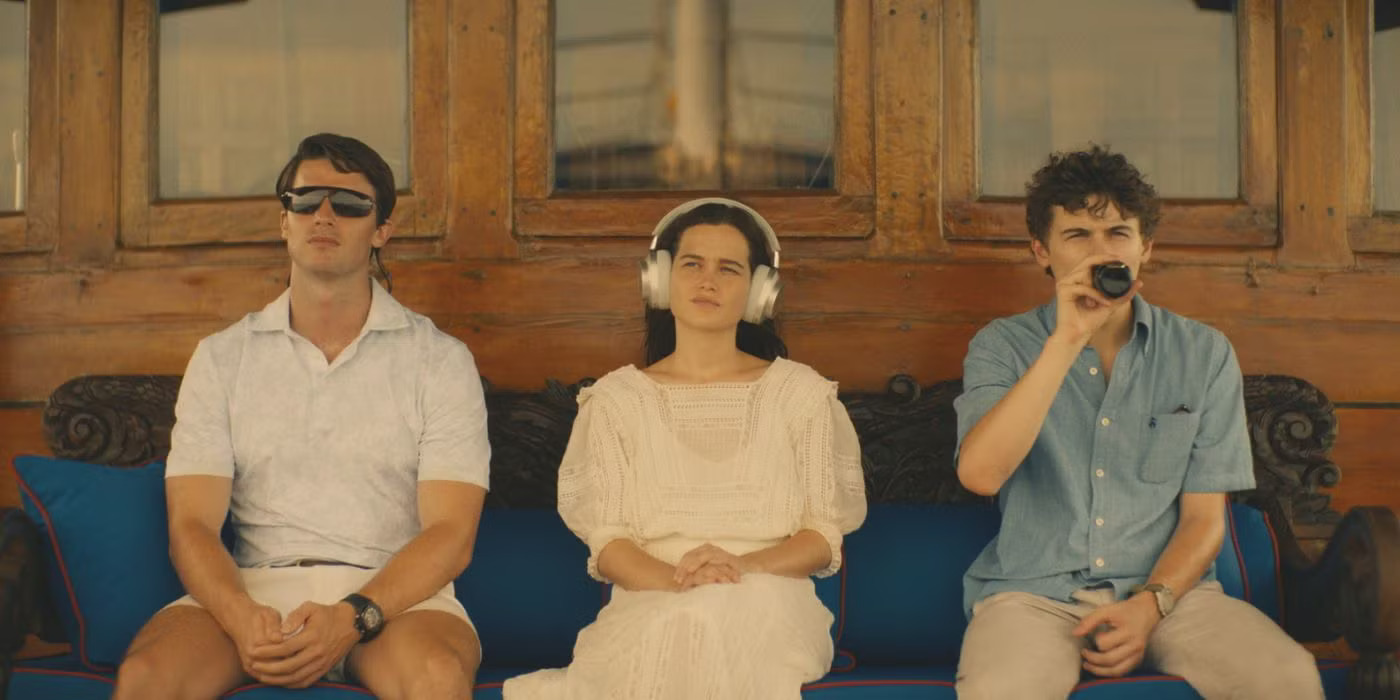
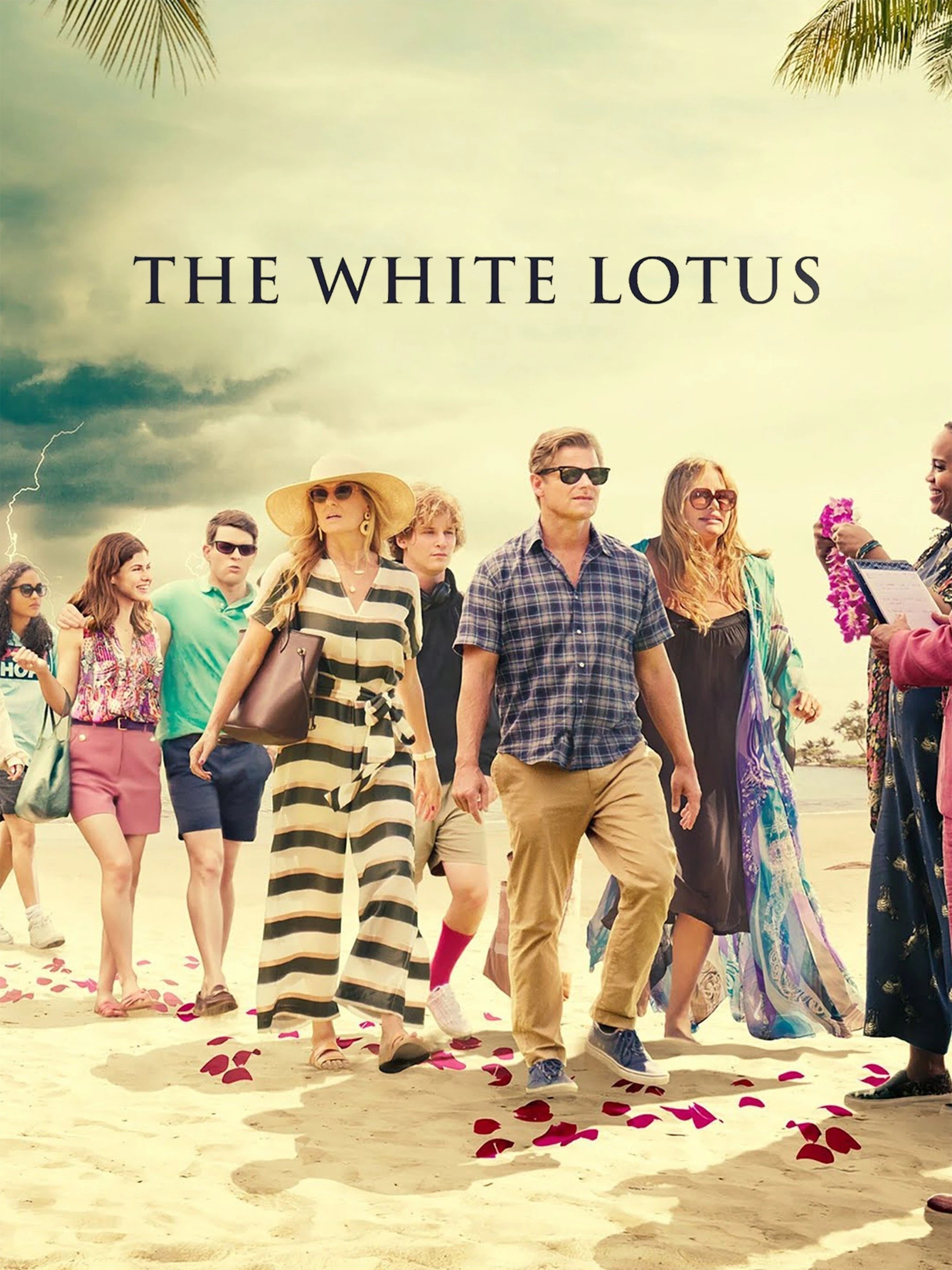
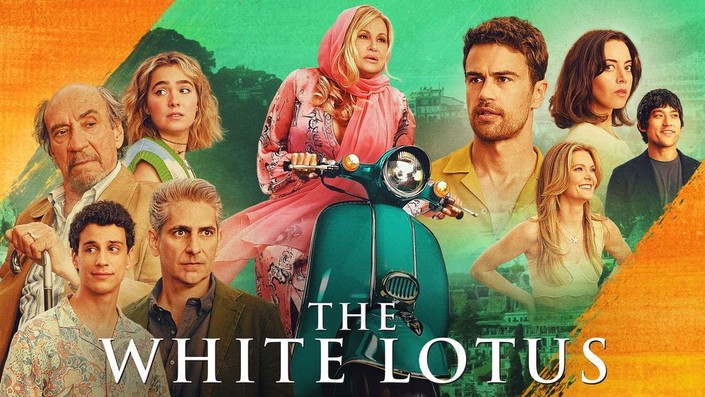
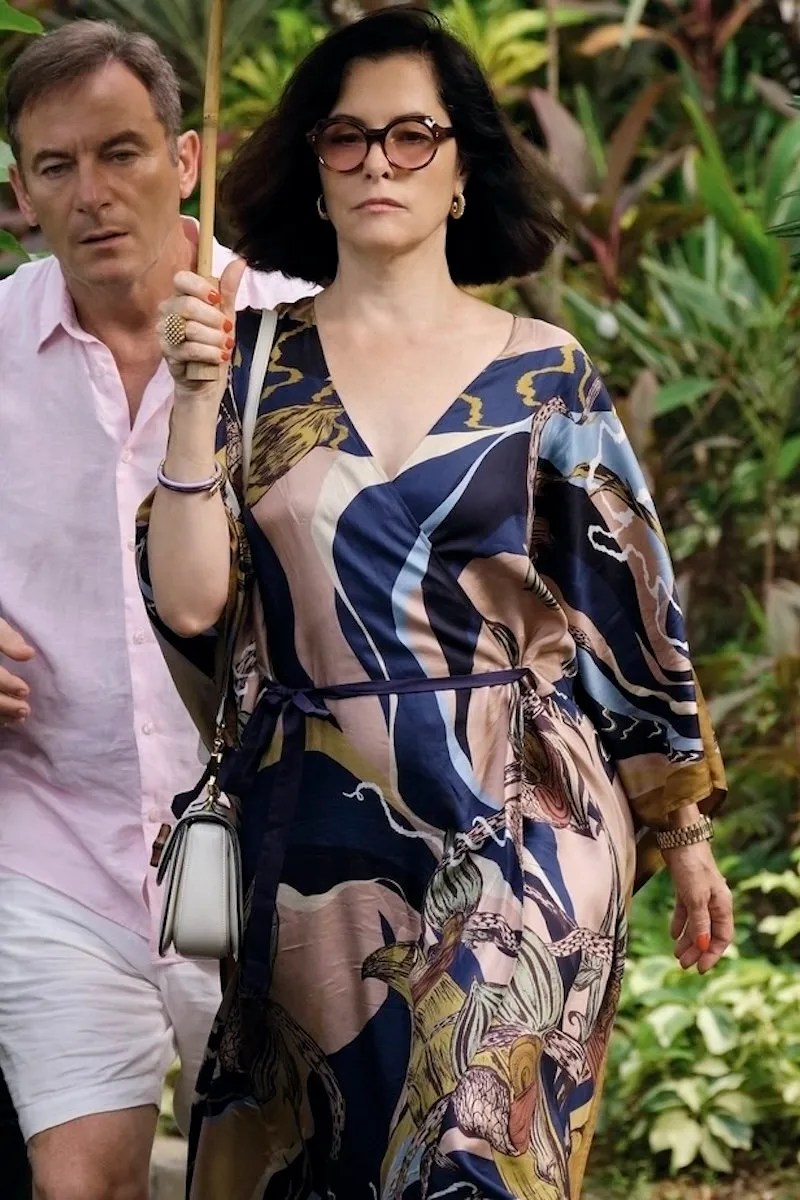
In case you have not noticed, The White Lotus is the multi-Emmy and Golden Globe award winning show launched on HBO (Home Box Office) in the US in 2021.  Now into its third season it has lost none of its momentum but rather gained in popularity and influence as a now record-breaking success for the channel, simultaneously broadcast outside of the US via Sky.  HBO is well known for its highly successful and influential “adult” dramas invoking much taboo, sexual and violent subject matter such as The Sopranos and Game of Thrones that, if it continues its run, The White Lotus perhaps looks set to eclipse.  It is the brainchild of Mike White, also known as a cinematographer, actor and occasional reality TV star, who writes, produces and directs the show in its entirety.  The show has received accolades for its writing, acting, and increasingly stratospheric production values and is praised as what one might loosely call its dark satire on particularly, yet not exclusively, North American forms of wealth and privilege. Its title plays upon the mythology of the lotus eaters who laze indulgently in a state of forgetfulness as well as its creator’s name.

Season One

It is interesting to question quite why it has had this impact and what, more exactly, sits at the core of its success.  I will suggest that this centres not on one rather a number of both thematic and episodic tropes and devices that entice the viewer and tap into wider cultural concerns.   These include its plot and narrative constructions; its cinematography; and its drilling of morality and ethical scruples through character driven psychological portrayals that centre most strongly on power and privilege, sex and sexuality, and death.

It is, on one simplistic level, a murder mystery thriller as each series opens with the death of a character (or characters) and then unfolds to eventually show not only who but rather how and why they die from a wider cast of holiday makers staying in luxury hotels.  The White Lotus itself refers to a chain of upmarket holiday residences in differing locations that change with each season so the first was set in Hawaii, the second in Sicily, and the third in Thailand.  Yet, interestingly, the series also scrambles conventional tropes of the murder mystery genre.  We do not know at the outset who has died, or even how many, who perpetrated the crime(s), or why, or even how.  It is not a whodunnit nor even a whydunit either rather a mix of all of these and, as some critics have pointed out, it is far too slow paced to work at this level alone.  The first series took up six near one-hour episodes, the second seven, and the third eight, the last of which was extended to ninety minutes.  In each case, at least half of the episodes are taken up with character building and, in the third, the climax is introduced in the penultimate episode, and then disrupted, only to return in the finale.  Thus, we think that Rick’s (Walton Goggins) “monkey is off his back” and Timothy’s (Jason Isaacs) suicidal killing spree is not happening, only to find that they reappear in differing forms with deadly consequences.

This disruptiveness is part of The White Lotus’s appeal; whilst infuriating for some, many more are kept on the edge of their seats.  Similarly, multitudes of plotlines are simply dropped or unresolved – how does Shane (Jake Lacy) get away with manslaughter in season one, just what is the connection between Greg/ary (Jon Gries) and a gang of gay hedonists in season two, and what will happen when Timothy’s family find out they’ve lost everything and he will likely end up in prison?  Minor story lines are often equally confused – does the truth of the robbery ever come to light in series one for the Mossbacher family beyond Olivia’s (Sydney Sweeney) suspicions, did Harper (Aubrey Plaza) have sex or just a snog with Cameron (Theo James) in season two, and who and what were the gunmen up to in series three as they were not the Russians?  These factors annoy some critics intensely and clearly have the potential to throw audiences off-track yet often keep more hooked for the following series.

Season Two

The show’s most complex plot straddles all series in fact – namely that of Greg’s seduction and, we presume, planned murder of Tanya.   She meets him in season one, they are married prior to season two, and in season three – following her death in season two – Greg (now Gary) collides with Belinda who was her masseuse in season one.  The fact that Greg (seasons one and two) Gary (season three) has turned up in all three seasons, and Tanya (Jennifer Coolidge) and Belinda (Natasha Rothwell) in two, adds to the sense in which it’s not all over when it seems over.  Moreover, the plotline here is extremely convoluted.  In season one, it appears Greg is unwell, yet this is never explained and is perhaps a ruse to get Tanya to marry him, whilst in season two he disappears early in the series to go on some kind of business trip but is overheard saying “she doesn’t suspect a thing” on the phone.  Tanya is then befriended by the openly gay but decidedly creepy Quentin (Tom Hollander) and his group of friends and cronies.  He takes her to the opera to see Madame Butterfly and arranges for her to have a lover for a night in his villa.  Her assistant Portia is meanwhile distracted – as part of the more murderous plot – by Jack to separate her from Tanya.  Tanya’s discovery of a gun and other paraphernalia on a yacht whilst on their return to the hotel confirms her suspicion that Greg is planning to do away with her as their prenuptial agreement means he will only inherit her fortune if she dies.  She then shoots and kills Quentin, as well as his cronies, yet falls to her death accidentally trying to get off the yacht onto a small boat that will take her to the harbour.   More obscurely, we are left to presume that Greg will now inherit her fortune and has “got away with it” in parallel to Shane in series one yet, in a further twist in season three, Belinda recognises Greg, now Gary, and becomes suspicious.  The now wealthy Greg attempts to silence her with money yet, in a twist that directly replicates season one in reverse, Belinda connives to attain more and rejects both the love and business proposition of her fellow masseur to pursue her fortune alone.  Preposterous as much of this is, it perhaps lends a feeling of reality to the fantastical show and its scenery.  Life rarely offers easy resolutions, a theme openly and directly expanded upon in the finale of season three, yet fans were left querying this final twist.  White appears to have felt the need to ameliorate the outcome that Greg may get away with murder and grants Belinda a cut of his success though, in so doing, her character has to perform a complete moral volte-face and reject a promising relationship. An underlying point, perhaps, is that wealth and privilege will turn even the most innocent. Yet it is perhaps White’s manipulation of the wider mise-en-scène that is key here, a theme I will return to later.

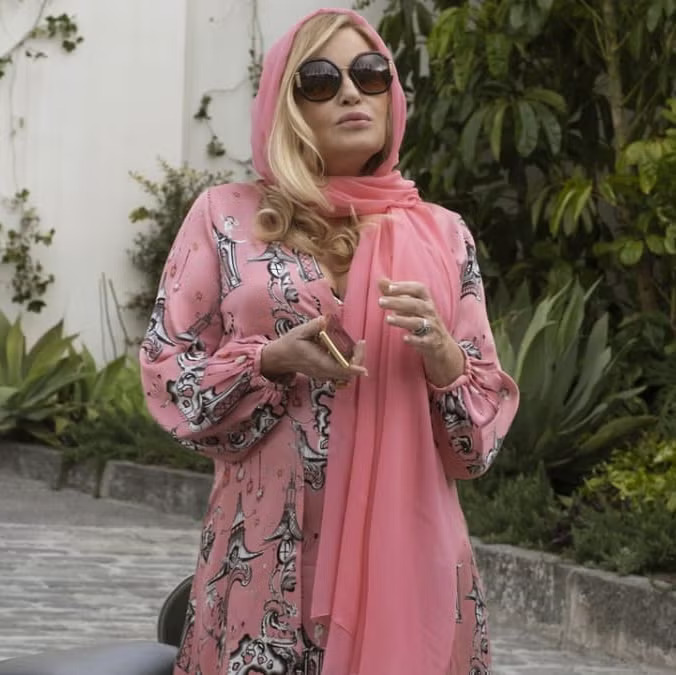
The White Lotus is also a show full of contrasts.  Far from being wholly serious, it is often highly, if rather darkly, humorous in places with various characters deployed to primarily comedic effect alongside wider satires on the peccadillos of the rich.  For example, the billionairess Tanya, who features in seasons one and two, is neurotic and self-obsessed, in one scene descending into a hysterical breakdown on a yacht that she has hired to scatter her mother’s ashes, much to the horror of her fellow travellers who are otherwise seeking a romantic dinner.  Similarly, in season three Victoria (Parker Posey) plays the wealthy yet prejudiced wife of a tycoon adopting an stylised Southern American accent to complain about “boat people” and “Buddhists” (pronounced boo-dist) explaining that the least one can do as someone highly privileged is to show the less fortunate that you enjoy it!

Season Three

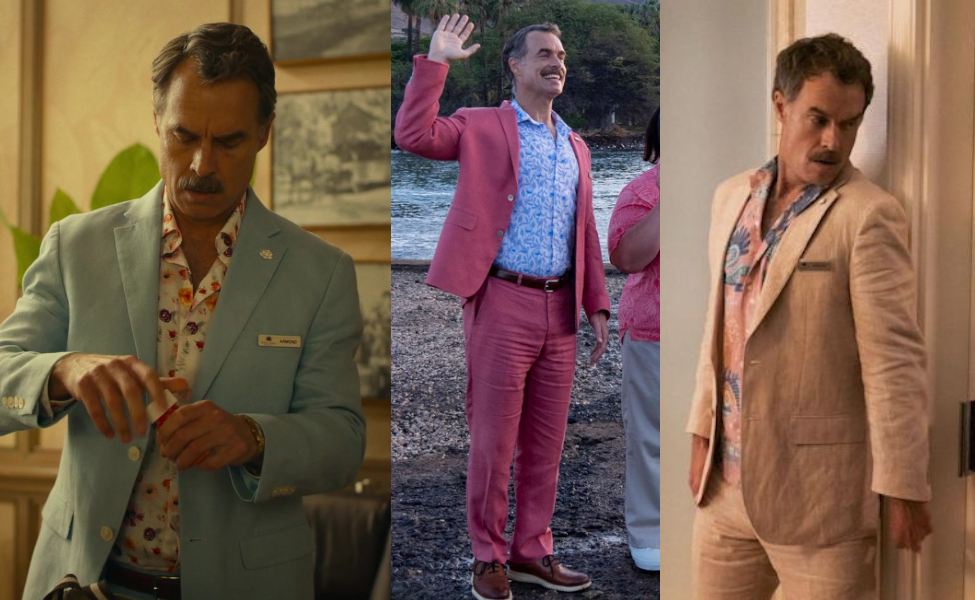
On the flip side, there is also much tragedy and unhappiness that emerges for almost every character.  Most major and some minor characters are explored in depth to reveal their hidden miseries and concerns from hotel managers – Armond (Murray Bartlett) in season one is a gay man recovering from drug and drink addictions whilst Valentina (Sabrina Impacciatore) in season two is a repressed lesbian – to their preposterously wealthy guests who worry about everything from testicular cancer to relationship problems and financial ruin.  Thus, there is a near relentless scrambling of genre going on where the audience is at once empathising with, yet equally horrified by, the characters presented who induce feelings of both fear and upset as well as ridicule.  Whilst most drama shows are keen to present characters who are complex and neither wholly good nor bad such contrasts in the show are often ratcheted up to a degree that is as unsettling as it is involving.  So, the audience is encouraged to sympathise with Armond as the pressured manager of oversized egos staying in his hotel whilst at the same time realising his self-destructive behaviours of stealing and drug taking are wrong – and, in relation to defecating in the suitcase, extremely funny – or to recoil in horror as Tanya’s egotistical demands increase yet empathise with her fragility and suffering.  This psychological “scrambling” has much to do with the show’s success.

The “Four-some” Season Two

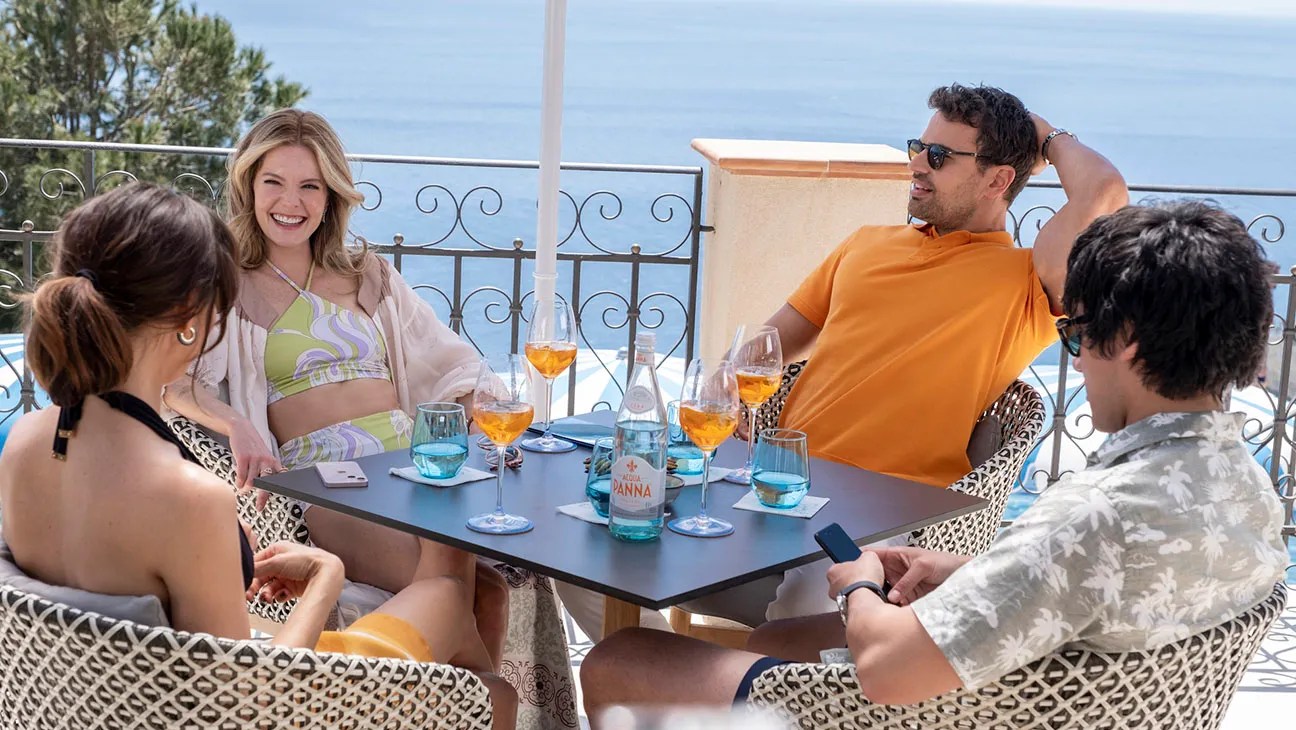
More significantly, plotlines here fling audiences around like a magnetised moral compass.  The foursome at the centre of season two, for example, invoke feelings of desire and disgust given their good looks and confused orientations – Cameron is arrogant and vain whereas his best buddy Ethan (Will Sharpe) appears guilt ridden and struggling with some kind of sexual impotence.  Underpinning this are themes of sexual jealousy and possessiveness that, even at the end, appear unresolved.  Will’s sudden amorousness towards Harper appears to follow a potential fling with Cameron’s wife Daphne (Meghan Fahy).   Similarly, even relatively minor characters are complex so that Jack (Leo Woodhall) swings from being a sexy Essex boy to a criminal with a background that alludes to him being groomed on the streets.  Similarly, the doe-eyed Mook (Lalisa Manobal) of season three turns out to be pushing her good natured and devoutly Buddhist boyfriend Gaitok (Thame Thapthinthong) towards aggression and killing.  It is this onion peeling of character and psychology that is so compelling, akin in kindness to the psychological thrillers of Hitchcock and Lynch yet is here framed within a TV series not film.

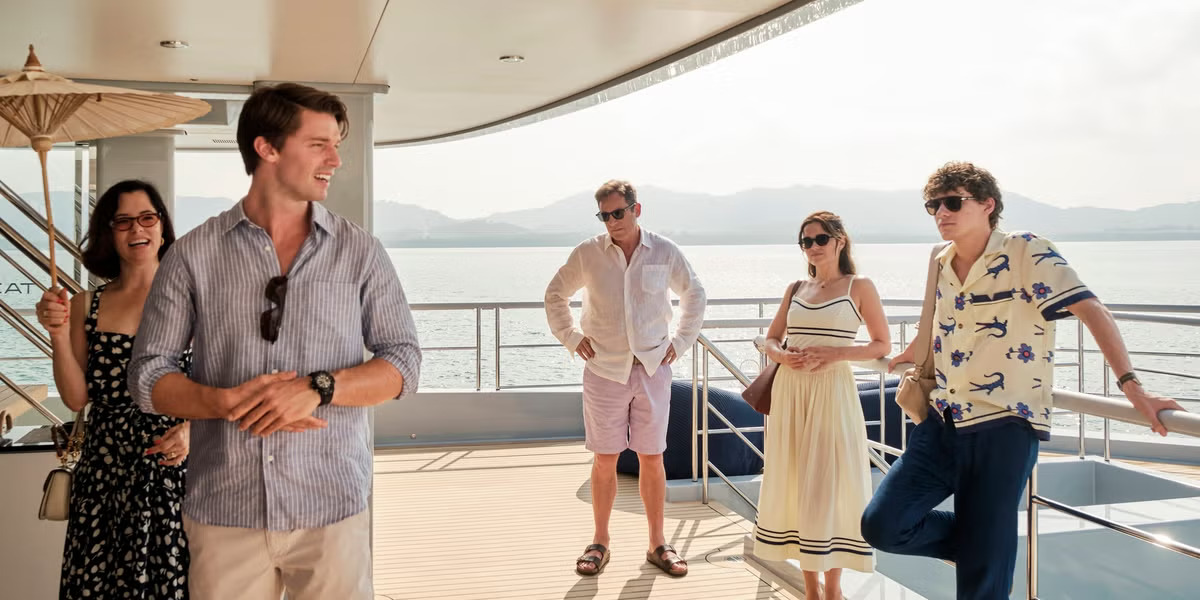
White is not averse here to the tricks of the reality TV genre, however, using sex in particular to titillate and draw in his audience.  Thus, in season one, Armond is caught cavorting – in fact rimming in full shot – one of his underlings in his office whilst the apparently heterosexual bad boy Woodall is caught buggering his boss Quentin, and all series feature one if not more (prosthetic or not) cocks on show.  What increases the amplitude here is that these are not necessarily minor characters or even throwaway plotlines rather Saxon (Patrick Schwarzenegger) in episode one of season three is watched desirously full frontal by his younger brother Lochlan (Sam Nivola) invoking themes that are not just incestuous but homosexual, a storyline that reaches its climax literally and figuratively during a drug-induced three-cum-foursome orgy mid-series, and this is a major part of Saxon’s unravelling.  Similarly, Cameron’s shorts dropping in front of Harper is the start of a plotline of “will they, won’t they” that becomes “did they, didn’t they” that dominates series two.   White’s own life history seems to play into this as both the son of a father who later came out as homosexual and as someone himself who is openly bi-or homosexual.  Perhaps more significantly, given the rise of conservative or even reactionary right-wing politics in the US, these shock style tactics also become jabs at the wider sexual hypocrisy that dominate parts at least of US culture.

As has already been stated, the series is primarily – if not exclusively – character driven.  There are interesting gender differences here, however.  Characters in any show are presented in three ways – first, through their appearance and dress; second through their actions and speech; and third, less directly through their interiority, silence, and expression.  For the most part, yet not totally, greater interiority is given to male characters – particularly in the more interior-focused season three – Timothy’s pain and suffering is a repeated trope shown on all levels including his recurrently horrified facial expressions.  This is a pattern repeated in his son Saxon who – in an ingenious piece of casting and playing by Patrick “son of terminator Arnie” Schwarzenegger – shifts from cocksure confidence to confusion and self-doubt.  By the same token, Gaitok is repeatedly presented through his “willing to please” smile that covers a multitude of internal terrors; whilst Rick is fully fleshed through his often-dishevelled appearance, perplexed expressions, and highly risk-taking actions.

Tanya (Jennifer Coolidge)
Victoria (Parker Posey)

By contrast, White has something of a fixation with making “rich bitches” the butt of his jokes.  This starts with the affectations and posing of both mother Nicole (Connie Britton) and daughter Olivia in season one and culminates in the figures of both Tanya in season two and Victoria in season three who become, in differing ways, resounding sources of humour whether for their childish howling (Tanya) or camp sneering (Victoria).  In fact, this sets up one of the difficulties of season three, namely that the three-character study of femaleness and friendship, only really comes together through Laurie’s (Carrie Coon) “at the table” speech (a near Emmy winning moment) in the final episode precisely due to this lack of interiority – the three of them are simply too indistinct.  In addition, White might be accused of setting up misogynistic stereotypes but his portrayals of both hotel manager Valentina and good time girls Lucia (Simona Tabasco) and Mia (Beatrice Grannò) as well as the suffering Portia (Haley LuRichardson) in season two offsets this let alone the tragedy of the kooky but immensely likeable Chelsea (Aimee Lou Wood) in season three.

Underpinning all of this is a recurrent theme – effectively and fully explored – of toxic masculinity starting with the utterly irredeemable Shane in season one.  He starts out by making unreasonable demands of the hotel and ends up murdering the hapless Armand whilst meantime consistently treating his new, young wife Rachel (Alexandra Daddadio) as a trophy for his mantelpiece.  More to the point, he gets away with all of it, including manslaughter, and his wife returns to him at the airport.  This is part and parcel of White’s scathing critique of privilege yet sets up a theme to which he will persistently return.  Cameron in season two is a good looking yet arrogant man on the make embroiled in competing with his best friend whilst, more significantly, the Di Grasso family are entirely composed of three generations of varying forms of masculinity – the “it’s natural” grandfather Bert (F Murray Abraham), the “recovering” sex addict father Dominic (Michael Imperioli), and the “guilt ridden” son Albie (Adam Di Marco).  Interestingly, none (quite) gets the girl.  The grandfather is too old, the father misses his wife and is desperate for her forgiveness, whilst his son is duped by a sympathetically portrayed, yet on-the-make, sex worker Lucia.  This moral complexity is played out in more depth in season three when the supposed archetype of successful masculinity (Timothy) unravels into a self-doubting and semi-suicidal mess that can do no more than appreciate the power of family by the end.  From here, his adoring son Saxon proclaims he is nothing without what his father has given him and gradually implodes in the wake of too much admiration from his younger brother Lochlan.  Thus, it would seem that – without invoking Donald Trump who is raised in conversation by the group of female friends – White concludes that the classic American ideal of masculinity is more simply a disaster waiting to happen.  Such tropes resonate strongly within and across contemporary culture and account for much of the show’s success.  Interestingly, alongside this, more than once White also invokes the figure of boyhood innocence in both season one when Quinn (Fred Hechinger) leaves his family to ride the waves and the whales with the other Hawaiian boat men and – in a moment of jaw wobbling emotion – Timothy, in tragically trying to spare the one “innocent” in his family, accidently near kills his son Lochlan then, in a further twist, saves him with a maternal style of love in a scene that has echoes of the Christian pieta in its presentation.  It is perhaps tempting to read this in terms of the over-cooked concept of “masculinity in crisis” yet there remains a strong sense of redemption in these story lines of finding nourishment in simpler ways of living.

Armand (Murray Bartlett)

As is becoming evident here and is otherwise well-known, The White Lotus shows are not merely entertainment or drama, but thematically multi-layered explorations of varying issues.  These both organise particular series and overlap across them.  For example, season one is dominated by themes of privilege and the struggles of the have nots (the hotel and other workers) in the face of haves’ immense wealth and power (the hotel guests).  If plotlines are taken to indicate “messages”, then the argument here is that privilege will always out – whether in terms of wealthy women who mislead their masseurs or money spinners who quite literally get away with murder.  Similarly, waiter Kai’s (Kekoa Scott Kekumano) failure to steal Nicole’s bracelet, in an attempt to reclaim a small part of Hawaii’s heritage from greedy colonialist hands, ends in disaster whilst Armond desperately tries to secure the hotel’s reputation yet is fired anyway.  What is thought-provoking here is that this could easily invoke frustration and fury for the audience yet the sense of moral complexity of both plot and character overtakes this.

Season two also interestingly inverts such outcomes as the workers, not the guests, are triumphant.  The good time girls Lucia and Mia get their money, Valentina is sexually liberated, and “rent boy” Jack carries on whilst the guests all end up fleeced, corrupted, confused, or dead.   At the centre of this is sex.  Sex in White’s narratives is a leveller, something that can render the powerful weak and the clear-headed confused.  At the centre of this in turn is identity – who exactly is zooming who?  These dark and murky themes ratchet up interest for audiences who attempt to morally evaluate what they see.

The parallel with reality TV is clear as already outlined yet what is more interesting here is White’s invoking of older and deeper, more literary – and indeed cinematic – explorations.  Ian McEwan’s novel The Comfort of Strangers (1981) explores the moral complexities of love and sex as a young couple find themselves victims of something more far more visceral in Venice.  Its more cinematic qualities were later developed as a film of the same name by Paul Schrader in 1990.   Whilst the psychological dramas of Hitchcock’s greats such as Psycho(1960) and Vertigo (1958) are easy reference points, another that underpins the third series in particular is Conrad’s turn of the twentieth century novella Heart of Darkness (1899), later the basis for Coppola’s critique of the Vietnam war in Apocalypse Now (1979), and resonant here.  An exploration of the hollowness and savagery at the heart of the civilised west is, in season three, juxtaposed with the ideas and teachings of Buddhism.  Whilst some characters are moved and confused – particularly Timothy, Saxon, and Lochlan – others such as Victoria are unmoved.  Similarly, those representing Buddhism itself do so in very mixed ways – Sritala (Lek Patravardi) is portrayed as an egoist screaming “kill him” at the end whilst Gaitok garners his promotion and gets his girl but at huge cost to his own moral compass.   Whilst some western characters become more sympathetic to Buddhism, Thai Mook for example echoes the western trope of the gold digging woman. Meanwhile, Suthichai Yoon as Luang Por Teera, a Buddhist monk, talks more sense than the rest of the cast put together.  The feeling here that all is far from well in the affluent west, materially and spiritually, is vast…

This thematic “goo” of morality, corruption, and redemption – in the wake of the hollowness of western extravagant consumption on lavish holidays – makes The White Lotus a rather religious show on more than one level.  Most of the major characters have lost, or are losing, their way as if to say that if organised faith fails in the wake of secularism, then other guidance is needed.  This is indeed a grandiose theme yet in a twenty first century dominated so far by wars, threats of terrorism, extreme greed and need, and day to day struggles to find meaning, it is one of immense redolence.   It is not surprising then that Laurie’s (Carrie Coon) paean to friendship in a long speech at dinner on how, aside from anything, we are all just on a journey with each other had most of its audience in tears.

The Ratliff Family, Season Three including Saxon (Patrick Schwarzegger) 2nd left and Lochlan (Sam Nivola) far right

All of this so far focuses on the show’s content, characters and plots.  A final key aspect to its success centres on how it looks and sounds.  Whilst the production values of many shows since the inception of pay for streaming TV globally have risen immensely, The White Lotus is perhaps in a stratospheric league of its own, only matched by that invested in the fantasy genre.  There are two factors at work here.  One is that the shows are all shot on location where they are narratively set and the hotels are real, using access to various Four Seasons Hotel locations.  On top of this, White adds his own cinematic skill in amplifying equally the visual “wow” factor and more symbolic imagery.  Hence the sea is real yet then overlaid with visual effect.  In season one, Hawaii is portrayed as a water surrounded oasis, the water itself and the canoes and ocean wildlife feature strongly both visually and as a plotline for the escape of the deeply dissatisfied Quinn from the utterly dysfunctional Mossbacher family.  In season two, Sicily sizzles visually as a stunning landscape for its characters yet White adds recurring motifs through his use of murals, artwork, ornamentation and decoration of Greco-Roman style mythology – frescoes, paintings, and Mount Etna all feature – to illustrate the risks the charters face.  The effect, as in the visit of Daphne and Harper to a luxury ancient villa or in Tanya’s stay at Quentin’s mansion in Palermo, is to increase anxiety – or the spooky factor – in the onlooker.  More particularly, it plays into White’s handling of the death of Tanya that, directly and indirectly, is intentionally “operatic”.  She is taken to the stunning Teatro Massimo in Palermo to watch perhaps the most “tragic” and “heroine” centred of all operas, Puccini’s Madame Butterfly.  Operas are well-known for their tragic heroines and contorted plotlines, and it is this, rather than any verisimilitude of “reality”, that explains the convolution of the show’s core story.  Similarly, yet more so, season three sees Thailand awash with monkeys, snakes and lizards as well as verdant trees and shrubbery that themselves seem almost alive in what is clearly intended as a semi-pantheistic invocation of humans lost in nature.  The settings and their presentation echo the themes of the show and the internal worlds of the characters – the monkeys that chatter and disrupt, the sexualisation of the scenery that offers both possibilities to hide and be seen, and the ocean that constantly threatens to drown all in uncontainable emotion.  White’s skill here is perhaps unparalleled.  For example, in one of the key scenes of series three, a monologue by Frank (Sam Rockwell), heard and watched aghast by Rick, on the confusion of desire and identity of wishing to actually “be” a Thai girl fucked by his more masculine self, is set in a bar awash with glassy golden yellow walls and blurred shadow imagery that alludes to both problems of alcoholism and the moral ambiguity, if not even collapse, of the characters involved.  The scene was overly simplistically interpreted an exploration of Blanchard’s controversial conceptualisation of autogynephilic transsexualism yet is more accurately a study of the breakdown of Western identity in the face of challenges from more Eastern traditions and practices.  All shows in the series, as a matter of course, employ a more cinematic level of mise-en-scène with, for example, hotel décor echoing artwork used in the opening credits alongside a wider, hefty use of nature-based symbolism throughout.

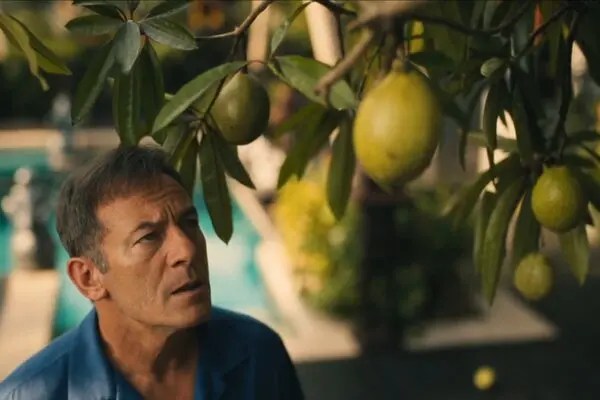
Timothy (Jason Isaacs) and “Pong Pong” Fruit

A similar statement may be made about White’s use of music in the show.  Working with long-time collaborator and musician Cristóbal Tapia de Veer, they come up with both theme tunes and sound effects playing on those theme tunes that play a large part in upping the “creepiness” and tension of many scenes.  Season two is littered with the use of classically Italian love songs – for example, Dean Martin’s That’s Amore sung at one point by Mia at the piano – yet Cristobal is Chilean Canadian and draws on a perplexing mix of both South American rhythmic and downright weird sound effects that often echo nature, animals, rhythms and disturbances.  In season two they are routinely paired with the imagery of mythology, art, and Italian frescoes to somewhat operatic “screaming” effect on occasion; whilst in season three, the music – prominent to the point of intrusiveness perhaps – adds to key scenes of character interiority and plot.  The repetitive and weirdly “breathy” refrain that is used in season three repeatedly occurs when risks of death are invoked, for example, in Timothy’s “not so pina colada” shake-making and delivering.  Whilst music is commonly used in TV shows, the level at which it is pitched here is more cinematic – akin to key scores such as say the use of Michel LeGrand’s piano in juxtaposition with imagery of deadly nightshade in Losey’s seventies classic The Go-Between (1971). Such a parallel in technique is not unfounded for the image and substance of the white lotus is constantly juxtaposed literally and symbolically with that of belladonna or deadly nightshade (even to the point of Timothy’s use of the cerbera odollam or “pong pong” fruit in season three).  Whilst the white lotus flower often represents spirituality, purity and transformation or reincarnation, belladonna symbolises not only literal death but desire, self-destruction, and implosion.  It is difficult to conceive of a more potent juxtaposition of imagery that, together with its complex plotting and character development, stirring of contemporary morals and profound thematic concerns, makes The White Lotus unmissable and resonant TV.

White Lotus
Belladonna (Deadly Nightshade)

In Black And White: On The Problems of Cultural Appropriation

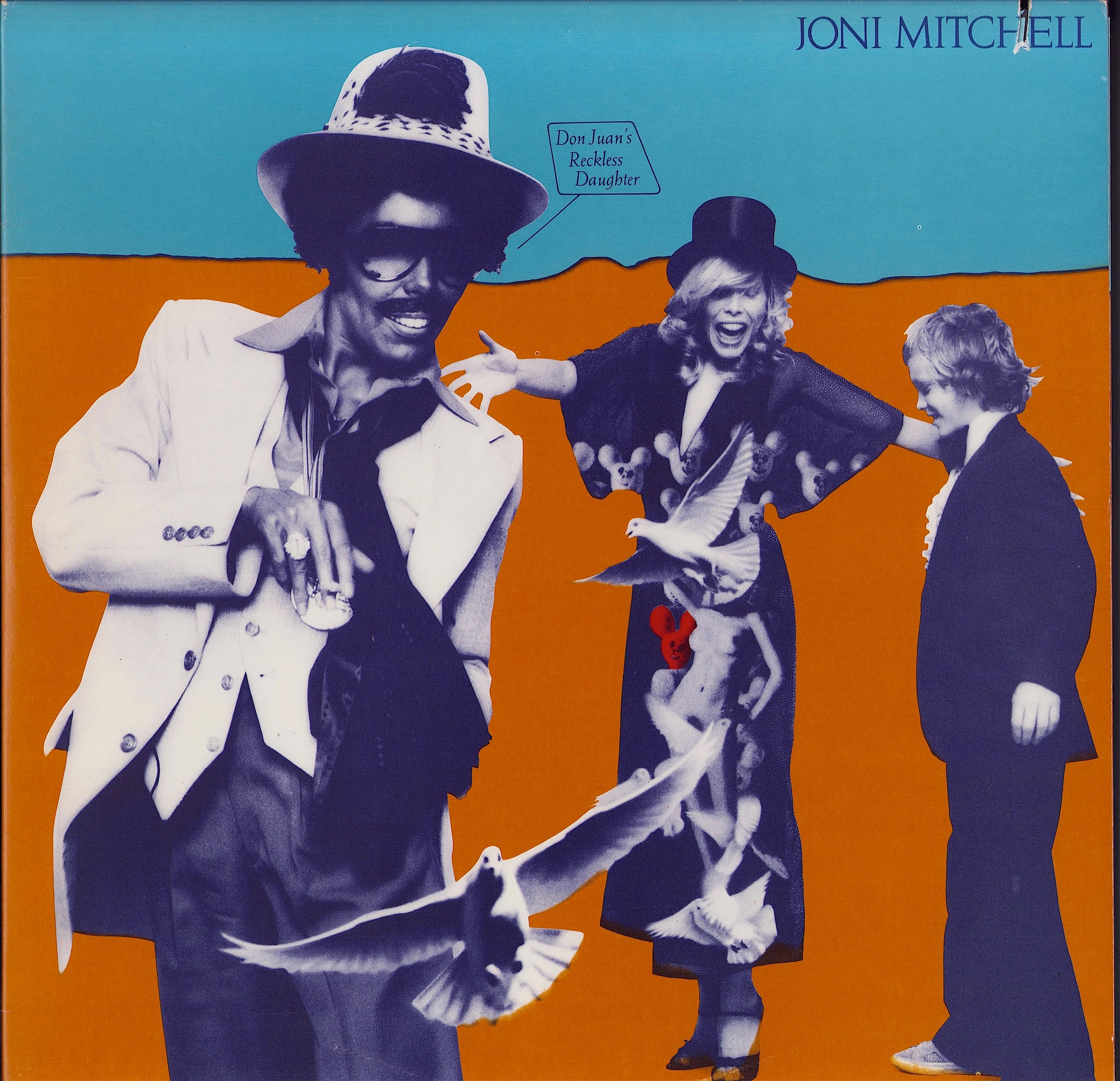
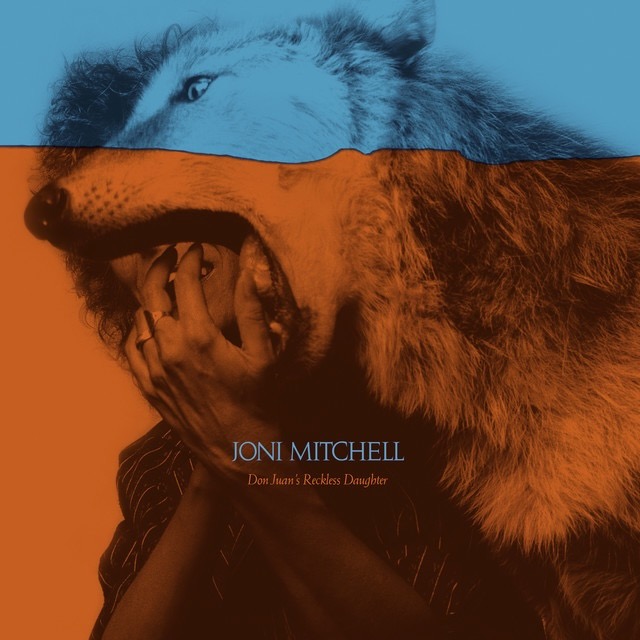
In late 1977, I was fourteen years old and still viewed Joni Mitchell through the lens of my mother who – like millions of others – extolled the virtues of her album Blue and her wider early “folk” period.  In 1978, I would plunge headlong into a love of her music – all of it – and extol myself the virtues of her much vaulted “mid – period” where, in another hopeless appropriation of a category, many accused her of getting “too jazzy”.  Mitchell’s music in many ways defies all categories, past and present, yet appropriation is a theme that now once again seems to stick.  The case in question is the re-release and remastering (cue my excitement) of her so-called “mid – period” that started with a boxset containing Court & Spark and The Hissing of Summer Lawns, two of her most applauded albums (at least now – the latter was much maligned at the time) sounding stunning at the hands of Bernie Grundman.  And now a second boxset including what is widely regarded as perhaps her last true masterpiece, Hejira, plus Mingus, the live set Shadows & Light, and indeed Don Juan’s Reckless Daughter itself originally released late in 1977.  The records are to be released in boxset form in multiple formats and in the exact same presentation as before bar one, namely Don Juan.  On looking at the promotional materials I was surprised to realise that the cover for this record is now unrecognisable in comparison with its predecessor.  Whilst I had heard the odd rumbling, I remained bewildered quite as to why.  The answer centres on appropriation, cultural appropriation that is, of racialised imagery.

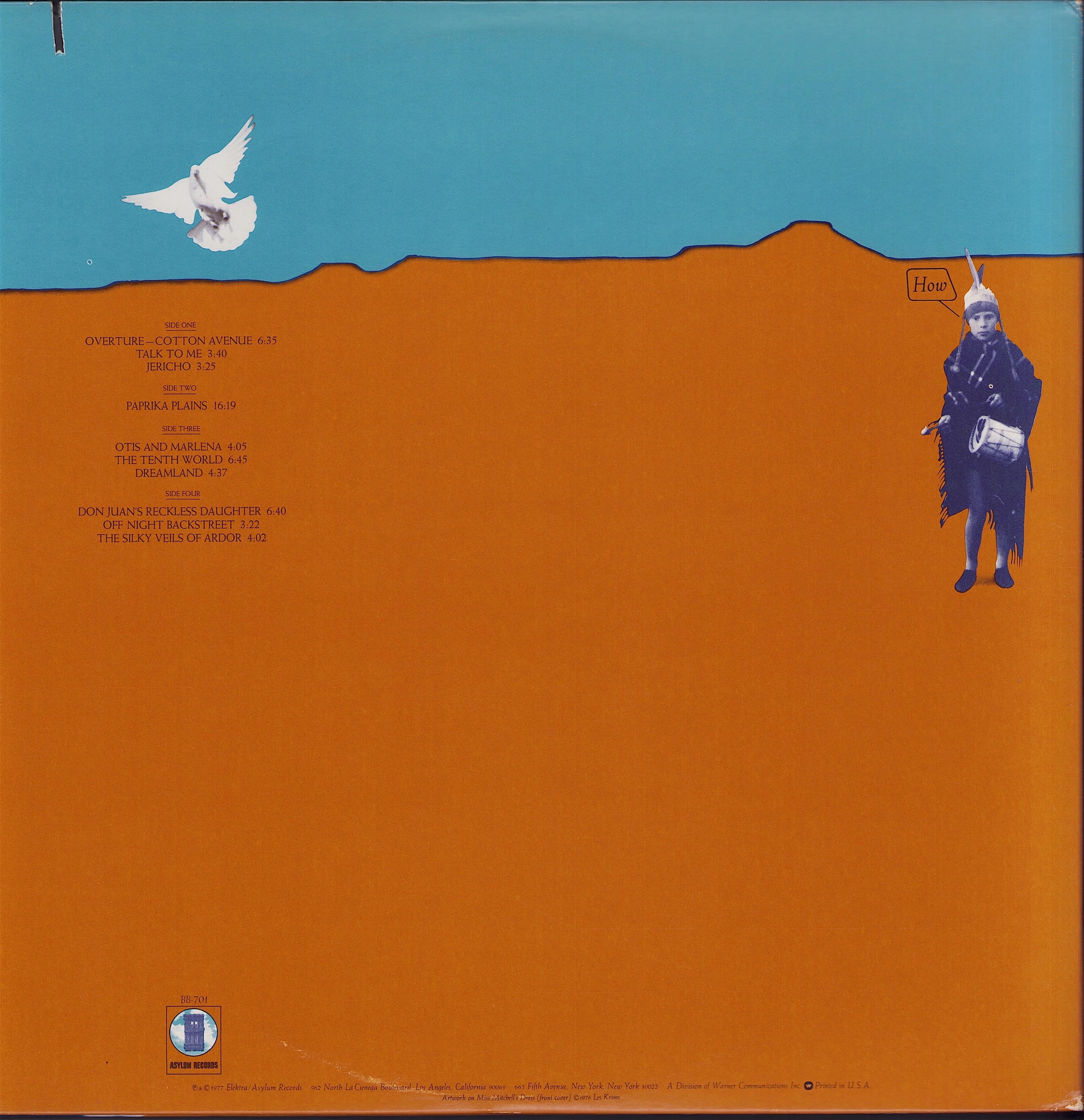
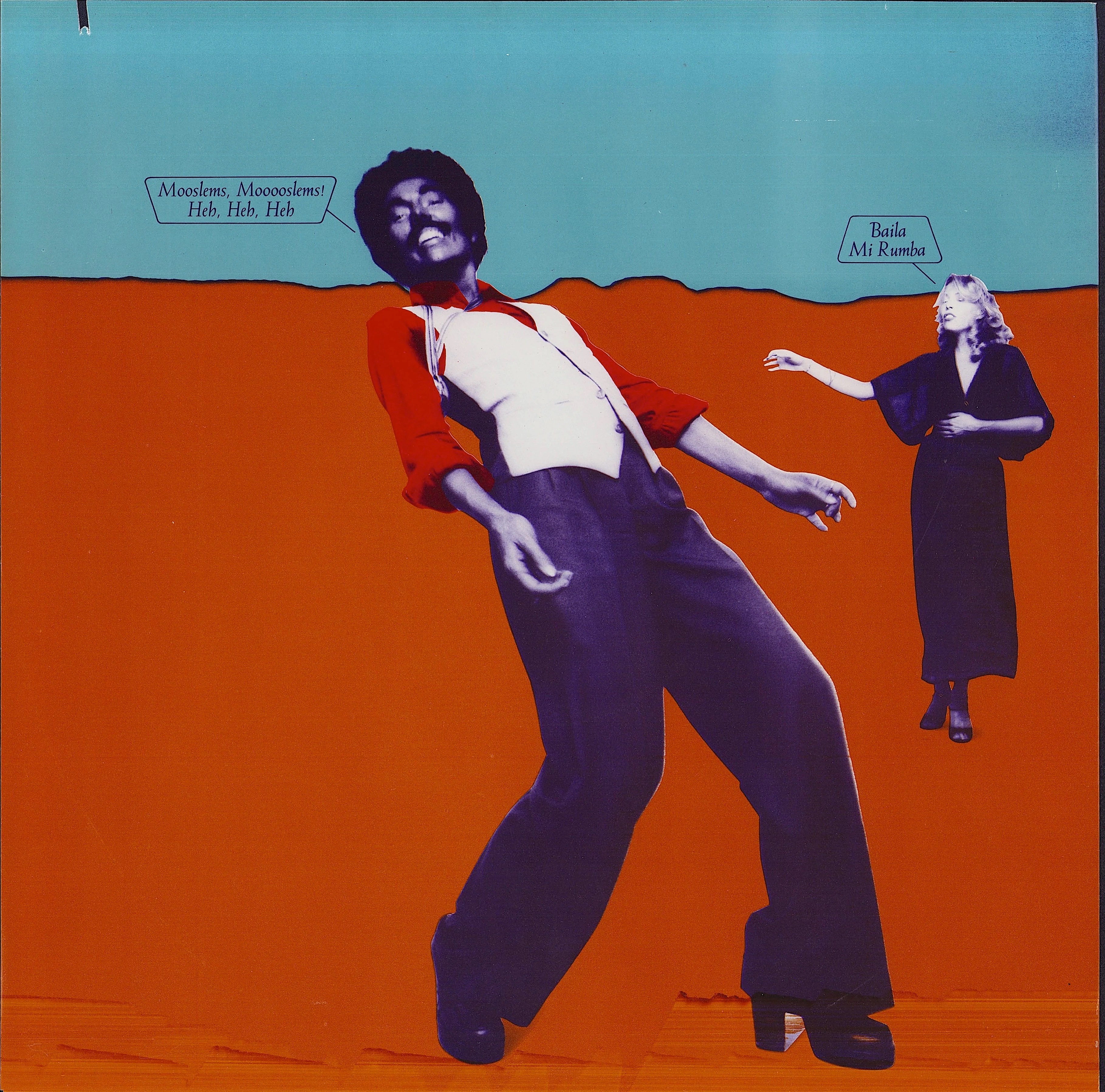
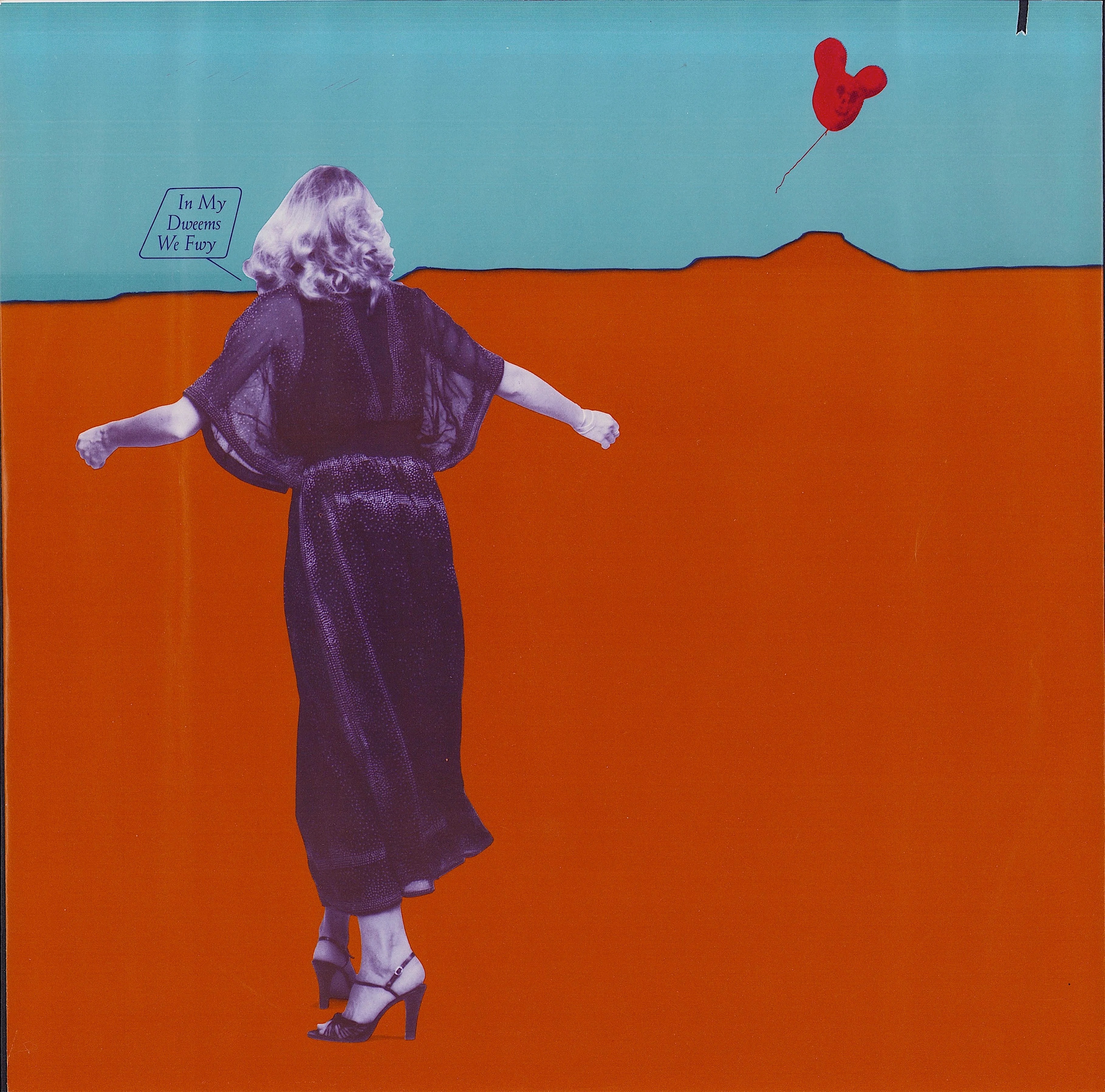
The original album front cover displays – amongst other things – the image of a black male pimp dressed in hat, shades, and fancy clothes and donning a thick moustache.  The man appears to dance with Joni herself pictured in a top hat and wearing a dress painted with imagery involving a female nude, birds, and odd balloons that echo the art of Jeff Koons.  The figure also dons what seems to be a medal with which he perhaps charms the birds from the trees.  It also pictures a mysterious boy dressed in something akin to a prom suit with plimsolls, standing sideways on, and – on the rear – for the cover is gatefold, a small picture of what at first seems to be a boy but on closer inspection appears to be a childlike version of Mitchell herself dressed as an American Indian saying “How”.  The title of the record is also in a spoken bubble from the pimp whilst the entire cover’s background is a deep burnt orange offset by a bright blue strip at the top – a clear reference to the Paprika Plains of track four.  So, on the face of it, we have Mitchell playing with racialised imagery echoing the music itself that draws on African themes, among many other things, and which incorporates a string of black musicians including Wayne Shorter and Chaka Khan plus Don Alias, the percussionist, whom she was also dating at the time.  So far so good – until one realises (when informed) that the pimp character is in fact Mitchell herself in blackface.

Concerns were raised, then and now, that the, then and now also, “goddess of white folk music” Joni Mitchell was acting in a way that was racist.  Mitchell’s accounts and practice of her persona later called Art Nouveau did not end here but rather started with her donning the guise for a Hallowe’en party held by bassist Leland Sklar in 1976 where – literally – no one guessed her real identity; and the imagery would later appear, briefly, on tour in her homage to the musicians of Beale Street, Tennessee on the song Furry Sings the Blues.  Mitchell’s discussions of the incident are scant – if candid – including an encounter on Hollywood Boulevard where a similarly dressed black man complimented her style and an interview with the LA Times where she stated she felt herself akin to “black” in her poetry and musicianship and closer in kind to Miles Davis than white folk artists.  One interpretation then is that Art Nouveau, and Don Juan’s Reckless Daughter, are part of a conscious resistance to, and statement of separation from, the media induced folk tag she had had hanging round her neck since the 1960s.

Yet over 45 years later this fails to convince.  From the point of view of cultural appropriation, Mitchell is seriously naïve if not downright racist in her adoption of the imagery whilst her defendants rather glibly cite her celebration of black musicianship culminating in the late Charles Mingus asking her to collaborate with him on what was to become her next album Mingus.  This album was, arguably at least, readable more straightforwardly as a direct tribute to the jazz legend.  Indeed, it is necessary to spell out the difficulties invoked through the Don Juan cover rather more clearly here.  The assumption made under the term “cultural appropriation” is that the powerful (here the wealthy and white Mitchell) exploit the creative productivity of the oppressed (here the characterisation of the black male pimp) or, at the very least, neglect consideration of its history (here the legacy of rape and ownership, slavery and sexualisation, that dominates much of the United States cultural history in particular and informs the character of the pimp).  In sum, it appears to play with and trivialise that which is far more serious; and, to which attached, there is an immense suffering that still requires recognition and redress.  Interestingly, similar statements are often made in relation to gender where so-called “TERF” or trans exclusionary radical feminists argue biological males, including wannabe female males, trivialise and misrecognise the historic and cultural embeddedness of the oppression of women in attempting to dress as them or indeed become the same as them through surgery.

However, neither of these rather simplistic approaches is sufficient to understand the complexities of a cultural text.  Cultural texts may refer to any manner of things from advertisements and imagery to magazines, works of art, TV programmes and films, or indeed music and album covers.  Moreover, returning to the artwork for Mitchell’s Don Juan’s Reckless Daughter we in fact have a double album housed in a gatefold sleeve that has a front, a back, a foldout interior, and two semi-illustrated inners that contain the records.  This opens, simultaneously, a diversity of imagery for scrutiny and further food for thought on the theme of racism and appropriation.  Of more direct concern is the imagery that houses the discs.  One shows Joni, in the same or similar dress, yet without the montage of assorted imagery shown on the front cover, dancing with another version of her persona Art Nouveau without the jacket or hat yet sporting an afro.  The figure here is more of a giveaway as Mitchell’s slim wrists and distinctive long fingers are on display.  More to the point Mitchell’s character calls out “Baila Mi Rumba” (Spanish, dance my rumba) to her Art Nouveau persona who responds “Mooslems! Mooooslems!  Heh heh heh”.  Whilst playful, the language at least is scrambled and potentially derogatory.  Yet more confusingly on the other inner we have a further picture of Mitchell in the same dress yet shown from the rear calling out to a “Koons” balloon “In My Dweams We Fwy”.  This is clearly a play on the line “in my dreams we fly” from the album’s closer, The Silky Veils of Ardour, a melancholic lament on the power and pains of love.  The doves that otherwise litter the record cover are also referenced here in the “crazy beating” of her heart and the desire to take the wings of “Noah’s little white dove” to “reach the one I love”.  However, the phonetic mispronunciation speaks to something either inchoate or childlike.  Or, more insidiously, the accent of someone “foreign”.  Interpreting this miscellany of imagery is far from easy.  Whilst some of it is a clear reference to various song lyrics other parts such as the child/children and Koons style balloons are far harder to read.  Muddying the water still, the racialisation of the imagery is hardly limited to black culture but also involves a parody of American Indian heritage.  Children playing games of “cowboys and Indians” are invoked here whilst the word “How” is at once childish or raises the question of “how” indeed any of this might make sense…

Mitchell’s playfulness in all of this is at once perhaps conceived as a simple artistic conceit yet equally raises questions as to how seriously she understood that which she was playing with.  It is worth remembering here that cultural appropriation of such imagery was common at the time ranging from long running comedy and minstrel shows, including the BBCs own that finally came to an end in 1978, to the “golliwog” figure that both adorned jam jars made by Robertson’s and became a child’s soft toy, neither of which was dropped fully until the twenty first century.  There is clearly a strong sense in which one neither can, nor should, hold Mitchell responsible for something far wider particularly when the main target was fundamentally unrecognisable as her.  Similarly, Mitchell’s dabbling in the mixing of musical forms both white and black, or rather more accurately Western and African, in origin foreshadowed acclaimed work by both Paul Simon (Graceland, 1986) and Peter Gabriel (IV or Security, 1982).  That both artists have been far less subject to scrutiny here speaks to less controversy concerning their albums’ covers but more to that other thorny issue, namely gender.  Returning to Don Juan’s Reckless Daughter, again the figuration is inconclusive.  Whilst women dressing as men in general is often heralded as brave and subversive – cue the figure of Marlene Dietrich in a tux – crossing racial lines to depict a man who is black here offsets this radicalism almost entirely into something more reactionary.  Similarly, the imagery of the pimp has little of the connotation of either butch lesbianism or later drag king culture celebrated by the likes of Jack (nee Judith) Halberstam or k d lang.  What rattles more still here is Mitchell’s image of herself as an American Indian of not entirely distinct gender that perhaps “beat the drum like war” on Paprika Plains.  One is left with a sense of constant ambiguity in all of this whilst ambiguity itself is key to any understanding of any cultural text as something that has meaning that is polyvalent not singular in one truth.  The difficulty of cultural appropriation arguments is that they tend to assume specific truths to interpretations that often do not exist – that one known cultural text a is easily interpretable as b and that this the constitutes truth c.

Which rather brings us to the frankly indecipherable imagery that forms its replacement for Don Juan’s Reckless Daughter in 2024.  Not all the artwork is available before the album’s release, but we have a clear image of the front cover.  Nor is it known whether the cover is single or gatefold or whether it includes decorated inners, but we can safely assume that little of the original imagery persists beyond the orange and blue colouring.  Turning to the front cover itself, we have a photograph of Joni mostly obscured by what appears to be a dog or a wolf in whose mouth she has her hand.  The immediate difficulty presented, for her fans at least, is that this imagery appears drawn from another era, namely that of Dog Eat Dog, an album released in 1985 that shows a painting by Mitchell of herself with dogs and wearing what seems to be the same pinstriped jacket.  The front cover here appears aggressive or even bloody whilst the dogs appear calmer on the rear but there’s has been a car crash, and the overall picture is centred on a road at night.  The associations of danger and violence are clear, echoing much of the record’s preoccupation with the nefarious politics of the 1980s including a scathing critique of the Reagan era, tax evasion, evangelicalism, and wider consumerism.  What such allusions are doing on a cover for Don Juan’s Reckless Daughter is anyone’s guess.  It could be said, at a push, that connections are being made between her attack on corporate greed in Dog Eat Dog with the racialised musical expression of Don Juan yet this collapses entirely if you do not recognise where the imagery is coming from.  Perhaps more pertinent, is her hand in the mouth of the wolf like dog begetting the expression “biting the hand that feeds”.  Again, we tend to draw blanks here as this would fit with a commentary on celebrity and fame where the Mitchell critiques the same system that made her wealthy, themes explored far earlier in albums such as Ladies of the Canyon (1970) and more particularly For the Roses (1972).  One should therefore perhaps refrain from further comment until the reissue is released and any statement is given.

Yet the fact remains that the cover has been very significantly changed.  Given its ambiguity, its near surrealism of balloons and characterisations of contradictory things, and the reliance of the “it’s racist” argument on recognising Mitchell within it when the majority never did, it is arguable the original should stand.  Or at least stand with an addendum of explanation.  The words cancel and culture spring to mind here when what is at stake is far from being in black and white in any sense.1

  1. Images show a paper clip mark that is not part of Don Juan’s Reckless Daughter’s album’s imagery but high resolution imagery showing text as well as image was hard to find. ↩︎

The Sex That Dare Not Speak Its Name

In case you have been oblivious to the world of popular culture, and in particular popular music, in the past week – “controversy” now surrounds the career of singer-songwriter Sam Smith.  Smith made his name in 2014 penning the album In The Lonely Hour about his doomed adoration and unrequited love for an unavailable, married man.  Nicknamed a male Adele given the torch song genre and massive sales, Smith was then merely famous for his voice and his song writing.  Even then he was openly gay and made no secret that subject of his album was another man.  By rights, this could have made waves if not for the likes of George Michael’s profoundly personal outpourings concerning his grief for his lover Anselmo Feleppa lost to AIDS on his record Older in 1996 or the trail of other openly gay male singers making no secret of their losses in love from Will Young to Rufus Wainwright.  So, perhaps we were already used to that.

What set Michael (and now Smith) apart was not gayness but sex itself.  The homosexual has long been tolerated, if not even accepted, when devoid of the sexual activity that defines it – not so much the love that dare not speak its name as the sex.  The paradoxical proof of the pudding came in 1984 when Frankie Goes To Hollywood were banned for both releasing a song about ejaculation (Relax, interestingly also a Michael favourite) and a video set in an underground gay club where a “mock Nero” urinates over a “bound to a wheel of sexual fortune” Holly Johnson.  Of course, the apparent “paradox” at the time was this had the effect of sending Frankie Goes To Hollywood’s record sales stratospheric.  Oscar Wilde’s other proverb – there’s no such thing as bad publicity – was clearly invoked.  Cue near forty years later and a far milder reference to golden showers still sends the moral majority spewing their hypocritical bile all over social media – Piers Morgan cashes in (again) and the likes of Candace Owens in a podcast that drags on for well over ten minutes brands Smith “pornographic”, “diabolical” and “disgusting”.  Yet the real paradox here, as Louis Chilton in the Independent, columnist Owen Jones, and others have noted, is that the video for Smith’s I’m Not Here To Make Friends is, quite simply, not very racy – the apparent “pee” is equally champagne and this is no underground dungeon rather a camp castle of fun that draws on the Les Liaisons Dangereuses (dir. Frears, 1998) era in the way that Madonna did with her MTV live performance of Vogue.  In fact, the video in many ways is more pastiche than anything else – a series of nods to the world of Madonna (including the corsetry and tits) and Kylie (the troupe of cute dancing guys) as well as a direct homage to the successes of Ru Paul with a stream of “sashay to stay” poses in outrageously camp outfits.  And to finalise all that, Smith then drives off atop the car bonnet in a style not dissimilar to that “heel on the bus” routine used in Priscilla Queen of the Desert (dir. Elliot, 1994).  It is very queer yes, awash with gender and sexual ambiguity for both sexes, and very body positive as various dancers and Smith himself are to – put it politely – plus size.  Indeed, Daisy Jones in Vogue asserts that the furore is indeed centred more on fat phobia than anything else.  Similarly, the video for Smith’s Unholy operates like some kind of updated super spun version of the peep show of Open Your Heart (Madonna) complete with gender scrambled revenge on the double standards of the suited/married businessman.   Enormous visual fun, yes – radical confrontation, no.  Except for one thing – the blink and you miss it because it is so obvious you cannot see it factor – that Sam Smith whilst identifying as non-binary remains recognisably and biologically male.  What Madonna, Kylie, Christina and all the rest can do, he can’t – and, whilst campy female pop videos are two a penny, campy and raunchy (even when it is only implied) homosexual (and male) expressions of sexuality remain as rare, outrageous – and delicious – as ever.

W

Running Up What Hill?

The recent success of Kate Bush’s ‘Running Up That Hill’ due to its incorporation in the hit Netflix show Stranger Things, returning to top the charts 37 years after it was first released, perhaps illustrates rather more than a resurgence of interest in a great song.  The song was originally a major, if not monster, hit for Bush in 1985 as the lead single from her “soon-to-become-a-classic” album Hounds of Love.  At that time, you heard it on the radio or saw the video (Kate and Michael Hervieu dancing, dressed in Japanese hakamas and directed by David Garfath with vertiginous camera work) and, if you liked it, you had to trot off to your local record shop and buy a 7- or 12-inch vinyl pressing of the song.  The 12-inch incorporated an extended version as well as the piano based b-side “Under The Ivy”.  Despite becoming a million seller in the UK alone and charting worldwide at number one for multiple weeks in 2022, it was never re-released.  You’ll also have a tough job getting a vinyl or any other hard copy of it barring buying the Hounds of Love album on vinyl or CD, remastered or otherwise, or ordering the vinyl compilation that accompanies the show*.  Its current success is entirely due to its digitisation – downloads and streaming.  Indeed, when Kate Bush re-recorded it and indeed re-mixed it for the closing ceremony of the 2012 Olympic games you could only get it on download then, and it went top ten all over again.

My point is that within 40, let alone 50, years the consumption of music, and popular music in particular, has been transformed.  And this is not just a matter of formats.  Like many aged over fifty, I was introduced to music via a mix of my parents’ vinyl record collection (my mother was a fan of the folk music of the 1960s and 1970s as well as obsessed with Neil Diamond), the radio (BBC Radio One was known to play the chart topping hits), and the TV – Top of the Pops particularly was a staple on Thursday evenings giving a run-down of the top 20 or later top 40.  Artists would perform live in the rather tiny studio or, as time went on, videos for their hits were shown.  Vinyl had its appeal, those lovely big arty covers and often lyrics to read, but also its drawbacks.  It wore out, got grimy and scratchy and if only a single or the like you were perpetually turning the thing over to play the other side.  The record players themselves developed in sophistication from cranky all-in-one boxes created to look like furniture to stereo systems of separates housed in much bigger boxes.  But the almighty problem of portability remained.  Hence, when cassettes and, more to the point, portable cassette recorders and players came in during the 1970s, one spent endless hours compiling copies and playlists to use elsewhere.  Whilst headphone sockets were common, the private listening experience did not fully take off until the invention of the Sony Walkman in 1979 that would then dominate the music consumption of an entire generation as youth stuck ear buds in their ears or headphones on their heads to listen to their favourites everywhere they went.  Cassette tapes had an annoying hiss, however, and were liable to stretch and break.  Reducing this via Dolby helped but then you lost the upper treble range as well.

Yet these shifts were minor compared to the one that was to come only a few years later with the rise of the compact disc or CD.  This offered portability, near indestructability, clear – if sometimes rather harsh – sound, and the ability to skip/programme and generally jiggle the tracks.  The packaging was a tad tacky – a lot of plastic and squinty pictures yet CDs disguised a more dramatic development – digitisation.  Although many were recorded from the original analogue studio tapes, they would increasingly be based directly on studio recordings that became digitised themselves.  The technology of the studio itself was gaining apace and this was, on top of all else, the era of electronic music was now moving on from the pioneering influence of Kraftwerk to the disco-pop of Madonna.  This would appear to then set up parallel longevity to vinyl that, despite its limits, had persisted since the pre-war era.  Yet, not so, as once digitised recordings the became free-floating.  With the rise of the high speed access to the internet en masse in the 21st century and the replacement of Sony’s Walkman by Apple’s iPod the music consumer was then enabled one to download literally thousands of songs or entire albums onto one tiny music playing device.  Convenience ruled – you could carry all your music literally anywhere from home to office and from train to gym.

The unknown consequences were indeed less known – the so-called compression or loudness wars would take over as audiophiles complained that the music was quite literally audio-dynamically flattened into one loud note that had neither range from treble to bass nor spatial sound stage as everything just boomed from the middle due to the literal shrinking of file size and musical information.  Radios, smart speakers, and much commercial music recording itself can often play into this shrinking the range, so it is, quite simply, louder.  The mechanics of listening to music here shifted significantly.  The clumsy boxes – whether wooden or metal – that dominated living rooms from the mid-twentieth century became compacted into mini “hi fi” systems, and later smart speakers.  The days of rummaging through someone’s album collection to find what they were into are largely gone along with much of the more social aspect of music consumption though this is a complex point to which I will return.

The key shift here was less formats than the development of digital over analogue.  Analog worked through recording sounds from the studio as an entire room full of instruments and gizmos onto high quality tape.  Indeed, on early CDs and the like you can still hear the hiss of the master tape.  Digital music, like computers themselves, created sound that exists as electronic files.  Thus, whilst often suitable for chart banging disco, those who liked their complex prog rock and classical complained quality was lost.  The solution, temporarily, came in the form of downloading so-called “high resolution lossless” audio files that took up far more computer space yet could outperform even top-quality CD and vinyl pressings in terms of sound quality.  They came at a (relative) price however and many a lay listener claimed they could hardly hear the difference.  Yet the death of the download does not lie here rather in two other linked developments.  First, the commercial problem posed by the ease of copying and sharing digital formats, even “high res” ones; and second, the commercial solution to this posed by streaming even in high quality playback forms.  For a monthly fee, as with Sky or Netflix on TV, you could now access tracks by the thousand or even million.  Spotify, initially set up as a free entry service in 2006, now offers various tiers of ad free service and exclusives – for a price.  Similarly, tech giant Apple got in on the act in 2015 guzzling up the music market of its already iPhone owning consumers.  “Hi-res” only specialists such as the US HD Tracks and French Qobuz offer increasingly complex mixes of content that you stream or can, at a price, download and keep.  Yet this was supplanted once again as speakers and computer chips in everything from laptops to cars now allowed one not only to play digital content but rather, with now vastly and speedily increased internet connection, stream it not only on music devices yet rather anything capable of transmitting sound.  Music wars these days are not between mods and rockers, rather between the money-spinning commercial music subscription services that provide it.  It appears a music consumer’s dream – access to everything (well, almost) for next to nothing (well, not really – even ten bucks (let alone premiums) a month is 120 bucks a year, by the zillion, let alone all that advertising…) – music is dead or maybe long live music.  Despite the covid crisis, live music is booming and far more profitable than any format whilst – perhaps – the sheer accessibility of it all is the key to its future longevity.

This potted history is well-known and of no surprise to anyone informed enough or old enough to remember it.  What is in question is the way this reshapes the entire consumption of music per se.  Prior to this it is perhaps worth making a comparison.  For the only matter to parallel popular music’s rapid shifts in its mode of consumption is (ahem) pornography.  In 1970 if you wanted pornography, you were, by and large, limited to the top shelf of the newsagent or perhaps a private screening of a movie if you were lucky enough.  By the 1980s, video tapes (and with them video camcorders) were nearly as ubiquitous as cassette tapes.  A home grown industry grew to both film and then sell films of sexual activity.  Given an influx of money circa the immense demand for sexual gratification, studios were born that could then deliver both higher quality recording and offer distribution, for a price.  Thus, one could then nip off to the, frankly limited, top shelf of one’s local video store or find the means of purchasing pornographic films via advertising in the back of magazines and then struggle with import restrictions.  Video to video copying was rife yet, like vinyl records, was surpassed by the superior and lasting quality of the DVD that like the CD would then dominate until the internet, once again, took over.  For producers, popular performers were turned into porn stars and a few directors made names for themselves in the erotic arena, for a time.  The limit initially came from illegalities and regulations in trying to physically distribute graphic content internationally.  Such content is now commonly digitised and recycled as nostalgia.   For pornography, like popular music, is now primarily consumed via websites that offer endless streaming services of some kind.  There are a couple of difficulties, however.  First, pornography – despite its apparent internet popularity – is not distributed with the same ubiquity as pop music for it is not watched by everyone – let alone the issues of legalities and laws surrounding it.  Women now constitute a growth market as the consumers and not just the objects of pornography, yet one should not overestimate the sheer “maleness” of consuming sex as a visual medium of masturbation.  Pornography may not be entirely for men by men and about men’s desires, but it is heavily skewed that way.  Second, whilst studios can continue to attempt to cash in on the digital world, the advent of high-quality recording facilities even on humble mobile phones, allows everyone – and anyone – to get in on the act.  Consequently, homegrown bedroom fodder finds another home on the internet, but it can hardly keep up with sheer tidal wave of titillation offered by an app like snapchat.  Yet the process remains remarkably similar to music, driven by markedly related developments in technology that again clearly re-shape consumption.

It is to the question of the re-shaping of consumption to which I now turn.  In relation to music, the process has been relatively unilinear.  Consumers have become increasingly distanced from a sense of music as a physical commodity and increasingly see it as a floating miasma of sound.  The sheer solidity of vinyl, the weight, the covers, and artwork were reduced in the transition to CDs let alone digital downloads and streaming.  Interestingly of course, vinyl has seen a resurgence in popularity overtaking CDs as the physical format of choice, yet it is still vastly outstripped by downloads and streaming culture not least due to its expense.  The increased popularity of vinyl is also at once a nostalgia trip for those old enough to recollect it the first time and perhaps a form of resistance to the sheer speed and efficacy with which the physical existence of music has come to disappear.   What perhaps adds to this is that music is still seen as leisure and recreation and as something separate from computers which, for some at least, remain too associated with work.

More significantly still, our relationship with music has changed.  Whilst once the plight of many a parent was to put up with the deafening racket from a teenage bedroom it is now far more common for music consumption to take place privately via ear plugs and headphones.  Even linking computers to speakers, amplifiers and other paraphernalia rarely replicates the physical intrusion of the full-on music system or the infamous ghetto blaster.  Many a home now does not own much more than the odd speaker; systems are for enthusiasts only.  More painfully, TOTP is now reduced to some reminiscence event at Christmas.  The sense of communality, at this level, is then lost yet is perhaps reproduced in more virtual terms through the online world of sharing.  Somehow even then there is a sense of the creeping death of the social were it not for the resurgence of touring and playing live.  Companies have successfully commodified much of this with “buy the album and get pre-sale access to tickets”, let alone merchandise and social media promotion, yet the consumer it seems yearns – and pays – for sheer experience of the pub or the stadium whilst televising festivals has only fuelled a greater interest in going.  The music mega-event as in the Superbowl or Glastonbury is now where it, or at least the money, is at.  Spectacle.  There is a curious contradiction going on here then as the consumption of music slithers from isolated worlds of naval gazing with earphones to the collective euphoria of the live event that, whilst cruelly undermined by the response to the covid crisis, simply refuses to lie down.

What does appear near terminal in this process is, in the case of more commercial pop music at least, is the death of the long player.  CDs were very long containing anything up to nudging an hour and a quarter of music whereas the humble LP was best suited to forty-five minutes or less (and less still if audiophile remastered and played at 45 rpm).  Few had the energy to wade through the length of a CD, and the skip and programme function clearly came in handy.  Yet this paved the way far more radically for the relentless hop skip and jumping of streaming turning everything from heavy metal to disco pop into pick and mix – even contemporary popular classical musicians such as Max Richter and Ludovico Einaudi need singles – digital ones as the hard copy of the “45” is long since as good as dead.  Interestingly, the vinyl revival challenges this too as few buy an LP – particularly given the prices – for a track or two.  Well, sort of, as the appeal, sadly, lies less in loving the sense of story a record offers than in the immense marketing of the packaging from pictures and posters to the endless “limited edition” snazzy colours, patterns, decoration and even liquid filling of those circular pieces of wax plastic.  Part of Taylor Swift’s marketing, for example, involves the endless permutations around which her music gets sold with different colours, photos, the one extra track, and so on – thus her dedicated fans tend to end up spending fortunes on acquiring every variation.   Consequently, listeners are increasingly less “sold’ on stories – that sense of narrative that forty-five minutes of music might create – and more on product.  The significant number of those who buy these snazzy packaged albums more as objects of worship than as anything they actually listen to, in that many are not even in possession of a turntable, plays into this.  Part of this depends on the so transparent you miss it factor that music is now sold increasingly multiple formats – the vinyl’s (plural), streaming (subscriptions), downloads (deluxe and non-deluxe versions, lossy and lossless), CDs with variant packets, cassettes in differing colours and so on.  It smacks, somewhat, of children and candy stores, yet more to the point the most fundamental principle of all marketing – diversification.

Given the (il)legalities, pornography was less concerned with commodities rather with access.  The internet has given it this in immeasurable spades and, despite the moves of Islamists, dictators, and some parental campaigns, it remains utterly uncontrollable.  Whilst pornography was never particularly shared as a communal experience beyond the private worlds of couples or swingers it’s now become Alice’s dystopian wonderland of a rabbit hole that individuals go down.  The endless, seamless, searching for kicks is like cake, the second one never tastes as good as the first – it needs to go further, harder, dirtier, raunchier, more extreme.  Or just plain weird.  The world of exhibitionism and voyeurism becomes limitless – furby anyone?  Look it up.  The comparison with the desperate attempt access porn, even as late as the 1990s via the top shelf, your mate’s or your mate’s dad’s collections of mags and movies could not be starker.  Whether this truly causes a world of addiction and unrealistic expectation, let alone violence, is – frankly – too soon to know though the sheer tidal plethora of the stuff has to be impacting something.  What is known is that it opens the door to the amateur creator.  Whilst phones have long served as a useful way to listen to digital music on the go, the relentless advancement of photo and video technology to outstrip, or at least keep up with, most semi-professional photographic equipment has turned near everyone into a potential porn star and sex – virtual now as well as real – as a prime gig economy of the twenty first century.  Rather than music paralleling pornography, the world of porn increasingly apes music – anyone can do it, but can they sell it?  There is some sort of market it seems for anyone from 9 to 90, from kink to kinkier, and from utter vanilla to endless fetish.

The parallel with music also returns then not only at the level of production, rather exploitation.  Not just viewer or viewee, rather the streaming platform provider that pays a pittance whether its music or sex.  There is also something else similar here as whether music or erotica the process of consuming via the internet is equally isolating and without control.  Consequently, parents panic as the deafening racket from the bedroom or the magazines under the bed are replaced by, well what?  Who knows.  Enter attempts to placate parental anxiety and exert control via nanny the state – a series of frankly idiotic laws that do little than just make it harder to produce non “main/male-stream” porn, the opt in not out on adult internet provision that even a child of ten knows how to get around, and those utterly pointless “parental advisory” labels on CDs.  It’s all a rather sorry “state” of affairs.

There is of course a further parallel as music itself is increasingly sold not as sound in any way yet rather as image – from Tiktok clips to the full-on pop video or concert broadcast –  what was once merely visually sold through the picture on the cover or the gyrations on a live stage is now an entire visual arena in itself.  It is hardly surprising then that the pop video comes near the top of the list in examples of the “pornification” of popular culture and sexualisation.  The concern most often raised here is in relation to consumption or rather the impact of all this gawping, particularly upon the young.  The attempts to control at source whilst easily supplanted also miss the issue of who selects what that someone else can see.

Underpinning this is the problem of ownership in both cases.  Both music artists and sexual film makers require equipment and distribution if they are to become more than a minority home produced item.  Whilst recording one’s guitar twanging on a computer or sexual activity in the bedroom via a mobile phone is now more possible than ever for it to profit requires both far more investment and some kind of online platform.  So, performers – whether musical or sexual – struggle to retain or even gain ownership over their own output.  Recent protests and attempted boycotts by a number of well-known recording artists over the pittances paid by online music streaming platforms would appear to echo well-known histories in the battle for artistic control.  From Johnny Cash and Elvis Presley to George Michael and Michael Jackson, there remains an on-going litany of music-related disputes that – given digital copying – increasingly centre on plagiarism hence the recent losses of Pharrell Williams and Robin Thicke for the song “Blurred Lines” that was, interestingly, itself also accused of inciting sexual violence in a way similar to pornography.  Such cases are less well known with pornography itself given the morally ambiguous and often anonymous status of the sexual performer – though there are a few infamous and historic cases and historic of models speaking out – yet the potential for exploitation in the world of online performing is vast.  In economic terms, there is ample opportunity yet also vast threat.

There are shifts here also in terms of the power relationships of consumption.   Pop music has a history of fickleness, yet some artists and groups become “household names” that most, if not all, at least know and in some cases follow and like.  Consequently, the Beatles, the Rolling Stones, Abba, and many big names of the 1980s from Madonna to George Michael were beloved by billions both younger and older whilst major scandal could not rock Michael Jackson’s following.  Yet one struggles these days to draw parallels.  Adele appears semi-retired whilst Ed Sheeran is simply too middle of the road.  The world’s largest contemporary seller by a country mile is Taylor Swift yet few can name many, or any, of her songs.  Swift is illustrative of something far wider, namely the power of social media and the internet plus a frankly terrifying juggernaut of marketing that sees fans queueing for hours to purchase music they already have in another format, with a different cover, or colour, or something.  What is lost in all of this, despite the popularity of live shows, is the collective or communal sense in which music means something when it is endlessly pumped through computers and phones to individuals – radio let alone TV is in fragmentation freefall where only the “mega event” of the likes of Glastonbury can engage many on and offline, on and off media.  Underpinning all of this are shifts not only in technology yet rather the increasing domination of capitalism.  Even well-known stars complain of the lack of money for them in music, the eye watering exploitation of streaming and the immense costs of studios and tours alike.  Yet the ecological critique of the carbon footprint, far from removed by streaming but undermined more by the download and keep model, means that some such as Massive Attack are unlikely to ever tour – or perhaps record – again.  The internet appears to disseminate and certainly facilitates sharing yet “indie” artists such as Wolf Alice, amongst many others, have felt themselves forced to feed the conglomerations to expand their own reach and not collapse.  Others meantime have sought the rights to their own material yet it requires wealth to achieve. 

All in all, there’s something just a teensy bit gloomy in all this.  Even sad.  That the excitement of hurling off to the record shop, even queuing for hours, or that stomach swirling excitement of the first foray into dirty pictures that still left far more to the imagination is just plain lost in a sea of over-mediated, over-commodified, blasé gorge festing on new tunes, new videos, new – well, somehow none of it ever quite is.  The resistance to this comes in the form of indie record stores and “record store day” where music is only – initially that – is released in a physical format you have to visit a shop to get yet this in itself is becoming an increasingly profit driven racket of re-issues and the gig economy of ebay.  Still, you do at least have long chats with other like minds whilst waiting in the queue.

So, running up what hill where?  I am truly delighted that millions have listened to Kate Bush who had never heard of her before let alone see her twirl on the telly, yet somehow still feel they’ll all just end up somewhere else, lost in the sea of it all, not apoplectic with excitement when she releases another years later that you cannot wait for, then play to death, then fondly remember for ever more…  Bush herself is an interesting case in point.  Famously “reclusive” her career has been dominated by her desire to gain control of her output.  She was doing that way before Swift had even heard of it.  Such was the adversity of her reaction to her early “pornographic” typecasting and promotion, since the 1980s she mostly only allows her family photograph her and owns her studio, her record label along and near all rights to her output.  Yet such a reluctance to “play the game” would now stop her ahead of starting had she not achieved the successes she did.  There’s a twist here, though, as her recent success has little to do with her music at all yet rather the media itself that spins unknown futures of its own – namely a hit show on TV.  So, perhaps, it is more apt to end on another tune, Talking Heads, ‘Road to Nowhere’, that actually came out the same year as ‘Running Up That Hill’…

*it was eventually re-released on CD single format, but in the US only

https://www.youtube.com/watch?v=wp43OdtAAkM

ABBA – The Journey

‘I’m now and then combined’ (Don’t Shut Me Down)

When Abba announced their comeback album and “abba-tar” tour on September 2nd, the common response of many of their fans was not to start jumping around joyously but rather to begin blubbing.  Such is the emotional depth of what Abba, not perhaps just four individuals with varied talents, but rather Abba the phenomenon taps into.  For many, myself included, Abba primarily represent childhood as we grew up with them like elder brothers and sisters.  Yet of course Abba’s music has continued to resonate with the generations since, the reason being that that emotional connection lies not just with some machine of promotion or happy syncing with an era but rather within the music itself.

For anyone not old enough to remember (meaning anyone under the age of roughly fifty), Abba were HUGE back then in a way that has only ever been surpassed by Beatlemania who set the precedent.  Measuring their significance is not easily reduced to statistics, staggering though these are (around 150 million record sales, of which Abba Gold alone has sold 30 – and this is all before the impact of the current comeback) – rather assessed in terms of “cultural clout” or presence within the zeitgeist and here none of their competitors at the time nor big hitters since can hold a candle to their sun.  New wave and punk that appeared to topple them at the time have long since died, Blondie on what is now about their fourth comeback have failed to make much of a splash, the Spice Girls were far too short-lived and far too demographically specific in their influence, and not even that juggernaut of self-promotion that is Madonna can have a properly big hit this millennium without sampling them.

Explaining their importance is another matter again.  Cynics, then and now, accuse them of cold commercialism, cashing in, and exploitation.  Such points are sloppily made for in the world of fickle pop whilst hits might be manufactured no-one can control the scale of sales and pointing the finger at the self-writing, self-performing, and self-producing Swedes is frankly daft in a pop world dominated in recent years by reality TV, impresarios, brand makers like Beyonce and Kanye, and manufacturing managers from Simon Cowell and X Factor to Simon Fuller – a collaborator on the Voyage shows but until now absent from their career.  Equally they rarely toured, never really broke North America, preceded the MTV generation, and could by rights have carried on in the studio till God knows when but just fizzled out after a tense TV appearance in 1982.

Which only leaves us with the music.  Characterised by critics as catchy yet schmaltzy candyfloss that sells yet is consumed and forgotten, their sentimentality is in fact key to their longevity.  The legacy and significance of Abba’s music is emotional not commercial, and it is their melding of melody with melancholy that not only makes them resonate, rather elevates them to the level of mythology and fairy tales.  Tragedy, the stone inside the cherry, and the bitter nut inside the sugared almond are not only why we have Abba but rather the legacy of Diana, a royal family, soap operas, and a machine of celebrity.  Thus, the best of their songs has you celebrating and crying all at once such is their joyousness and their pathos.  They don’t write sad songs or happy songs rather songs that do both at once and so the effect is from Fernando to One Of Us is simultaneous, you hardly know whether to wave your arms or cry.  Dancing Queen is quite literally delirious, yet its joyousness is so intense it can drive you to tears whilst The Winner Takes It All is a song that sobs with emotional conviction yet is such a belter it has you tapping along at the same time.  This is emphatically not the stuff of regular pop musicality that divides into disco and slow songs, or bangers and ballads, rather it is some combination where the whole becomes a more than enchanting nearer spell-binding sort of mix.  This continues with their latest releases.  I Still Have Faith In You is a long, drawn out and rather “adult” ballad that still has the rousing chorus and harmonies that characterised the likes of Chiquitita whilst Don’t Shut Me Down has the whumping beat of a banger yet tells the agonised tale of the “dumpee” trying to “reboot” herself in a clever twist on the impending Abba-tar theme.  Yes, it’s schmucky if not schmaltzy yet is wrapped up in so much musicality and emotionality you have to be the stone in the cherry not to fall for it.  Of course, this is traditionally a line mined in the work of singer-songwriters where the confessional story telling hooks you in – it’s rare, if not next to unheard of, in the work of groups with the exception of course the Beatles who had both the melodies and lyrics or the Beach Boys who were their true predecessors in sound.  Interestingly whilst a truck load of singer-songwriters have done it since – melding their melancholy to melody in work as diverse as Joni Mitchell and George Michael – no group has done it since.  In sum, the gap remains so it’s no surprise that only Abba can return to fill it or that records breaking is as predictable as the outpourings of emotion that will accompany them. 

All of which of course brings us to the new album Voyage itself.  The response of critics has been to say the least “mixed” and often negative whilst fans on social media have expressed confusion and disappointment.  This response is perhaps understandable if looked at through the lens of forty years ago – rifling through it trying to find the successor to Dancing Queen or The Winner Takes It All.  Looked at that way it comes up lacking – there are few true bangers and the balladry is so nuanced it’s in an entirely different category.  And then one has the apparent kitsch of a song about Christmas (Little Children) and the plight of the humble bumblebee (Bumblebee) plus some dug out and barely revamped 1970s three chord rocker (Just A Notion).  This leaves us with the true “meat” of the album namely a cluster of songs that are delivered with varying degrees of brutality (the piano ballad I Can Be That Woman, more electronic Keep An Eye On Dan, and No Doubt About It the album’s one true belter).   Throughout there is a visceral level of lyrical honesty for Abba that is frankly plate-dropping.  I Can Be That Woman is emphatically not about a dog but a relationship that is on the rocks where the pet is acting as the conduit whilst Keep An Eye On Dan dashes such hopes in a tale of child custody pre- or is it post-divorce and No Doubt About It sounds like the discoed up frying pan of emotional relationship difficulty it actually is and paradoxically raises doubts in all directions. Abba have not sounded this bitter and twisted since the days of I’m A Marionette and what we have is this vertiginous sense of sliding backwards and forwards in time – simultaneously – Agnetha is still the brittle queen of tragedy and melodrama, Benny still belts out a mean keyboard arrangement, Bjorn is still writing emotionally painful lyrics for his ex-wife to sing whilst the playing is top notch and Frida’s near contralto register still adds warmth and depth to the whole thing – and yet this is not quite what it was somehow, something’s changed.

There is a trick or an illusion going on here, this sounds like the Abba of yore – well almost – is presented like the Abba of yore – well almost – so it must be the Abba of yore – well no, frankly.  For what this album does, unlike any of their others, is add up to far more than the sum of its parts.  The core concern, as most have noticed, is nostalgia and the sense of time passing.  Thus, when the long player is taken as a whole, we get a rollicking rollercoaster of despair and hope and attempts to just get off the merry-go-round.  This oscillating is set in motion with When You Danced With Me a song that typically plays the happy ceilidh whilst clearly still fearing all is lost whilst Little Children and Bumblebee themselves become attempts to live in the moment whilst some loosely outlined female protagonist lurches from hope (Don’t Shut Me Down/Just A Notion/I Can Be That Woman) to despair and the setting in of grim reality (Keep An Eye On Dan and No Doubt About It particularly).  Little Children and Bumblebee are also not easily dismissed as kitsch rather seen as direct musings on the passing of time. Comparisons with their earlier work are difficult to make – Voyage, when fully engaged with, is nearer to some Abba-world version of the yo-yo-ing emotions of Joni Mitchell’s Blue or Fleetwood Mac’s Rumours. Yet even then things are not so simple and work on more levels.  Just A Notion’s inclusion is interesting here as a self-conscious attempt to dig up a relic when perhaps that’s how they feel about the entire project.  There are near pastiches of earlier songs scattered throughout too if you listen closely enough – Keep An Eye On Dan uses the intro to SOS as its outro whilst When You Danced With Me is clearly a Celtic twist on Arrival territory.  More importantly, then, what is at stake here is not the internal wranglings of the group rather their relationshp to the world. I Still Have Faith In You hovers between doubt and conviction in a clear nod not to personal relationships but of the big one between Abba and their fans whilst the orchestrally driven Ode To Freedom with its not-so-subtle nod to Tchaikovsky’s Swan Lake both looks backwards to where they have come from yet grapples with something far more difficult and contemporary, reflecting on their own sense of privilege and the price of freedom that comes with it – at once a thanks and an au revoir.

It also may, or may not, be their “swan song”. It is worth remembering that Abba never officially split – rather they wandered off in differing individual directions late in 1982 claiming it wasn’t fun anymore.  Voyage and the accompanying “Abba-tar” tour have been hailed as a comeback, but all four members have dropped large hints in interviews that this is probably it – farewell, goodbye.  The album itself plays with this – is the relationship going on in it truly over or might some light of hope still flicker?  And if it is, what would that mean anyway?   Abba are now into their seventies and reflecting, unavoidably, on where they’ve been and where they want to be when “the end” in all its forms comes.   There is no picture of them on the cover – even the alternative artwork has them presented as “Abba-tars” – just a small black and white postcard inside to remind you that they are just four increasingly elderly individuals recording in a studio.  It’s perhaps a pity as the accompanying publicity shot shows them to be both fit, healthy and presentable and, more to the point, happy as Frida in particular appears to have a fit of the giggles.   But what we actually get on the cover is a sunrise, a sunset or even an eclipse – interpret as you will – maintaining importantly the mystique as well as the hope and despair that has dominated their career, and the lives of their fans, for over fifty years.

Abba – The Albums

Given their megastar status with sales of over 150 million albums, of which their greatest hits Gold itself constitutes one of the best-selling discs of all time; and as the music behind one of the highest grossing musicals on record Mamma Mia – now also the source of two highly commercially successful films – it is perhaps surprising that ABBA produced only eight studio albums (and perhaps one album’s worth of other material) of which, if one is to be slightly harsh, a mere five have serious critical merit.  All of these albums have been remastered and repackaged multiple times and in multiple formats leading to an accusation of cashing in yet, it might equally be said, one can only cash in if cash can be made so this incessant recycling still going strong over forty years on is itself merely another measure of their immense success.

As a relatively reluctant touring group (blonde lead singer Agnetha Faltskog’s loathing of travelling was, and is, well known) that never fully broke the United States market, and as an act not particularly advantaged by media promotion in preceding the MTV generation by some years, the question is raised as to what drives this jaw dropping on-going success.  The answer only partly lies in the quality of the music itself that, whilst sparkling and iridescent, was equally inconsistent.  They are maligned, wrongly, for their particularly poor lyrics (Blondie, the Spice Girls and Wet Wet Wet were all far more guilty of this), mawkish sentimentality (there is some truth in this but it is double edged), and commercialism (markedly untrue given relatively few singles per album and many even number one songs that were either more than commercially long or structurally complex or both, The Name of the Game being a prime example).  They were undoubtedly slow starters, rather poor in honing their true talents, and arguably gave up too easily when the going got tough.

ABBA Album Cover Collection Poster: Amazon.co.uk: Clothing

Yes, there was an Abba album before Waterloo bearing in mind that, at the time, they were not called Abba but Bjorn & Benny, Agnetha & Frida.  There is a certain history to the name itself as Abba did not become ABBA with the reversed Bs trademark until the Arrival album and Agnetha for some time was known as “Anna” outside of Sweden given difficulties non-Scandinavians had in pronouncing her name.  It also left fans scratching their heads as to who the Agnetha was that “appears courtesy of CBS records” given that Faltskog was a major solo artist yet largely unknown outside of Sweden and still under contract.  Ring Ring, their first album is also notable for Faltskog’s first – and last – solo writing contribution to an Abba record, the simple and sweet but otherwise unremarkable Disillusion.  The roots of Abba’s music are all too clear across the other tracks – the Scandinavian folk scene and “schlager” music, the singing prowess of the female leads, and the influence of three chord 70s rock on the male writers.  The effects of this are mixed to say the least.  At their best, they produce catchy – if slightly dated – folk rock ballads like Another Town, Another Train or He Is Your Brother; but elsewhere it’s often lumpy and grasping attempts to be commercial when what is all too missing is that harmonious yet melancholic note that would come to dominate later works.  The influence of the Beatles and the Beach Boys alike is clear too, but it is the Bacharach-esque I Am Just A Girl that perhaps points towards their more melodic future.

Their second long-player Waterloo hinted more at this melodic greatness in party pleasers like Dance (While The Music Still Goes On), Hasta Manana, and Honey Honey.  That said, clangers still abound, most notably the ridiculous gorilla driven King Kong Song, the utterly throwaway What About Livingstone, and Watch Out, a truly desperate attempt to sound hard edged.  The challenge remains one of synthesis, not least in finding that all important Abba sound whilst you get no less than two versions of the “three chord rock by numbers” Eurovision winner Waterloo on the vinyl alone.

Self-titled Abba is a marked improvement as well as the point where they start garnering international commercial success.  The syncopated chop sticks of Mamma Mia became their first number one since Waterloo.  That followed SOS, another hit dominated by a belter of choral chorus that would soon become a hallmark of their biggest hits as well as an added bonus for Agnetha on her album Elva Kvinnor I Ett Hus.  Elsewhere Hey Hey Helen is a respectable rock ballad given its guitar hook; whilst Tropical Loveland is a melodic take on reggae.  Bjorn’s words are still an on-going problem though.  Bang A Boomerang’s title alone says it all whilst Man in the Middle doesn’t have the edge it should have either lyrically or musically.  Indeed, the story of Abba’s development is one of Bjorn’s gradual acquiescence into the background of guitarist and writer rather than frontman and fans have long complained about the stubborn persistence of a token “Bjorn song” on almost every album.  Here, it’s Rock Me a particularly heavy-handed attempt at edginess that isn’t really saved by the girls’ impressive harmonies.  Benny’s keyboard abilities, always central to Abba’s melodies, are showcased to better effect on Intermezzo no: 1, one of their few instrumentals, though John Miles or Bohemian Rhapsody it is not.  There are glimmers of the greatest to come, however, in I’ve Been Waiting For You, a big gushy love song with a very fine vocal from Agnetha.  Abba is by far their “rockiest” record when pop is more their forte yet it’s rather as they still can’t quite find their way as the album collapses into the three chord 70s rock of So Long once again.

The release of their first Greatest Hits album largely sifted the successes from the failures in these early records and also proved seminal in more ways than one.  First, it has that cover – the one of the two couples sitting on a park bench – Agnetha stares out longingly at the viewer whilst her husband is more absorbed in reading a magazine than in her and, if you open out the back of the cover, you get Benny and Frida locked in a kiss.  Open it up again and you get all four laughing at the joke they’ve created.  The thirtieth anniversary edition on CD had a different cover, using artwork by Swedish artist Hans Arnold, and there has never been any major reissue rendering the park bench vinyl version a sought-after collector’s item.  Of course it would also prove a sad premonition of things to come a few years later.  Second, it became a major commercial success, selling nearly three million copies in the UK alone, on the back of showcasing the phenomenally successful Fernando.  The track was originally given to Frida for her Swedish solo album Ensam and not included on the original Scandinavian version.  Thus, it was to become the turning point in making Abba major, and international, stars.  As sentimental and nostalgic as the campfire around which the video was set this song was to become the template for much of their future greatness juxtaposing melancholia with the choral euphoria of the choruses.  Finding “the Abba sound” was the key that unlocked the door to an awful lot more and tapped into an emotionality that their lyricism otherwise struggled with.  There are echoes here of not only the Beach Boys, but the Philadelphia sound and Phil Spector and it is this, more than anything, that elevates them above the more throwaway pop of their contemporaries and indeed many since.

Arrival marked not only a quantum leap forward and the perfect pop moment in Abba’s career but rather became the template by popular music could now be judged.  With sales of nearing two million in the UK alone it remains their biggest studio seller primarily on the back of the stratospherically successful lead single Dancing Queen – perhaps one of the few pop tracks to deserve the title of iconic – and later Knowing Me, Knowing You one of their first and finest forays into darker and more adult lyrical territory.  Simple it may be but banal it is not and when combined with a belting chant of a chorus – aha – became raised to more emotional heights.  Indeed, it is this choral harmonising that characterises almost the entire record.  From the moment it kicks in on so wondrously on When I Kissed The Teacher, the famous Abba sound has finally been found.  And there’s still no lack of experimentation either – thus, Money Money Money would not sound out of place in a Weimar music hall, all syncopated piano and drums wrapped up in high camp drama whilst That’s Me is an early foray into something altogether more synth driven.  At a mere thirty-one minutes long, the melodies pile on thick and fast in a blur of slick arrangements and smooth production.  Even the downright silliness of Dum Dum Diddle is irresistible given the sheer joyousness of its bagpipe style belter of a chorus whilst the can-can kicking meets rockabilly of Why Did It Have To Be is undoubtedly the career best of the “Bjorn songs”.  Tiger, a play on the lights of the city night, is perhaps a less well-judged attempt at social observation but the arrangement is just about clever enough to pull it off.  And all that just paves the way for the near madrigal like closer and title track.  It sounds royal because it is royal – this is a band at the peak of their majesty.  Abba were never to match this sense of perfection – from the acoustic opening to the closing strings not one note sounds out of place – yet perhaps what is most important remains that quintessential mixing of melancholy with euphoria.  My Love My Life is one of their lushest, gushiest and even churchiest of songs and yet, at the same time, a total tearjerker.  The foregrounding of Agnetha as the soprano ice queen is key here not only in forming a sound but in providing an embodied image – a beautiful yet vulnerable blonde – that would then get played upon again and again to increasingly devastating effect.  It also crystallised their exoticism and mystery as not only Swedish but rather cinematic.

The cinematic would underpin the release of The Album to coincide with The Movie, effectively the story of their 1977 tour of Australia given a celluloid level of celebrity.  The core motive behind doing the movie was the avoidance of touring given Bjorn and Agnetha were now expecting their second child, Peter Christian, born in December 1977.  Hallestrom’s film was never going to win Oscars but it undoubtedly made Abba stars, shining more brightly and with more dazzle than ever before.  Interestingly it would also hint at the stone in the cherry making no bones about the fact that the adulation of the band, now on a level with Beatlemania, was becoming overwhelming.  Agnetha, as mother of two young children, in particular was not happy and this would feed into their music.  The tour featured a mini-musical entitled – surprise, surprise – The Girl With The Golden Hair.  Whilst both girls in fact wore blond wigs, the reference to Agnetha was unmissable as it told the tale of a simple suburban girl from a “dull little town” (Jonkoping?) hitting the big time with “a wonderful talent, a wonderful thing because everyone listens when I start to sing”.  This is the stuff of fairy tales and Hans Christian Andersen and has a similar sense of all that glitters is not gold for our heroine then finds herself caught on a carousel of highs and lows like some out-of-control marionette.  Much to the chagrin of fans, the frenetic Get On The Carousel would never be released, its middle 8 merely reworked and used in Hole In Your Soul, though much of it is heard during The Movie.  The group would strenuously deny any autobiographical connection yet in protesting so much only fuelled the sense of trouble in paradise, a point later emphatically proven in Faltskog’s increasingly outspoken loathing of fame and touring.  What is at stake here is the development of Abba into a near Barthesian myth, as symbols of the pain and suffering behind the stage, as cracks in the mirror, and as expressive of the axiomatic interdependence of euphoria and despair.  Their increasingly camp aesthetic plays into this along with their now recognised status as icons of gay culture for the same dynamic is at work there in the heartache swirling under the disco glitterball.  Abba would sound increasingly triumphant as the years rolled on whilst the lyricism of their songs would tell an altogether darker and more serious story.  The secret of Abba’s success and importance in many ways depends on this as they and their music alike became more and more elevated above and beyond the throwaway world of pop into something more akin to the world of theatre and fairy tale, the mythical and magical.

More musically, having created the perfect pop record in Arrival, The Album marks something of a watershed in Abba’s career.  Not content to attempt to create Arrival two, Abba’s music would now start to veer in an altogether more adult, more experimental, and deeper, direction.  Indeed, Abba The Album barely constitutes a pop record at all.  This is also emblematic of their bravery and creativity – they are emphatically not the hit machine they were sometimes made out to be – and the depth of their appeal that they could get away with this without losing too many fans in the process at the time.  Lead single, The Name of the Game is a case in point at nearly five minutes long and, more significantly, containing a complex three-part chorus that only really develops into full-on “catchy” in the song’s closing minute.  It’s dominated by a combination of bass, rhythm and electric guitar and both Agnetha’s and Frida’s take on lyrics that tell in essence of sexual awakening and emotional insecurity.  Frankly, pop it is not yet at this point Abba were unstoppable and it became a major number one hit.  The only more obviously commercial moment is Take A Chance On Me, the chugging rhythm of which was dreamed up by Bjorn whilst out jogging.  Eagle meanwhile is a near six-minute attempt to evoke the sensations and emotions of flight.  It’s dominated by Janne Schaffer’s electric guitar over a whumping bassline, and is another example of Abba’s increasingly complex musical arrangements; as is One Man One Woman, on the face of it another chant of a chorus yet actually woven around an extraordinary mixing of electric guitar, keyboards, and strings.  Similarly, the vocal harmonies increase in their complexity as none of these songs is dominated by either Agnetha or Frida but rather the combination and highlighting of both.  Frida ruminates on a housewife’s loneliness and ailing marriage to be joined by Agnetha on the melodic chorus.  We are a long, long way from the King Kong Song and Dum Dum Diddle.  Bjorn’s spoken intro on Move On is best forgotten but is then swept away by the song’s soaring oceanic metaphor lyrically and musically.  This leaves Hole In My Soul, a song that doesn’t sound like Abba, more a prog rock band trying to be Abba and it is the album’s one misstep into sounding desperate.  All of that just leaves us back where we started with “three scenes” from the mini musical The Girl With The Golden Hair.  Logically, if this were the Abba we had come to expect, then Thank You For The Music, as emblematic of their crowd pleasing appeal to nine and ninety year olds alike as it got, should be the closer but instead it is the opener as it was when staged on tour.  This is emphatically not a tale of happy endings, rather the horror that lurks behind the façade, cementing their increasingly mythological status as I have already outlined.  Whilst I Wonder (Departure) would be worthy of a place in one of Andrew Lloyd-Webber’s saccharine musicals given its pitch perfect vocal from Frida and storytelling musical arrangements, I’m A Marionette is nearer to something from Cabaret and Weimar Germany with its sense of Wagnerian drama and thundering bassline.  Abba kept rather stumm concerning the song, making light of the mini musical’s darker themes yet none of their attempts to dismiss them undermines the sheer fury of the lyrics: “You’re so free, that’s what everybody’s telling me/Yet I feel I’m like an outward bound, pushed around refugee”.  If that was anywhere close at all to their view of fame, fortune and celebrity then one could but worry.  What The Album represents in many ways, then, is the completion of their mythology.  Abba moved from the world of snow shakers and Hans Christian Andersen to become players in a Brothers Grimm story now complete with wolves and wicked witches.  What is more, this oscillating from fairy tale to gothic horror would continue to inform much of their later work.

However, prior to this, we have Voulez-Vous.  If Abba The Album was near devoid of bangers, then Voulez-Vous is near devoid of anything but such is the ferocity of its attempt to recapture the more commercial elements of pop.  If one is critical, it is rather cynical record – as cool and calculated as its nightclub cover – yet this masks the difficulties in its composition not least caused by the divorce of Agnetha and Bjorn who were now trying to form a purely working relationship.  What also underpins it is Abba’s attempt to make their mark in the world of disco.  The stratospheric success of Saturday Night Fever and the Bee Gees, whilst technically preceding the release of The Album, only truly impacted the writing of Voulez-Vous whilst there were also nods in style to the likes of Donna Summer on the album’s more “adult” moments.  Much was made of this increased emphasis upon sex.  Nevertheless, the record is not so consistent in either content or style.  Lead single Chiquitita, a tale of friendship and reconciliation, harks back to both the group’s earlier schlager musical style and Spanish inflections and was chosen as lead single over the sixties style camp piano riffs of If It Wasn’t For The Nights.  The lead vocals of Agnetha Faltskog and near three-part harmonising on the chorus are eye wateringly euphoric nonetheless and up there with the very finest moments of their career.  The record is, however, rather more dominated by Frida’s sultry mezzo-soprano on songs like the decidedly slinky Lovers Live A Little Longer and the adult story telling of The King Has Lost Its Crown.  The increasing use of synthesisers and string sections on such tracks is effective yet cannot lift the rather leaden chorus on the latter.  Of the rest, the commercialism of songs such as Angel Eyes and Kisses of Fire echoes much earlier records despite the increased standards of the production and arrangements.  This leaves I Have A Dream, a song so cloyingly sentimental in its Nana Mouskouri style Greek twanging and complete with children’s choir, it neither fits nor suits the increasingly adult direction of their career; whilst the Lolita theme of the “Bjorn song” Does Your Mother Know marks a return to the three-chord stomping of their first few albums that is best forgotten.  Given their release as “charity” records, Chiquitita and I Have A Dream alike could have stood alone as singles, and the track listing of Voulez-Vous undercuts its disco status, yet these occasional lapses were to reoccur on later records though and Voulez-Vous still contains the grains of a truly great disco pop record.  Accordingly, if the first-rate standalone disco driven singles Summer Night City and Gimme! Gimme! Gimme! (A Man After Midnight) that preceded and followed it respectively had become part of it then indeed it would have been.  The fact that it was not also begins to expose a series of dubious decisions and pressures building on the group both personally and professionally. Bjorn and Agnetha’s divorce stress was compounded by an over-ambitious and arguably ill-timed attempt to break the North American market. Summer Night City had been released as a potential lead single but ended up dropped from the album due to relatively poor sales that were in themselves as much about problems in distribution as any fault in the song. Similarly, the internal pressures to produce a record a year seems, in hindsight, rather unnecessary and rushed Voulez-Vous’ completion. That said, it remains an album that, despite its overly obvious nods to its disco context, has stood the test of time surprisingly well garnering a string of hits (no less than five songs were released as singles) though – oddly – no number ones in the UK.

By contrast Super Trouper garnered two of them and became their most commercially successful album since Arrival largely on the back of lead single The Winner Takes It All.  The story of the song is well-known.  Song-writing was becoming an increasing struggle for both Ulvaeus and Anderson but Ulvaeus came up with a provisional lyric to which Anderson added a descending piano melody and the rest is history or rather her story as Ulvaeus handed the song to his still smarting ex-wife to sing the lead on in act of extreme callousness or genius depending on your point of view. When interviewed, Faltskog said she approached the song theatrically, as if acting out a role, yet it remains her finest vocal performance for the group, and perhaps one of the greatest executions of any pop song ever, precisely due to the conviction with which she sings it – sounding as if near breaking point one minute yet ferocious the next.  The second single, and title track, was also a massive hit due to its schlager stomping catchiness and bittersweet lyrics but it’s ultimately as soggy and sentimental as a snow globe.  Much the same could be said about the waltzing Andante Andante, a song so saccharine and twee it could induce diabetes.   This is in fact a problem that besets much of the album and Super Trouper is perhaps the flip side, or yin to the yang, of Voulez-Vous centring itself emphatically in the MOR territory the group were now famous for and often drowning in nostalgia.  Considerably better is Happy New Year which, whilst equally schmaltzy, still captures the after-party haze with its “sit around the piano” style verses and soaring choruses.  Equally, Our Last Summer is sung with such conviction by Frida and wrapped in a melody so rapturous one is forced to believe in it.  Super Trouper is otherwise near devoid of bangers and at its best on the few occasions where it bites – the sublime Winner Takes It All and the decidedly adult disco seriousness of Lay All Your Love On Me.  The same cannot be said of the daft lyricism of On & On & On or the inexplicable lapse into folksiness of The Piper.  The creation of their own mythology that had worked so well on earlier albums was clearly now both too transparent and too contrived to convince their critics at least.  The album closes on a live recording from their 1979 tour of The Way Old Friends Do as if to say “it’s all still ok” in Abba’s never never land when the world was all too aware that it was anything but with both of the band’s key relationships well known to have come undone.  The fortunes of the group were also by this time changing for the worse.  Whilst they rose to the challenge of disco on Voulez-Vous, the impact of punk and new wave in the late 1970s was now rendering them deeply uncool and the subject of mockery, most notably in the Not The Nine O’clock News parody “Supa Dupa”.  This juxtaposing of a commercially successful attempt at crowd pleasing whilst more publicly unravelling would prove to be their undoing and their next moves would prove as interesting as they were terminal.

The Visitors even more than The Album is Abba in experimental mode.  As many commentators have noted it’s also, like its cover, their darkest work.  Rather maligned at the time for its lack of bangers it is a mixed bag yet remains a container for some of their finest work.  Soldiers with its militaristic beat and foreboding that “if the bugler starts to call, we too must dance” and the title track alike speak to ill-defined yet unsettling political themes; whilst Like An Angel Passing Through My Room, set to the ticking of a metronome, is as wistful and melancholic as they get. Elsewhere Head Over Heels is a triumph of camp style over content and Two For The Price Of One, supposedly inspired by a dating ad seen by Bjorn, is as funny peculiar as it is funny haha.  The only real Abba standard is lead single One Of Us, a tale of regret with the same kind of fluttering Spanish instrumentation and harmonies that dominated Chiquitita years earlier.  It was also to be their last major hit.  The boys’ production and arrangement skills are polished till they shine whilst the lead vocals are amongst the girls’ finest – Agnetha mimicking the schoolgirl she misses on Slipping Through My Fingers whilst Frida develops her operatic skills on I Let The Music Speak, a clear foreshadowing of the musical theatre to follow.  Whilst much of the lyrical content here is emotionally driven, The Visitors never descends into the schmaltz of Super Trouper and towers over it as a far more mature tour de force.  It is perhaps When All Is Said And Done that sums up the album best – on the face of it a near disco style belter (whilst the more obvious dance riff of the title track made it a minor hit on the gay club scene) it is altogether grittier and more adult in its themes than it at first appears, driven it seems by Frida’s recent break up with Benny.  One is left with the feeling that there was life left in them.  And yet it wasn’t to be.  Instead a miscellany of bits and pieces across two singles.  The plate droppingly sublime melancholia of the six-minute Day Before You Came, the plodding beat and storytelling of which was offset by Agnetha’s fragile vocal splendour.  It barely disturbed the charts but has now become recognised as one of their finest, and most quintessentially Scandinavian, moments in turn backed by the rollicking and atmospheric musical themed Cassandra on the B-side.  The double A-side of Under Attack, whose downright odd electronics undermined what was otherwise a well-written song, and You Owe Me One which, put simply, was not.  Neither were hits and the latter barely even sounded like Abba, and with that they quietly disappeared.  The difficulty was not however that there was really any deterioration in the quality of the music, rather an increasing falling out of favour with an audience that seemed to want three-minute foot stompers or nothing.  This is saddening as Abba are by far their most interesting when they are their least commercial.  They could, by rights, have gone on to become more of an albums band but both Benny and Bjorn’s other ambitions and the increasing personal divisions in the group given not just one but two divorces meant otherwise.  When asked to comment on their split, their response was merely to say: “it just wasn’t fun anymore”.

It needs to be said that a number of Abba’s finest moments never made it onto a studio album at all – crowd favourite Fernando was only included on the first greatest hits collection and re-released versions of Arrival, the Donna Summer-esque Gimme Gimme Gimme (A Man After Midnight) on the second. These attempts to produce the ultimate compilation was an award eventually won by Gold though even then The Name Of The Game was unforgivably shortened and The Day Before You Came left off altogether given its running time.  The Bee Gees influenced belter Summer Night City was another casualty whilst some very good B-sides such as Lovelight or Should I Laugh Or Cry weren’t there either.  These mostly ended up on the eclectic More Gold along with the utterly unremarkable I Am The City, one of their final recordings. There is an award waiting for someone who can collect up these oddities into the ninth album that never was – without risking accusations of “cashing in” – a criticism that started with the release of Greatest Hits Vol. 2 after Voulez-Vous. Whilst the first greatest hits was a commercially and critically successful attempt at synthesising their early career, the second was merely a vehicle for promoting Gimme! Gimme! Gimme! (A Man After Midnight).  Abba were not album artists in the way many more serious acts were yet neither were they easily reduced to a singles act – an accolade that best befitted their American contemporaries Blondie – as far too much of their greatness, perhaps paradoxically, existed outside of their greatest hits.  Their collected albums somehow both overstretch their prominence and yet don’t quite encapsulate it either – their so bad its good silliness, the sublime pop, the balladry beyond compare, and that indefinable Scandinavian melancholia, are all needed yet can never quite be grasped in a single collection, even of albums.

“We’re Waiting” (Kate Bush, There Goes A Tenner, 1982)

Kate Bush was recently awarded with a Fellowship of the Ivors Academy.  Whilst arguably overdue, the award recognises Bush as primarily a writer and creator of music rather than as some kind of pop star and my point here is that she is indeed of the most “writerly” of artists.  Her career consists of ten highly original studio albums, a live album, a greatest hits, and two pathbreaking multimedia live shows.  Although perpetuated as “reclusive” across the media, her output is neither as small as some nor as inconsistent as many of her contemporaries, male and female, in the standards it hits.  It seems appropriate, then, to give it the kind of “writerly” review it deserves.

Forty years ago, Kate Bush would become the first woman to have a solo self-penned number one album in the British album charts.  Given the remastering of Kate Bush’s entire back catalogue, it is easily forgotten that 2018 marked the fortieth anniversary of her arrival on the popular music scene cartwheeling around in a white dress on video or swirling in black velvet on Top of the Pops.  Yes, those were the days.  I’m sure I am not alone in remembering the first time the stylus hit the vinyl of The Kick Inside.  Not surprising then perhaps that these were tagged remasters “in vinyl”.  As the whale song gave way to an imploring of “does it really matter as long as you’re not afraid to feel” above piano and plunging bass line, one could but stand there and think (or feel) what the hell was that…   yet soon enough you were plunging like Alice down a hole into Wonderland…  “to be in love, and never get out again” as the woman herself might say.  Move forty odd years forward and listening to those opening bars of “Moving” it is no easier to deconstruct quite what did happen or quite what hell that was.   It’s worth remembering that at the time there were few women in the pop world who were not just front women singers but also songwriters.  Everything about Kate Bush is writerly, she is – and was – from the get-go a writer, a creator of worlds, whether with her music, her lyrics, or to some extent her videos.  This was, and is, art not pop.   And then of course there is that voice.  Love it or hate it, the remastering brings it centre stage from the sometimes-foggy vaults of the earlier mixing.  Her detractors criticised her for sounding too young, but she was young – many of the compositions from not just this but the first three albums were done when she was a teenager and, in some cases, even earlier (the lyrics for The Man With The Child In His Eyes were allegedly first written at eleven on a den wall).  Listening to these recordings now, one is struck not just by the pitch she hits but by the power of her voice, those swirling octave ringing vowel twisting howls and screams, delicate one minute then unleashed to the chandeliers the next.  Wuthering Heights is a case in point.  The voice comes as if from nowhere and pitched solo against a piano then battles full throttle with a band and an orchestral backing.  She is at her most impressive vocally when things get stripped back to her voice, a double bass and the piano on songs like Moving, Feel It, L’Amour Looks Something Like You or indeed The Man With The Child In His Eyes and comes rather unstuck when she attempts to “rock it up a bit”.  James And The Cold Gun remains a horrible attempt at rock ‘n’ roll and others still misfire.  Them Heavy People really needed the live treatment and Kite, whilst funky and full of vocal gymnastics, is resolutely just plain silly.  She would also later complain that her producer Andrew Powell suggested too much fantasy and take on full artistic and production control herself in under five years.  Yet for these occasional failings, The Kick Inside is stuffed full of the compositional craftwork that would make the likes of Andersson and Ulvaeus, whom she toppled from the number one spot or Elton John, whom she worshipped, clap with pride.  Songs like Strange Phenomena are – stripped of their strangeness – just finely made pop songs.  The remastering does some of this credit as the percussiveness and Bush’s own piano playing ability come to fore.  Over forty years on and The Kick Inside remains one of the most startling and arresting, yet also accomplished, debuts of the modern pop era.

Her second long-player Lionheart is well-known not to be one of her favourites, the songstress herself often claiming it to be a rushed job.  Whilst her attempts to get heavier and more percussive are hit and miss, it’s more maligned than it deserves to be and the remastering goes some way to levelling things out – Don’t Push Your Foot On The Heartbrake still rolls rather than rocks but loses some its original harshness whilst the gentle Renaissance flutters of the title track are far more distinct, foreshadowing her tribute to her son Bertie on Aerial.  Her song writing is also better than it is often made out to be – Kashka From Baghdad remains a gorgeous eastern influenced paen to outsider love now given even lusher brushstrokes from her brother Paddy’s instrumentation, forerunning the kind of material that would arrive on The Sensual World over ten years later.  The theatrics are a mixed blessing – Coffee Homeground frankly still sounds a bit silly – but her on stage dramas captured in the two lead singles Hammer Horror and Wow enchant as much as they used to whilst that voice is given more of a leading role on most if not all of the album.

Never For Ever would prove to be a first on several fronts – her first number one album and the first number one album in the British charts penned and performed by a woman – but, more importantly, her first attempt at producing and her first go at “serious artistic credibility”.  She had already collaborated with Gabriel on his highly acclaimed third album and his influence becomes clear here, credited directly for “opening the windows”, and she now co-produces.  It’s a curiously mixed bag overflowing with good ideas, not all of which come to fruition, and Janus-headed.  In the middle, we have Blow Away – a piano based homage to engineer Bill Duffield who tragically fell and died on her Tour of Life. Half of the album looks back to her earlier attempts at melodrama and half of it looks forward to the greatness that would come to be.  At its best, and closing, stages this album is up there with her very finest.  Army Dreamers makes ingenious use of the Fairlight synthesiser to mix the cocking of a rifle into the lilt of its funeral march whilst Breathing remains a five and half minute epic, and self-proclaimed “mini-symphony”, upon the theme of nuclear war told from the point of view of an unborn baby.  By this time, Bush’s ability to not only go down rabbit holes but conjure up entire new worlds was coming into full view and would only be matched in its bravura by the best of Hounds of Love and Aerial much later.  The early parts of the album fare well here – clearer vocals, more space in the instrumentation (at least in the 24-bit version), and a toning down in the harshness.   Babooshka is super crisp while Delius chugs away with delicacy yet it’s on the wobbly melodramas in the middle and later bits that the remastering really starts to matter.  The theatrical percussion of The Wedding List really pops and the song starts to sounds less like Tarantino and more like the theatre she might have intended it to whilst Violin similarly benefits from mastering that seems to strip it back to a more “live” sound though there is still no escaping that it’s madder than a box of frogs.  Bush has long been awfully good at pent-up bodice rippers of which The Infant Kiss is a case in point tingling with the sexual tension of The Innocents film version of the Henry James novel that inspired it.  Egypt was always over-ambitious – an attempt to produce an audio commentary on the extreme contrasts of a country – yet it does sound less forced here.  Breathing however remains her first true masterpiece of layering, production and rhythm – a lilting piano and bass mimicking a hospital ventilator overlaid with something that sounds altogether more like the act of creation itself before the unborn foetus starts bawling its head off for its Pink Floyd rock opus moment.

The Dreaming remains the album that separates the real Kate Bush fans from the merely wannabes.  Starting with the full-frontal drum assault of Sat In Your Lap and ending with a chorus of braying donkeys, what she jokingly calls her “she’s gone mad’ album is seen by some as her truest masterwork whilst others remain completely foxed.  Of interest here is the sense in which the remastering itself regains its capacity to shock for few, if any, accounts of the significance of this record recognise equally both its bravery, its claustrophobia, and its fury.  Bush, who had long been stereotyped as an elfin female fantasist, was now desperate to be taken seriously – thus she studiously avoids any kind of balladry, turns her voice upside down and inside out to put some “balls” into it, and bangs drums – literally, symbolically, and loudly.  Sonically at least, this record is astonishing, and the recent studio tweaking regains its initial glory as the elements – particularly vocally – are separated out more clearly the effect of which, on occasion at least, is all the more scary.  Leave It Open is a case in point as the “weirdness” is indeed let in though a multitude of voices and, whilst her earlier attempts at melodrama were hit and miss affairs, here she finds her feet with jaw-dropping aplomb.  Whilst the likes of Pull Out The Pin gain clarity, the real excitement comes in the second half as “the abo song” aka The Dreaming becomes all the more visceral in its evocation of aboriginal dreamtime spookery – all breathy demons, rumbling didgeridoo, and a farm yard of animal sounds so lifelike you really could be having trouble sleeping in the Australian bush at night –  which then gives way to the imploring yet rollicking ceilidh and dialogue of Night of the Swallow.  The Dreaming is indeed a dark record.  All The Love is an intense a psychodrama of when no-one’s answering the phone as it gets yet she manages to accomplish it with a choirboy and the messages of friends.  As if that were not enough Gothic horror we get Houdini’s relationship with his wife who would “pass the key” then watch on in horror as her husband tried to escape from locked chains in a tank of water and The Shining inspired Get Out Of My House where, rumour has it, she spent six weeks trying to get the drums to sound like slamming doors.   The anthropomorphised “human house” drama created here and elsewhere is, to say the least, intense ratcheting up the painful and the furious to alarming effect.  Again, her vocals come to the fore which makes the whole thing sound less like an eighties production piece and more like the visceral emotions of a singer-songwriter wrestling with her own demons.  Thus, if there is one record in the Kate Bush canon that fans wanted to her re-done, and done like this, it is The Dreaming.

For most, though not all, Hounds of Love still stands as Bush’s masterwork.  It is interesting to question why.  Whilst providing her with her biggest hit since Wuthering Heights in Running Up That Hill along with the more commercial ammunition of side one, it is perhaps side two’s concept piece The Ninth Wave that is core here.  In essence, though, this remains a mystery.  On one level it tells the tale of a girl shipwrecked and left in the water at night not knowing if she will survive to the morning yet it is, as it were, what goes on underneath the surface of the water that intrigues here – seen by some as a story of reincarnation or other religious conversion – or more simply a work of creative imagination as Bush herself has alluded to little more than a fascination with the desperation of the situation she creates.  Altered states of psychological distress dominate much of her work, both early and recent, and none more so than here.  However, the story itself is of less import than the gamut of music gear shifting that gets crammed into less than twenty eight minutes as piano gives way to synthesised ice and then a wake-up call via a multitude of voices into drums overladen with Catholic prayer and witch trials that then suddenly transform into the clunking mechanisms of a clock, the clarion call of an Irish ceilidh, her brother’s poetry, and finally a male voice choir.  Much as The Ninth Wave might represent some kind of unknown spiritual or psychological journey it is its musical journey that really matter and impresses.  It’s freshened up here of both the earlier difficulties in balancing out all the natural elements at one end with the tendency to sound like an eighties experiment in digitised studio trickery on the other.  The instrumentation sounds all the more natural on say Under Ice whilst Waking The Witch is less bass heavy and more percussive yet it is the vocal complexities of Hello Earth that benefit the most as Bush herself sounds as live as the choir she seeks to showcase.  Much of the remastering on her “eighties” work is a triumph of digital clarity juxtaposed with the naturalness of something more analogue.   That leaves the hits of side one to sort out and it is the title track that stands out here.  Whilst The Night of the Demon horror movie inspired tension of the original recording was guilty of a galumphing drum rhythm dominating everything here it fights for centre stage with those wonderful violas.  Equally her uncommonly loud rhythm tracks are ratcheted back a bit, and to better effect, on both Cloudbusting and A Deal With God (to give Running Up That Hill its proper title).  Running Up That Hill would run all the way to the top of the charts thirty seven years later in the wake of its use on the sound track on the US TV series Stranger Things. It remains both a haunting and genius piece of songwriting on the theme of struggling intimate partners trying to “swap places” that appears to speed up through the arrangement and production to somehow “run” when in actuality it does no such thing. Cloudbusting meantime becomes a typical feat of master story telling here centred on Peter Reich’s A Book of Dreams. As many fans have noted, when Bush reissued the album on her own Fish People label a while back, she ditched the album recording of The Big Sky in favour of the single mix.  Whilst it’s arguably a tad more percussive, particularly at the start, it’s difficult to know quite why she favours it and it would have been nice to see the original revisited.  Nevertheless, she would knock Madonna off the top spot and Hounds of Love would prove a hard act to follow.

Whilst The Dreaming and Hounds of Love had showcased Kate’s increasingly dramatic and indeed cinematic talents, The Sensual World would set out to do something different.  This in itself is a credit to her intelligence and, moreover, diligence as the easier option would have been to try and knock out Hounds of Love two.  In an interview to accompany The Sensual World’s video single releases she discusses wanting to find a more “feminine” energy and the album is somehow her most “female”. It is noteworthy that she has rarely worked with female artists with the notable exception of here.  Soon after receiving my copy, I played it to a Turkish friend of mine who did not know her music so well yet was entranced.  For what defines this “female-ness” is something approaching an eastern, or even oriental, reverie on the sensual and emotional. This is symbolised in her use of the Bulgarian female singers The Trio Bulgarka whose traditional choral harmonising is blended with Bush’s own vocals to devastating effect on occasions.  Whilst Yanka Rupkhina is, in one particularly bold move, given license to battle it out for supremacy with an electric guitar (Dave Gilmour’s no less) on Rocket’s Tail (the title a play on fireworks and her cat) it is on Never Be Mine that this vocal enmeshing reaches its true crescendo, a lush tremulous song exploring the pleasures and pains of human emotional and sexual intimacy.  Indeed, much of this record explores “the thrill and the hurting” encapsulated in what is overall a very touchy feely set of songs.  Whilst the rhythmic backing of Love and Anger or the dark disco of Heads We’re Dancing echo earlier styles, almost all of the songs here strive for less drama and more sensitivity.  The title track is a case in point.  Despite a multi-layered backing of drums, bass, bouzouki, uilleann pipes and whips (!) the overriding effect is of Bush’s quivering vocalising of “yes” in mimickry of Molly Bloom’s unpunctuated stream of consciousness at the end of Ulysses.  Her frustration with not having permission to use the original words in Joyce’s novel would lead to her re-recording the song on Director’s Cut over twenty years later when the rights were finally hers.  Curiously, she would also strip out the song’s lush layering and completely rework and rewrite another of the record’s highlights This Woman’s Work.  Here it remains the short yet searing and poignant tale of a husband’s regrets whilst waiting outside his wife’s delivery room, originally written for the John Hughes film “She’s Having A Baby”.  Other parts of the album are no less vulnerable yet visceral in their explorations of childhood.  The Fog in a watery allegory on emotional “letting go” evokes the fear of “the day I learned to swim” replete with her father’s voice over; whilst Reaching Out evokes an even more infantile sense of touch.  Whist it’s true some of the production in its more upbeat places still sounds a little stuck in the 1980s, all of these songs benefit from a dusting down to highlight their brilliance and The Sensual World remains one of her most underrated records.  No, it was not Hounds of Love two – but that was precisely the point.

Bush’s problems, both personal and professional, with The Red Shoes album are well-known.  To begin with, this vinyl release is the third time she has attempted to improve it as seven out of the twelve tracks here were substantially reworked for her Director’s Cut and the original album was remastered once already from the analogue tapes.  The mastering here is unquestionably the best of the bunch adding clarity and space to the instrumentation and vocals but sadly the problem remains the album itself.  It is often overlooked that most of Kate’s work, even when it sounds intensely personal and emotional, is written from the point of view of a persona, or an idea, around which she creates an entire world.  In addition, these worlds are often coordinated into some kind of thematic vision that then constitutes an album.  The problem here is that neither of these things really happens.  Also, as anyone who was at her fan convention in 1990 knows, there was a loose intention post-The Sensual World to tour again given the increasingly long periods of gestation spent in the recording studio.  Whilst the tour would not happen and time would be spent on a creating the mini-movie of music videos The Line The Cross and The Curve instead, best described as “a load of bollocks” (that’s her words not mine), this does account for one dimension of The Red Shoes namely is its attempt to sound more straightforwardly like a pop record. Indeed its miscellany of bangers endears it to some of her fans. The lead single Rubberband Girl is a prime example of this tendency as is the near 80s disco of Constellation Of The Heart and the soul funk collaboration with Prince on Why Should I Love You?  Radio One at once stage started playing this particular song as part of its own playlist – yes, it really is that bad. The difficulty is that none of these songs really work as, whilst Kate has demonstrated an ear for a melody and a hook or two over the years, commercial she emphatically is not.  A second dimension is a continuation of The Sensual World’s eastern and this time Madagascan influenced musical styles in such numbers as Eat The Music or The Song Of Solomon.  This is more effective, particularly on Lily and the title track, inspired by the Powell and Pressburger film, yet the differing if not clashing styles reveal a lack of any clear focus or direction.  Underlying the entire record however is a third, more lyric-centred dimension. This is her most personal record and, more to the point, she sounds in emotional pain for much of it.  When not trying to observe relationships from further afar, the overriding tone is one of melancholy which informs the fan favourite Moments of Pleasure as well as And So Is Love and the closer, the Procol Harum influenced You’re The One.  Whilst exact details remain unknown, it is no secret that she split up with long-time partner and bassist Del Palmer and that her mother Hannah died during the making of the record.  In addition, it is far and away her most religious record invoking the biblical Song of Solomon, literally, and Lily, a prayer invoked/dedicated to spiritual healer Lily Cornford; as well as what can only be called mysticism on the Gabriel-esque Big Stripey Lie where she alludes to names being called by “sacred things that are not addressed or listened to”. Such personal losses clearly present particular difficulties for a form of music making such as Kate’s which is centred on deep emotional exploration and working – quite literally – in the confines of a close home and family network.  However, one ultimately has to forgive the misfires here and allow her the space to recover, though perhaps no one could anticipate that would take twelve years…

On its release, Kate would jokingly refer to Aerial as a “Great Danes of Love” given its parallel in structure to the earlier Hounds of Love.  Whilst the former was essentially one record split into two halves the latter would turn into a complete double album.  A problematic often missed here is that the two halves of Hounds of Love have fundamentally little connection yet on Aerial the two records act as linked reflectors of each other – a sea of honey and a sky of honey echoing (and this is again often overlooked) the emotions of the sea and the feelings associated with the air and sky respectively.  The first is altogether more driven by grief – itself an emotion experienced as oceanic in its capacity to overwhelm and drown – whilst the latter altogether is more uplifting, in every sense, and life-affirming, and uniting each and the whole is the sense of temporal, of time passing – and of losing a mother and becoming a mother.  During the first disc, A Sea of Honey, the feeling of contingency – of the temporary – predominates in a series of meditations upon loss across a variety of forms.  The lead single King of the Mountain, a top five hit in the UK, with its reggae and guitar hook riffs is rather misleading indicating something nearer to the pop songs of her yore yet the lyric – a bemused reflection on the spirit of Elvis Presley on one level at least – opens up a concern with what happens after death that dominates all seven songs.  Even Bertie, a tribute to her new born son, is set against a Renaissance arrangement that jigs along like a young child playing yet more deeply points towards the universality of mothering as an experience shared across centuries.  This sense of domesticity informs Mrs Bartolozzi – an extraordinary piano based ballad that effectively tumbles like its protagonist into a washing machine of memories and grief.  Few songs here have drama, let alone commercial appeal, yet this belies both Bush’s bravura and bravery as few, if any, could pull off a chorus of wails of “washing machine” that somehow nearly move one to tears.  The other dimension here is of magic – and the great unknown – so Pi reflects on mathematics in song through the incantation-like singing of numbers whilst How To Be Invisible weaves an inverse spell of disappearance over a bass disco riff provided by Mick Karn, the nerd if you like to the celebrity that dominates Joanni an equally mysterious rock elegy to Joan of Arc – or so it seems.  The record ends with A Coral Room, a second – yet more complex – piano piece that injects a more personal and direct connection to A Sea of Honey’s overall themes.  It is at once a quite beautiful meditation on time passing, given the mixed allegory of a lost world under the sea and the story of the folk song/poem Little Brown Jug, with an exploration of grief at the loss of her mother.  As a suite of songs, A Sea of Honey is not immediate but rather imbued with a sense of mystery, space and rumination echoed in often deceptively sparse arrangements.  The remastering, if anything, adds even more spatial awareness here.  On Aerial’s release, more attention was often paid to the second disc, yet it pays dividends to listen again here and scratch at its layers.

The second record A Sky of Honey still stands as some of the most beautiful music within the popular and contemporary canon let alone Bush’s own legacy.  A concept piece, not unlike The Ninth Wave yet here it records the passing of an afternoon into an evening and night and morning again symbolised by bird song (the dawn and evening chorus) that operates – as in reality – in some strange and unexplained symbiosis with the sun and the passage of time.  The motivation here is clear and fascinates Bush who then manages to weld this to her own elation at becoming a mother.  Bertie figures larger in remastered version than he did before as Rolf Harris is written out and her son is written in, as he did on her 2014 tour, to become the painter and his role in The Architect’s Dream and The Painter’s Link is itself slightly extended.  Indeed, the former is lifted from the Before the Dawn recordings.  Interestingly, this adds further temporal layers to both the album and to Bertie himself who now exists as both the giggling infant and grown teenager on the same record. The effect of the remastering is perhaps at its most dramatic here for whilst the original suite had a slightly hazy analogue softness the current version has, on occasion, an ear-popping clarity that separates and redraws rather than smudges the arrangements.  It’s a moot point as to whether this improves it and ardent fans may well wish to hang onto their originals as well.  Thus, it opens with an altogether clearer cooing of “you’re full of beauty” that does undeniably sound like the birds are saying words.  Whilst the Prologue nods its head towards the light of Italian Renaissance paintings, Kate’s influences are closer to home – Vaughan Williams to who she directly pays homage in her evocation of the lark ascending.  Similarly, it is Delius (previously celebrated on Never for Ever of course) that informs her Song of Summer at intermittent points here, particularly on Sunset.  Bush’s own bravura remains in evidence – who else would think to squawk in mimicry of a black bird and pull it off (on Aerial Tal) or write a verb twisting line like “we stand in the Atlantic and we become panoramic” (on Nocturn).  As many noted before, the Pink Floyd-esque latter stages of A Sky of Honey are its perhaps its most impressive – or at any rate remind us that she is no stranger to seduction, drama, or indeed laughter – as she giggles uncontrollably alongside husband Danny’s guitar, itself finally unleashed in a near Ibiza club-like celebration of the coming dawn.  Aerial is an album best listened with seriousness and attention, and preferably as a whole, to bring out its benefits – it is neither commercial nor immediate yet pays rewards in spades.

Over five years later, Kate would surprise fans with the release of what she called a new album that was in fact more accurately a major reworking of parts of two of her earlier releases – The Sensual World and The Red Shoes – to become her audio version of a Director’s Cut.  It is a curious affair and appears sparked at least through finally attaining the rights to “overwrite” her own lyrics to use a passage from Molly Bloom’s stream-of-consciousness that closes James Joyce’s Ulysses.  Thus, The Sensual World becomes Flower of the Mountain.  Her other main motivation seems to have been a growing dissatisfaction with the digital recording techniques she was using in the late 1980s and early 1990s.  Director’s Cut is, perhaps more than anything else, driven by a desire to recreate an analogue sound.  Seven tracks from The Red Shoes and four from The Sensual World are given this treatment including very radical re-workings of several fan favourites includes Moments of Pleasure and This Woman’s Work.  The former is stripped of its chorus entirely in favour of something approaching a humming interlude whilst the latter is slowed down and stretched out in space to become something nearer to an elegiac if not existential reflection on chances lost.  These two long tracks form the core of an album which, by and large, injects intimacy and reflection where once there was studio invention.  Moreover, there appears to be something of a desire to re-write her treatise on love from the vantage point of middle age, and perhaps marriage, rather than youth. It’s a moot point, though, whether this really improvesthings.  Whilst the Trio Bulgarka flooded The Sensual World album with a kind of Eastern delight here they are kept to the side-lines in order to observe more closely the rest of the songs of which they became such a part.  Flower of the Mountain in its analogue fug and bass rhythm heavy form has little of the sensuality of the original and This Woman’s Work, whilst admirable and altogether more raw, is arguably no better than what was already a very fine song.  Worse still, Deeper Understanding uses Bertie’s vocoder-ed voice to laughable effect where once the Trio Bulgarka brought the computer to life, although the Gabriel-esqe rhythm section at the end does lend it something.  The only true saving grace from The Sensual World here is the altogether sparser version of Never Be Mine which sees husband Danny’s guitar providing the emotional edge and adding to the growing sense of nostalgia that figures large on the record.  Tracks from The Red Shoes fare rather better – Lily gets a more rhythm-based feel combined with a ballsier vocal to sound more like a lead single it should have been whilst The Song of Solomon sounds more direct and altogether more adult.  That said, nothing much changes on some of the other tracks besides, for example, a lyric swap of “sweet” for “sad” on And So Is Love – it seems at least Kate herself is happier now.  Which leaves what can only be called the “doing an impression of Mick Jagger stoned in the bath version” of Rubberband Girl to close the album.  The harmonica is new and when interviewed she explained she put it on the end for “fun” yet one is left with the feeling that, in the act of clearing out her closets, Director’s Cut is the curate’s egg of her collection and remains the album which Kate needed to make for herself rather than anyone else.

The surprises of 2011 were not over for, later that year, she released an album of new material for winter entitled 50 Words for Snow.  What stood, and still stands, out here more than anything else is her return to more piano driven song writing.  Taking its cue from the likes of Mrs Bartolozzi this is predominantly a record of two defined, yet nonetheless pretty sparse, halves.  The first comprises a suite of long, classically inflected songs culminating in the near fourteen-minute reverie of Misty, an astonishingly sexualised tale of a tryst with a snowman.  Prior to this Snowflake evokes the hush of the first fall of heavy snow via a duet with her son who is neither the infant nor the teenager as before on Aerial but the pre-pubertal here.  Bertie’s voice is chorister boy high but caught, consciously, before it breaks.  Thus, it is not only an ode to the magic and strangeness of snow but a deeply affecting homage to her son’s, and indeed all men that were once boys’, voices.  The more straightforward of the trinity is Lake Tahoe, evocative of freezing cold and Victorian ghost stories, telling the tale of a long since departed woman and her dog.  The three songs together form a remarkable demonstration of Bush’s skill in evoking atmosphere and mystery as well as the extent to which she has moved away from the three-minute pop song in favour of something altogether more classical in style. The gears shift to up the pace for the second half starting with Wild Man – also abridged into seven-inch single format – at once an evocation of a humdinger of a snow storm in the mountains and a tribute to the yeti or myth of the abominable snowman, call him what you will, in the Himalayas.  Bush’s changes in singing are signalled here – and elsewhere – as her voice drops into a lower, and altogether more hushed, register making her forays towards the chandeliers even more astounding on the likes of Misty and Among Angels.  The latter was performed live a few years later and the power of her voice now has to be heard to be fully believed – as she might say herself, she has finally found some balls in it – and sounds, quite simply, magnificent.  Whilst the key of it was lowered for large parts of Director’s Cut, and her theme song Lyra for 2007 film The Golden Compass, dropped a large hint at what was happening, it is here that that her new voice truly comes into its own. What also marks out this album is both its wintry complementarity to Aerial which, for all its references to grief, is a record full of summer and sunshine and, likewise, its embeddedness in observations of nature – snow and winter are evoked in a variety of forms from the silence they create (Snowflake) to blizzards and sense of hazard (Snowed In At Wheeler Street) and from the transformative (Misty) to the downright glassy and mystical (Among Angels). It’s all flagrantly uncommercial and teeters on sheer “anti-pop” in its long, drawn out and intensely – some would say overly – measured pacing yet remains true to Kate’s strengths in invoking mystery from ghosts and yetis to guardian angels.

Her Before The Dawn shows of 2014 that took place solely in Hammersmith, London stand as one of the most major surprises of her career and, moreover, recent music history in its entirety.  Quite literally, no one saw them coming, quietly expecting another long wait for another long player.  Nor were the long shows a reprisal of her earlier career, rather a theatrical and cinematic reworking of her two concept pieces The Ninth Wave and a Sky Of Honey.  Eighteen months in the making and, as with the Tour Of Life thirty five years earlier, the effects were overwhelming – a combination of video backdrops, live playing, singing and a theatrical acting out of song story lines that one struggled to take in during one viewing.  There was little dancing, yet she sounded amazing.  Reviewers and audiences alike were enraptured and in awe, tickets sold out in minutes, and phones were turned off in reverence.  As yet at least, no visual record exists, rather a live album attributed to the “KT Fellowship” in honour of those involved and to leave it to the audience’s imagination.  Or so she said.  More understandably, it’s also not been remastered.

As fans have noted, remastered part four or “the non-album tracks revisited” is not exhaustive.  The list is, to say the least, selective.  Whilst everything here is brushed up and shiny like new coins, what is more interesting is the juggling of the order which is not chronological rather centred on genre and typology.  Particularly savagely, none of The Red Shoes remixes makes the cut at all, though they were not particularly successful either commercially or critically.  In fact, only five of the remixes are here – namely those from the Hounds of Love era and Experiment IV.  Of these, the Cloudbusting Organon remix fares the best, now sounding like the marching band it was probably intended to; whilst The Big Sky Meteorological Mix has always whipped up a bit of a thunderstorm.  Whether the viola driven reworking of Hounds of Love is an improvement is a matter of taste and Running Up That Hill still sounds like it always did – an attempt at turning it into an 80s disco hit.  Particularly irritating is the lack of the Army Dreamers single version and there are a mere twenty of her B-sides here.  Whilst some such as the bizarre Ken (Livingstone) are perhaps best left behind, other gems like the early piano based balled The Empty Bullring are sorely missed as is the On Stage EP of early live work that was a sizeable hit.  Bizarrely, early takes Ran Tan Waltz and Passing Through Air do make the cut as do other B-sides from the Hounds of Love and The Sensual World eras but not the perfectly decent Not This Time (flipside of The Big Sky).  Why these selections have been made is anyone’s guess and the omissions are, for any ardent fan at least, glaring.  There is of course one new song – or rather the release of a very old one – namely Humming from the pre-Kick Inside sessions where she sounds very young indeed.  The standard is generally high, particularly when writing in simpler story telling mode of which Under The Ivy and Walk Straight Down The Middle (complete with peacock shriek) are particularly outstanding.  Keen listeners will also note that we get the extended video version of Experiment IV too (though not the same for Cloudbusting).  The seasonal hit of December Will Be Magic Again is here though the more percussive mix used on the B-side of Moments of Pleasure would have been preferable.  Home For Christmas is best seen as part of the bad decision making that dominated The Red Shoes period and we still get her dodgy French accent on the percussive Ne T’enfuis Pas and unnecessary Un Baiser D’Enfant.  Ordering and decision making are also key to understanding the final selection of cover versions.  Publishing rights aside, another disc could have been made up of her very fine duets and backing vocal sessions with the likes of Peter Gabriel, Roy Harper, and Midge Ure.  There’s a strong Celtic theme to what is here – she is half Irish after all – and this may excuse her ill-advised rendition of Marvin Gaye’s Sexual Healing complete with ceilidh, a legacy from her Red Shoes era, though the same reggae-meets-Eire combination works well on Elton John’s Rocket Man.  It is interesting to note that all her covers are all of work by men not women thus sticking with her tendency to override gender ever since she invoked Peter Pan on Lionheart.  It’s a pity Kate has not recorded more acapella as the results are without exception exquisite (My Lagan Love, The Handsome Cabin Boy) which leaves us with her choral reworking of Candle In The Wind.  It’s tempting to read something more into her final refrain of “goodbye Norma Jean” that also happens to follow a sensual cover of Donovan’s “swan song” Lord of the Reedy River to close this inclusive, if not exhaustive, collection of her work.  She is rather clever after all.  

After well over forty years, ten for the most part exceptional solo albums, plus another one or two LPs worth of bits and pieces, a couple of quite remarkable tours and some “yet to be done anything with” video work one can but hope that this is not the final chapter.  Yet final chapter it may possibly be.  With no sniff of any new music since 2011, it’s easy to feel “Kate Bush remastered 2018” is to, put it politely, the definitive stamp on her career.  A book of lyrics entitled How To Be Invisible (ever the joker) and introduced by David Mitchell adds to this sense of someone wrapping up.  Her decisions of recent years have, however, emphatically proved that she is the mistress of surprises.  As ever, we wait.

The Gere Shift: Of Gigolos and Gigolettes

richard-gere-american-gigolo

American Gigolo (dir. Schrader, 1980) turns 40 this year.  The film is generally understood in terms of its significance in making actor Richard Gere and fashion designer Giorgio Armani household names.  Its director Paul Schrader, producer Jerry Bruckheimer, and female star Lauren Hutton were already Hollywood stars in the ascendancy.  My point here is that the film has a wider cultural importance in setting up a new template for the male sex object set within a shifting terrain of sexual mores, attitudes towards gender, and visual culture.

It is also important to compare it with Looking for Mr Goodbar (dir. Brooks, 1977), based on Judith Rossner’s best-selling novel of the same name, itself founded on the true life murder of school teacher Roseann Quinn who was stabbed to death by a man she met in a bar.  Both films also precede Michael Douglas’s unholy trinity of movies encapsulating the mores and sexuality of the 1980s, epitomised by Fatal Attraction (dir. Lyne, 1987).  What they share in common is their plotlines that, put simply, state that sex – or particularly pleasure-seeking promiscuity – leads to serious problems and, more likely than not in the case of women, death.  Thus, Theresa Dunn leads a “double life” as schoolteacher and near sex “addict”, Julian Kaye (intriguingly called Julie) is a male escort, sex worker or “gigolo”, and Dan Gallagher is a successful married lawyer who “strays” with high profile editor Alex(andra).  Dunn is murdered whilst Kaye ends up framed for murder.  Interestingly, Gallagher is not “promiscuous” as such yet his breaking of the rules of monogamy at the height of the AIDS pandemic is sufficient to turn a simple affair murderous.

The first two films are the more interesting to compare for what also unites them is Gere, a gigolo in the second and – more implicitly – a hustler in the first.  In both cases he is cast as a “good time boy” with the styled looks of an Adonis and an intense dislike of anything that ties him down.  That particularly includes relationships and Theresa Dunn and Julian Kaye, whilst of opposite genders, are cast as equally psychologically “unhealthy” in their avoidance of emotional intimacy.  Julian is eventually saved by the love of a good woman; Theresa is beyond recovery.  The interplay of gender and morality is therefore critical as whilst Julian is disreputable as a gigolo, he can be redeemed by love and monogamy whereas Theresa is so morally aberrant her murder only becomes interesting precisely because of the sexuality that precedes it.
The moral boundary making of hustler and gigolo movies themselves has precedent, most markedly in Midnight Cowboy(dir. Schlesinger, 1969).  Part buddy movie and part unprecedented expose of the seedier side of life in New York City life, the film politically and morally underlines the idea that nothing good comes from prostitution.  The sex scenes are either comedic or violent rather than erotic whilst wannabe male prostitute Joe Buck (Jon Voight) is presented as inept and confused as much as he is sexually attractive.  Emblematic here is his rather outdated cowboy outfit which he discards at the end of the movie symbolising his break with his “aberrant” past and his embracing of emotional support for his ailing buddy “Ratso” Rizzo (Dustin Hoffman) but it is all too late as Rizzo dies on the bus.

There are further layers here relating to questions of sexuality.  First, as is the case with Midnight Cowboy, each of these films is liberally littered with negative views of male homosexuality.  They both contain various storylines set within the gay scene and involve gay or bi-sexually identified characters that are key in the “downfall” of their straight counterparts.  Thus, Dunn is killed by a repressed homosexual whilst Kaye is framed by an openly gay pimp.  The casting of gay or lesbian characters as morally dubious murderers and “psychos” is notorious within Hollywood movies past and present from Cruising (dir. Friedkin, 1980) to Sharon Stone (cue the Douglas trilogy) as a bisexual/lesbian serial killer in Basic Instinct (dir. Verhoeven, 1992) and the ambiguous serial killer at the centre of The Silence of the Lambs (dir. Demme, 1988), a trope that goes all the way back to Hitchcock’s Rope (1948).

More ambivalently, each of these movies also relies heavily on their sexually infused disco soundtracks.  Whilst American Gigolo is famous for its flavour of the moment pop band Blondie’s hit “Call Me”, it is also dominated by music of Giorgio Moroder whose work also underpins some of the sounds of Looking For Mr Goodbar, itself otherwise punctuated throughout by the likes of Diana Ross and Donna Summer.  Moroder is famous for his collaboration with Summer – themselves icons not only of disco rather, more to the point, gay disco.  What we have here is a curious mixing of messages as audiences are encouraged to empathically engage with characters and experiences through the disco-infused soundtracks whilst simultaneously they are warned of the dire consequences that will ensue if they are too seduced by them via the plotlines.

Whilst the moral boundary reinforcing role of all of this is not in doubt and well documented by the likes of Richard Dyer, the question in the newer American Gigolo becomes its relationship to the homoerotic Gere.  Although little ambiguity surrounds the actor himself, his roles at the time are profoundly sexually abstruse.  Tony, the hustler of Looking For Mr Goodbar is heterosexually promiscuous yet when presented doing press-ups in a jockstrap is equally coded for a far more homosexual appeal whilst his exercise and fashion regimes in American Gigolo register him as stereotypically gay.  Thus, the famous scene of him laying out his endless clothes and coordinating shirts, ties and jackets is not only crucial in promoting the reputation of Giorgio Armani rather it assimilates Julian within a far “gayer” aesthetic.  Yet the most crucial factor here is Gere himself.  Whilst soon to be famous for his “looks so good in uniform he could turn a straight man gay” scenes in An Officer and a Gentleman (dir. Hackford, 1982), given the increasingly homosexual associations of uniforms themselves at the time (cue The Village People), it’s actually Gere’s body that becomes critical.  Gere is shown exercising next to naked and fundamentally accords to an increasingly dominant aesthetic of tall, broad shouldered muscularity and athleticism.

Although Looking for Mr Goodbar and American Gigolo were moderate box office successes, they were too left field, too morally ambiguous, to go mainstream in their defence of disco.  The game changer, and important point of comparison, here is Saturday Night Fever (dir. Badham, 1977) – a film so successful, particularly in terms of its soundtrack, it broke records as well as made them.  It also made John Travolta a household name.  Its success comparative to the others mentioned here is worthy of some questioning in itself.  Of key significance is the fact that Tony Manero, unlike Julian Kaye, is neither sexually ambivalent nor making money from it.  Saturday Night Fever, for all its disco hedonism, is in essence a and a tale of aspiration and hope whilst in poverty.  Manero like Kaye is, however, both consumerist and embodied.  His white suit is now more famous than he is; whilst his hair combing and bum wiggling sexually objectifies him.  Travolta’s body, though occasionally seen in briefs, is primarily sexualised through the clothes – the tight trousers, white suit, satin shirt, etc. – and Manero, unlike Kaye, has an almighty Italian American back story of warring generations and religion to match.  Julian by contrast is not only so sexually ambiguous he becomes Julie; he floats like a tabula rasa of character less mystery throughout the film.  One cannot identify with him or even really aspire to be him as one does not know him to begin with.  Thus, the desire the audience has for him is primarily consumerist rather than character driven.  The same can hardly be said of dead-end hardware shop working and family battling Tony Manero.  It is this characterisation process and working classness that neutralises the sexual ambiguity into something wider audiences can aspire to and idolise.

Although only three years apart, the styling of the two films seems almost worlds away.  This is partly due to geography as both Saturday Night Fever and Looking For Mr Goodbar are set in New York City whereas American Gigolo is located in Los Angeles yet more widely relates to a shift in visual culture and aesthetics.  Whilst the former two films mostly work within a field of realism – Dunn’s dirty and messy apartment or the crass posters of Manero’s late teenage bedroom – the latter sets up a far more aspirational, stylised and consumerist landscape set around the lighting of Kaye’s apartment filtered through louvered blinds, his Mercedes coupe on coastal roads, and the sun loungers and swimming pools of the rich and famous.  This comes across as far more contemporary in its magazine like aesthetics than either of the other two films that bathe in a nostalgia for smoke and whirling disco balls.  But within this again it is Gere that is key as an entirely different kind of sex object from Travolta – naked yet dressy, ambiguous yet characterless – in postmodern terms, a far more free-floating signifier of consumer desire.

Sexual objectification of men within film is of course as old as film itself.  Thus, whilst Cary Grant, Gary Cooper, Jimmy Stewart, Humphrey Bogart were all cast as leading men that could make a woman swoon, they primarily kept their kit on.  The rise of a more rugged masculinity in John Wayne and the western genre was equally for the most part clothed.  Similarly, the likes of Redford and Newman in films like the number one hit Butch Cassidy and The Sundance Kid (dir. Hill, 1969) or The Sting (dir. Hill, 1973) are barely seen with anything less than their collars undone.  Even Travolta’s later hip wiggling dancing in the stratospherically successful Grease (dir. Kleiser, 1978), although revealing, is not exactly naked.  Gere by contrast gets his kit off entirely to the point of doing full frontals.  Whilst not entirely “ripped” to contemporary standards, his athleticism and looks echo a Greco-Roman ideal down to the cut of his rather lush hair.  This is not just fashion, though that is a factor, it is the shifting of Gere into the increasingly ambiguous double or dual marketing of the male body to appeal to a gay and straight audience alike.

By the mid-1980s this was dominant in the selling of everything from Levi’s jeans to Calvin Klein underwear and from music to film.  Thus, Gere’s successor was the diminutive but equally athletic and similarly styled Tom Cruise in “the more than a bit sexually ambiguous” Top Gun (dir. Scott, 1986), cue more locker rooms and more uniforms.  What informs the importance of American Gigolo forty years on, then, is not the spectre of sexual pleasure in male, or even female, form – something still unresolved in the utter horrors of 50 Shades of Grey (dir. Taylor-Johnson, 2015) – rather it is the male form itself and the requirement that any actor in any role should now look good with his shirt off, a factor now so overwhelming that actors have to put their shirts back on to be taken seriously.  So Chris Evans – an actor with a torso so aesthetically perfect it could make Michelangelo weep – in an attempt to move out of a stereotyped rut has started putting his clothes back on, whilst never a lightweight to begin with Daniel Craig quit being Bond having had to become the one that has to emerge from the waves in his swimming costume.  Whilst there are other turning points along the way – Pitt’s “obliques” in Fight Club (dir. Fincher, 1999) – it was Gere’s shift towards an Adonis driven body beautiful that remains the key driver in this.

The passenger sitting alongside this, however, is commodification.  Such physiques require training that in turn depends upon product and gym membership yet, more importantly, they are set and displayed within contexts of high conspicuous consumption so that scene of Julian coordinating his clothes requires a naked torso to dress AND an apartment full of highly aspirational clothes and props.  Moreover, within a mere twenty years, Julian Kaye’s laying of clothes would become the penthouse glass, narcissistic and commodified grooming ritual of Patrick Bateman in American Psycho (dir. Harron, 2000) or the controlled, steel grey apartment meets porn set of Brandon Sullivan in Shame(dir. McQueen, 2011) – or, in short, the point where body meets mirror in the guise of a now well-trained consumerist gaze.

Of course, the other, and final, so-obvious-you-almost-miss-it, difference here is that Kaye, Bateman and Sullivan alike are not just naked and consumerist objects of desire but men who are alone.  There is an interesting gear shift here not only forwards rather in reverse to the figure of the gun-slinging cowboy who rides into town, causes all sorts of commotion, and then rides out again – the plotline of countless westerns.  Yet the shift forward is towards something far more middle-class, consumerist and aspirational – two factors that were then blended, to overextend the metaphor, in the aptly named Drive (dir. Winding Refn, 2011) the story of a stunt driver turned hero dressed in the most well-cut jeans you have ever seen.  Whilst Gosling’s nuanced ambiguity would continue American Gigolo’s legacy, Gere’s own Hollywood stardom was set to decline into debates about Buddhism and Tibetan politics.  Prior to this, he had one last hurrah as sexual hero of the hour when he inverted his gigolo status to become the trick that hired a prostitute and lost all his sexual ambiguity along with the pigment of his hair in Pretty Woman (dir. Marshall, 1990).   There are two factors of note here.  One, that Gere had become older, and sexual ambiguous naked male bodies have to be younger; and two, that the plotline of Pretty Woman plays into an altogether earlier and more traditional male trope namely that of the Hollywood idol, one that a certain Mr Clooney then took over for himself.  So, what we have here is a crossing of lines and travels of several differing idealised forms of masculinity in film, driven forward and combined in various ways; yet it was Gere’s quixotic shifting of desirable masculinity into a newer, barer and more consumerist ideal that remains axiomatic in cinematic history.

05-hbx-american-gigolo-0213-lgn