
‘I’m now and then combined’ (Don’t Shut Me Down)
When Abba announced their comeback album and “abba-tar” tour on September 2nd, the common response of many of their fans was not to start jumping around joyously but rather to begin blubbing. Such is the emotional depth of what Abba, not perhaps just four individuals with varied talents, but rather Abba the phenomenon taps into. For many, myself included, Abba primarily represent childhood as we grew up with them like elder brothers and sisters. Yet of course Abba’s music has continued to resonate with the generations since, the reason being that that emotional connection lies not just with some machine of promotion or happy syncing with an era but rather within the music itself.
For anyone not old enough to remember (meaning anyone under the age of roughly fifty), Abba were HUGE back then in a way that has only ever been surpassed by Beatlemania who set the precedent. Measuring their significance is not easily reduced to statistics, staggering though these are (around 150 million record sales, of which Abba Gold alone has sold 30 – and this is all before the impact of the current comeback) – rather assessed in terms of “cultural clout” or presence within the zeitgeist and here none of their competitors at the time nor big hitters since can hold a candle to their sun. New wave and punk that appeared to topple them at the time have long since died, Blondie on what is now about their fourth comeback have failed to make much of a splash, the Spice Girls were far too short-lived and far too demographically specific in their influence, and not even that juggernaut of self-promotion that is Madonna can have a properly big hit this millennium without sampling them.
Explaining their importance is another matter again. Cynics, then and now, accuse them of cold commercialism, cashing in, and exploitation. Such points are sloppily made for in the world of fickle pop whilst hits might be manufactured no-one can control the scale of sales and pointing the finger at the self-writing, self-performing, and self-producing Swedes is frankly daft in a pop world dominated in recent years by reality TV, impresarios, brand makers like Beyonce and Kanye, and manufacturing managers from Simon Cowell and X Factor to Simon Fuller – a collaborator on the Voyage shows but until now absent from their career. Equally they rarely toured, never really broke North America, preceded the MTV generation, and could by rights have carried on in the studio till God knows when but just fizzled out after a tense TV appearance in 1982.
Which only leaves us with the music. Characterised by critics as catchy yet schmaltzy candyfloss that sells yet is consumed and forgotten, their sentimentality is in fact key to their longevity. The legacy and significance of Abba’s music is emotional not commercial, and it is their melding of melody with melancholy that not only makes them resonate, rather elevates them to the level of mythology and fairy tales. Tragedy, the stone inside the cherry, and the bitter nut inside the sugared almond are not only why we have Abba but rather the legacy of Diana, a royal family, soap operas, and a machine of celebrity. Thus, the best of their songs has you celebrating and crying all at once such is their joyousness and their pathos. They don’t write sad songs or happy songs rather songs that do both at once and so the effect is from Fernando to One Of Us is simultaneous, you hardly know whether to wave your arms or cry. Dancing Queen is quite literally delirious, yet its joyousness is so intense it can drive you to tears whilst The Winner Takes It All is a song that sobs with emotional conviction yet is such a belter it has you tapping along at the same time. This is emphatically not the stuff of regular pop musicality that divides into disco and slow songs, or bangers and ballads, rather it is some combination where the whole becomes a more than enchanting nearer spell-binding sort of mix. This continues with their latest releases. I Still Have Faith In You is a long, drawn out and rather “adult” ballad that still has the rousing chorus and harmonies that characterised the likes of Chiquitita whilst Don’t Shut Me Down has the whumping beat of a banger yet tells the agonised tale of the “dumpee” trying to “reboot” herself in a clever twist on the impending Abba-tar theme. Yes, it’s schmucky if not schmaltzy yet is wrapped up in so much musicality and emotionality you have to be the stone in the cherry not to fall for it. Of course, this is traditionally a line mined in the work of singer-songwriters where the confessional story telling hooks you in – it’s rare, if not next to unheard of, in the work of groups with the exception of course the Beatles who had both the melodies and lyrics or the Beach Boys who were their true predecessors in sound. Interestingly whilst a truck load of singer-songwriters have done it since – melding their melancholy to melody in work as diverse as Joni Mitchell and George Michael – no group has done it since. In sum, the gap remains so it’s no surprise that only Abba can return to fill it or that records breaking is as predictable as the outpourings of emotion that will accompany them.
All of which of course brings us to the new album Voyage itself. The response of critics has been to say the least “mixed” and often negative whilst fans on social media have expressed confusion and disappointment. This response is perhaps understandable if looked at through the lens of forty years ago – rifling through it trying to find the successor to Dancing Queen or The Winner Takes It All. Looked at that way it comes up lacking – there are few true bangers and the balladry is so nuanced it’s in an entirely different category. And then one has the apparent kitsch of a song about Christmas (Little Children) and the plight of the humble bumblebee (Bumblebee) plus some dug out and barely revamped 1970s three chord rocker (Just A Notion). This leaves us with the true “meat” of the album namely a cluster of songs that are delivered with varying degrees of brutality (the piano ballad I Can Be That Woman, more electronic Keep An Eye On Dan, and No Doubt About It the album’s one true belter). Throughout there is a visceral level of lyrical honesty for Abba that is frankly plate-dropping. I Can Be That Woman is emphatically not about a dog but a relationship that is on the rocks where the pet is acting as the conduit whilst Keep An Eye On Dan dashes such hopes in a tale of child custody pre- or is it post-divorce and No Doubt About It sounds like the discoed up frying pan of emotional relationship difficulty it actually is and paradoxically raises doubts in all directions. Abba have not sounded this bitter and twisted since the days of I’m A Marionette and what we have is this vertiginous sense of sliding backwards and forwards in time – simultaneously – Agnetha is still the brittle queen of tragedy and melodrama, Benny still belts out a mean keyboard arrangement, Bjorn is still writing emotionally painful lyrics for his ex-wife to sing whilst the playing is top notch and Frida’s near contralto register still adds warmth and depth to the whole thing – and yet this is not quite what it was somehow, something’s changed.
There is a trick or an illusion going on here, this sounds like the Abba of yore – well almost – is presented like the Abba of yore – well almost – so it must be the Abba of yore – well no, frankly. For what this album does, unlike any of their others, is add up to far more than the sum of its parts. The core concern, as most have noticed, is nostalgia and the sense of time passing. Thus, when the long player is taken as a whole, we get a rollicking rollercoaster of despair and hope and attempts to just get off the merry-go-round. This oscillating is set in motion with When You Danced With Me a song that typically plays the happy ceilidh whilst clearly still fearing all is lost whilst Little Children and Bumblebee themselves become attempts to live in the moment whilst some loosely outlined female protagonist lurches from hope (Don’t Shut Me Down/Just A Notion/I Can Be That Woman) to despair and the setting in of grim reality (Keep An Eye On Dan and No Doubt About It particularly). Little Children and Bumblebee are also not easily dismissed as kitsch rather seen as direct musings on the passing of time. Comparisons with their earlier work are difficult to make – Voyage, when fully engaged with, is nearer to some Abba-world version of the yo-yo-ing emotions of Joni Mitchell’s Blue or Fleetwood Mac’s Rumours. Yet even then things are not so simple and work on more levels. Just A Notion’s inclusion is interesting here as a self-conscious attempt to dig up a relic when perhaps that’s how they feel about the entire project. There are near pastiches of earlier songs scattered throughout too if you listen closely enough – Keep An Eye On Dan uses the intro to SOS as its outro whilst When You Danced With Me is clearly a Celtic twist on Arrival territory. More importantly, then, what is at stake here is not the internal wranglings of the group rather their relationshp to the world. I Still Have Faith In You hovers between doubt and conviction in a clear nod not to personal relationships but of the big one between Abba and their fans whilst the orchestrally driven Ode To Freedom with its not-so-subtle nod to Tchaikovsky’s Swan Lake both looks backwards to where they have come from yet grapples with something far more difficult and contemporary, reflecting on their own sense of privilege and the price of freedom that comes with it – at once a thanks and an au revoir.
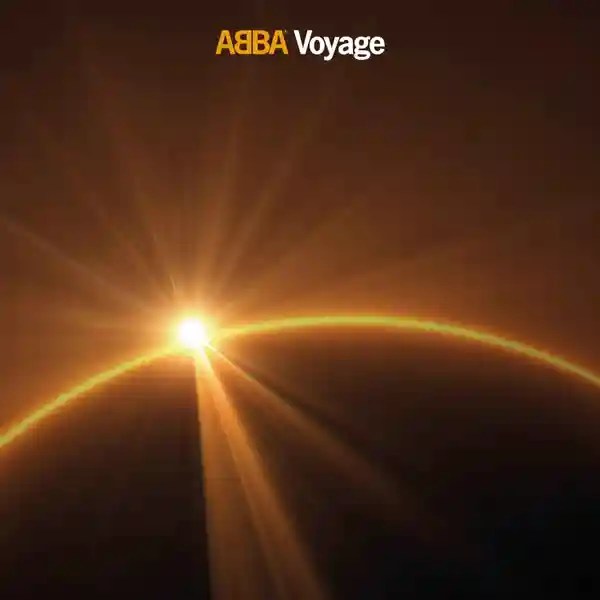
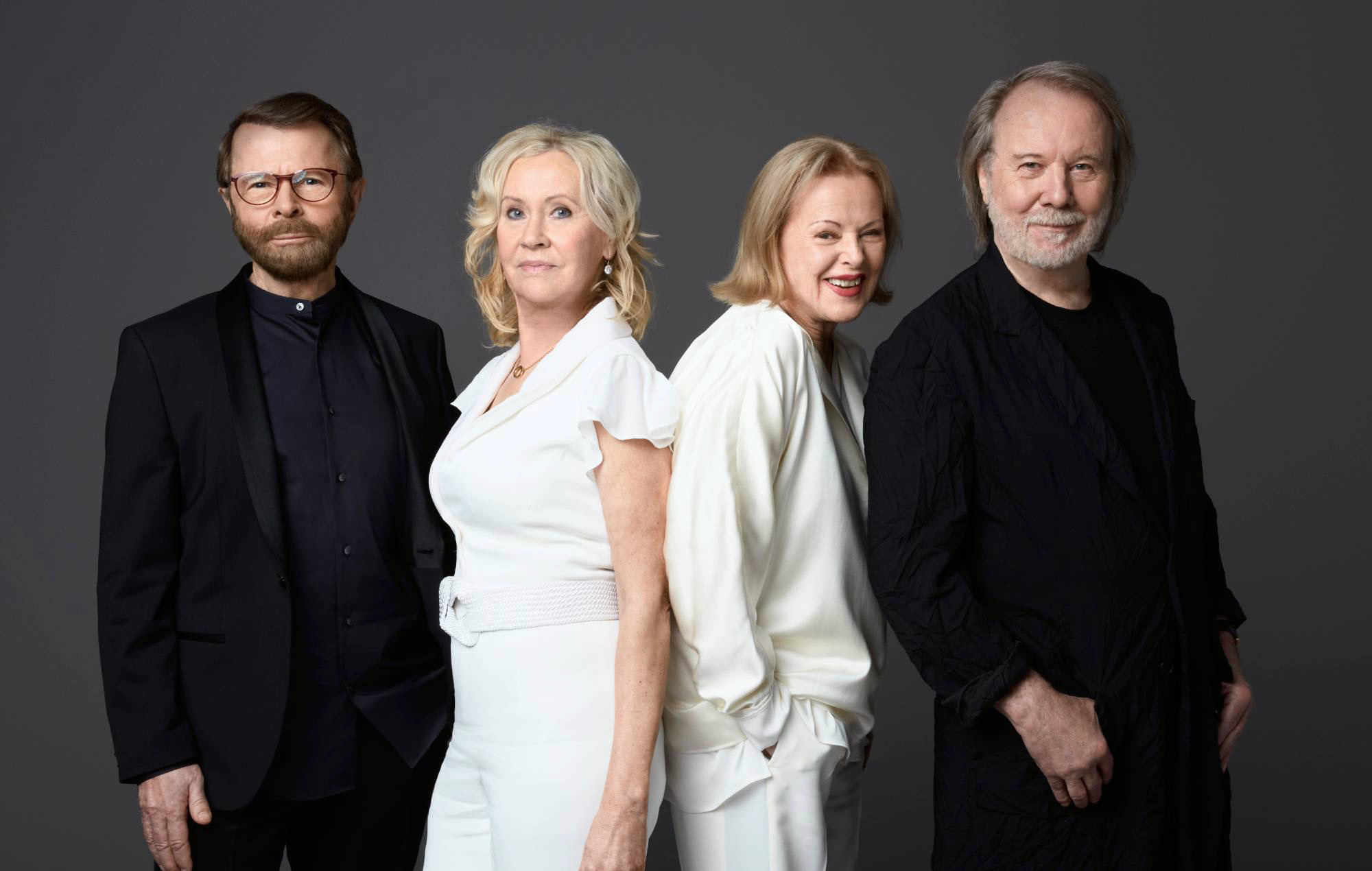
It also may, or may not, be their “swan song”. It is worth remembering that Abba never officially split – rather they wandered off in differing individual directions late in 1982 claiming it wasn’t fun anymore. Voyage and the accompanying “Abba-tar” tour have been hailed as a comeback, but all four members have dropped large hints in interviews that this is probably it – farewell, goodbye. The album itself plays with this – is the relationship going on in it truly over or might some light of hope still flicker? And if it is, what would that mean anyway? Abba are now into their seventies and reflecting, unavoidably, on where they’ve been and where they want to be when “the end” in all its forms comes. There is no picture of them on the cover – even the alternative artwork has them presented as “Abba-tars” – just a small black and white postcard inside to remind you that they are just four increasingly elderly individuals recording in a studio. It’s perhaps a pity as the accompanying publicity shot shows them to be both fit, healthy and presentable and, more to the point, happy as Frida in particular appears to have a fit of the giggles. But what we actually get on the cover is a sunrise, a sunset or even an eclipse – interpret as you will – maintaining importantly the mystique as well as the hope and despair that has dominated their career, and the lives of their fans, for over fifty years.
 The Cat's Meow